
 Appediet
Anti-Inflammatory Diet for Beginners: A Flexible Plate Guide
An anti-inflammatory eating pattern is not a detox, a supplement stack, or a universal list of foods to fear. For most people, the useful starting point is a varied, Mediterranean-style pattern that can fit familiar foods, culture, budget, and schedule.
For beginners, the most defensible approach is to build more meals around vegetables and fruit, whole grains, beans or lentils, nuts and seeds, fish or other suitable proteins, and unsaturated fats—while gradually reducing the highly processed choices that crowd those foods out.
This guide is for general wellness and meal planning. Inflammation is a normal biological process, and persistent pain, fatigue, swelling, digestive symptoms, or abnormal laboratory results need appropriate clinical evaluation. Food can support an overall health pattern; it should not be presented as a treatment for a diagnosed inflammatory condition.
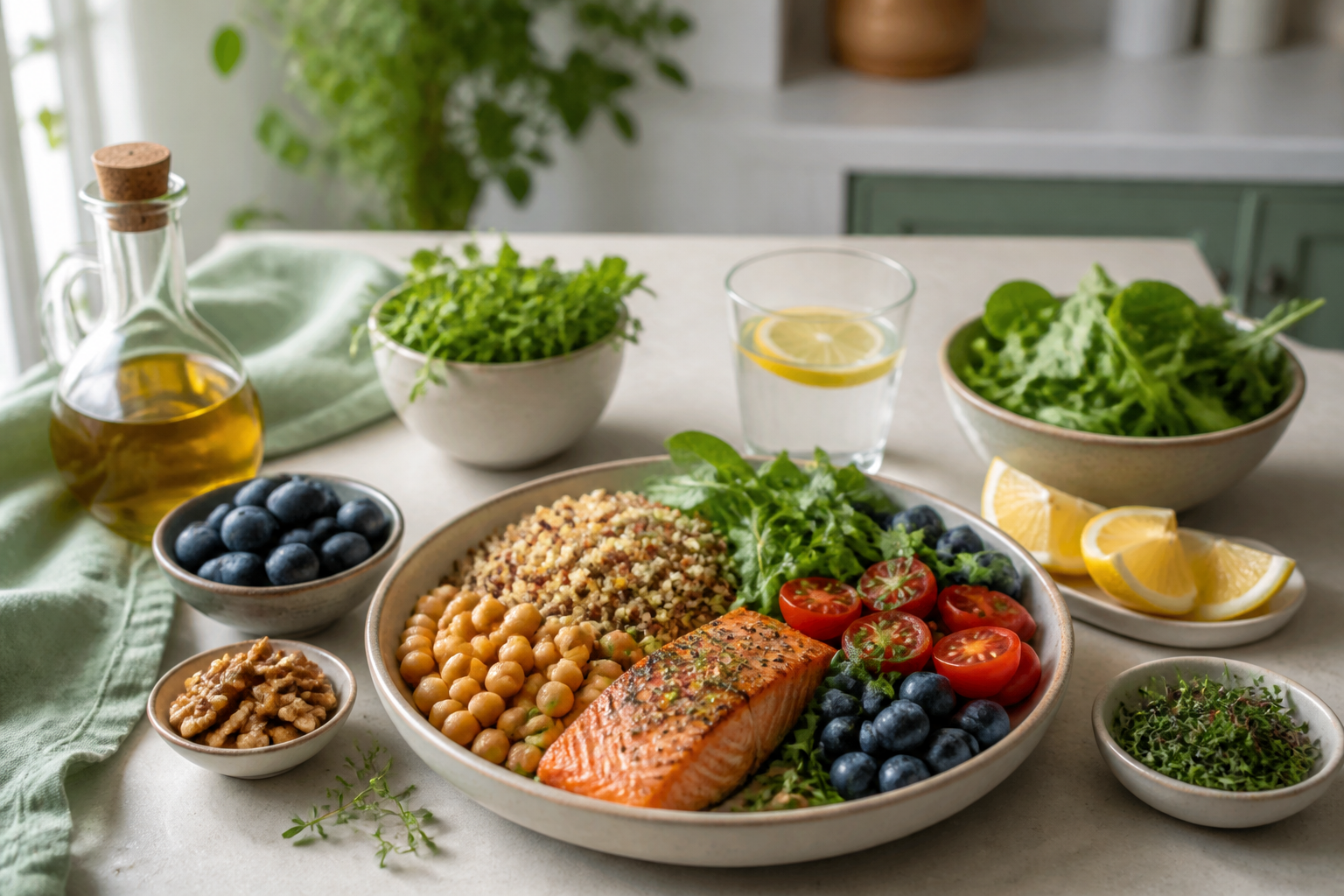
Research is stronger for recurring dietary patterns than for labeling one food as inflammatory or anti-inflammatory.
Start with vegetables, beans, whole grains, fruit, nuts, and suitable proteins before creating a long exclusion list.
Use foods you tolerate, enjoy, can afford, and can repeat; medical exclusions require individualized guidance.
What “anti-inflammatory diet” actually means
There is no single, universally defined anti-inflammatory diet with one mandatory menu. Research uses several scores and dietary patterns, which makes broad claims about a specific branded plan difficult to justify. The most consistent overlap is a pattern rich in plant foods, whole grains, legumes, nuts, fish, and unsaturated fats, with fewer highly processed foods, refined carbohydrates, processed meats, and excess added sugars or sodium.
That overlap resembles Mediterranean-style and other broadly healthful eating patterns. The practical question is therefore not “Which ingredient switches inflammation off?” It is “Which foods are showing up regularly, and what are they replacing?” Adding berries to a diet without changing anything else is different from replacing a frequent sugary dessert with fruit, yogurt, and nuts.
Olive oil instead of a frequent source of saturated fat, beans instead of some processed meat, and whole grains instead of refined grains are meaningful substitutions. A fashionable ingredient added on top of the same routine may change little.
What the evidence supports—and where it is limited
Systematic reviews associate healthier dietary patterns with lower markers of low-grade inflammation, and Mediterranean-style patterns have the most consistent evidence across reviews. Those findings support a direction, not a promise that a particular meal will change a symptom or laboratory value.
A 2024 evidence map from the U.S. Department of Veterans Affairs also emphasizes uncertainty for many specific chronic conditions. Studies differ in populations, diet definitions, comparison groups, duration, and outcomes. Much of the evidence is observational, so associations cannot prove that diet alone caused the difference.
This distinction matters for SEO and for real people: “may support a healthier dietary pattern” is accurate; “cures inflammation” is not. A clinician may recommend a specific therapeutic plan for celiac disease, allergy, kidney disease, inflammatory bowel disease, or another condition, but that is not the same as a general internet elimination diet.
Build a flexible anti-inflammatory-style plate
You do not need a new cuisine or a perfect ratio. Use the components below as a repeatable prompt and adjust portions to appetite, goals, culture, activity, and medical needs.
| Plate role | Flexible choices | Easy starting move |
|---|---|---|
| Color and volume | Leafy greens, tomatoes, peppers, broccoli, frozen vegetables, berries, citrus, apples | Add one produce item to a meal you already eat. |
| High-fiber carbohydrate | Oats, brown rice, quinoa, barley, whole-grain bread, potatoes, beans, lentils | Replace one refined grain or use a half-and-half mix. |
| Protein | Beans, lentils, tofu, fish, eggs, yogurt, poultry, or another suitable option | Choose a protein that makes the meal satisfying and practical. |
| Unsaturated fat and flavor | Olive oil, avocado, nuts, seeds, tahini, herbs, spices | Use measured amounts for flavor rather than chasing a “superfood” dose. |
Traditional foods can fit. A plate might be black beans, corn tortillas, cabbage, avocado, and salsa; lentil dal with brown rice and vegetables; salmon with potatoes and greens; tofu stir-fry with rice; or yogurt, oats, berries, and walnuts. The pattern matters more than making every meal look Mediterranean.
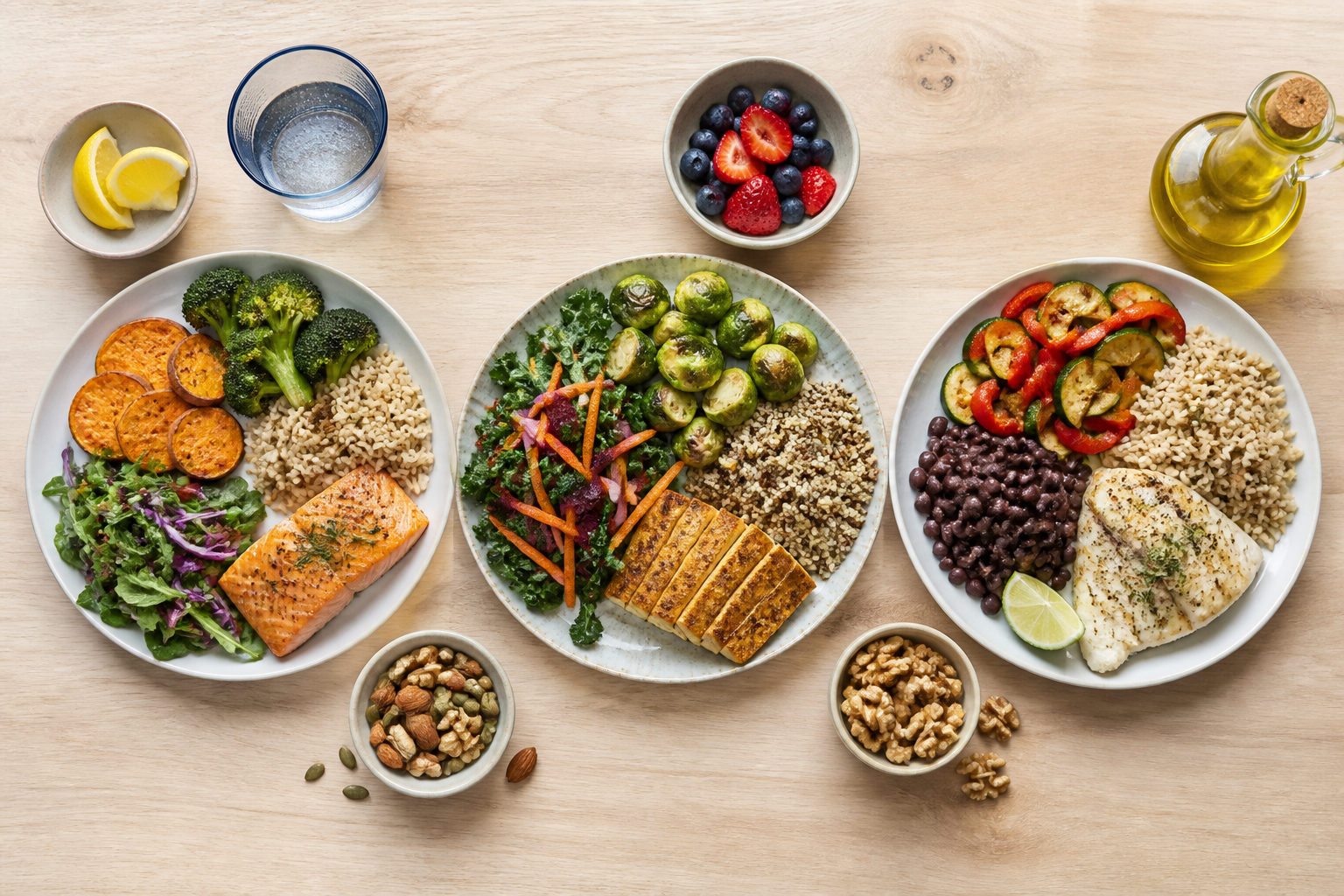
Use practical substitutions instead of a forbidden-food list
Breakfast
Try oatmeal with fruit and nuts, eggs with vegetables and whole-grain toast, or yogurt with berries and seeds. If your usual breakfast works well, improve one component rather than rebuilding the entire meal.
Lunch and dinner
Add beans to a grain bowl, choose a whole grain when it is available, make frozen vegetables part of the default, or swap one processed-meat meal for fish, tofu, lentils, poultry, or another preferred protein. Canned and frozen foods can be practical; compare sodium, added sugar, and ingredients rather than assuming “fresh” is the only acceptable form.
Snacks and drinks
Fruit with nuts, vegetables with hummus, yogurt, or whole-grain crackers can replace some highly processed snacks. Water, coffee, and tea can fit; beverages marketed with detox, adaptogen, or hormone-balancing claims deserve the same evidence check as any other product.
Read labels without turning food into a score
Use the Nutrition Facts label to compare similar products, not to declare one packaged food morally good or bad. Check serving size, fiber, added sugars, sodium, and saturated fat in the context of what you will actually eat. Then inspect the ingredient list for the foods you care about, such as whole grains, nuts, beans, or added oils.
A product can contain a useful ingredient and still be high in added sugar or sodium. It can also be processed and remain convenient and nutritious. The helpful comparison is usually within a category: two breads, two cereals, two sauces, or two frozen meals.
Do not eliminate gluten, dairy, soy, nightshades, or seed oils solely because a social post calls them inflammatory. Avoidance may be necessary for a diagnosed condition or individual intolerance; otherwise, unnecessary restriction can narrow variety, raise cost, and make eating more stressful.
A one-week beginner plan
- Choose one anchor meal. Pick breakfast, lunch, or dinner—the meal you can influence most often.
- Add one plant food. Use fresh, frozen, canned, or dried options that fit the meal.
- Upgrade one carbohydrate. Try oats, brown rice, whole-grain bread, beans, lentils, or potatoes with the skin when appropriate.
- Plan two protein options. Keep one quick choice and one cooked choice available.
- Use one flavorful fat. Olive oil, nuts, seeds, avocado, or tahini can help meals feel complete.
- Repeat before expanding. Make the same improved meal two or three times so the routine becomes easy.
- Review feasibility. Note cost, prep time, fullness, enjoyment, and any symptoms without assigning them to “inflammation” by guesswork.
If increasing fiber, do it gradually and drink enough fluid. A sudden jump in beans, bran, seeds, or supplements can cause gastrointestinal discomfort. Persistent symptoms, unintended weight change, or concern about food reactions deserves professional assessment.
Track the pattern, not perfection
You can monitor this approach without counting every gram. Review a week of meals and ask: How often did vegetables or fruit appear? Which meals included beans, whole grains, nuts, or fish? Which highly processed foods were most frequent, and what realistic substitute would satisfy the same need?
One meal cannot establish a pattern, and a “clean” streak can encourage all-or-nothing thinking. Use tracking to notice repetition and constraints. If Friday takeout is important, keep it and improve a different meal. If a high-fiber lunch leaves you uncomfortable, change the portion or ingredient instead of forcing it.
How Appediet can support a flexible eating pattern
Appediet can turn meal photos into a visual record of recurring choices. Rather than scoring a food as inflammatory, review several days for useful categories: plant variety, whole-grain or legume frequency, protein sources, added drinks, and the meals that rely most on highly processed convenience foods.
Correct the foods and portions the photo cannot know, then use AppeChat to ask a narrow question such as, “What is one vegetable or bean that would fit this lunch without changing the cuisine?” Save the revised meal when it works. The goal is a smaller decision next time, not a diagnosis or a claim that a photo measures inflammation.
Appediet is general wellness software, not medical nutrition therapy. Use qualified care for persistent symptoms, medical conditions, pregnancy, eating-disorder concerns, or a therapeutic diet.
FAQ
What is an anti-inflammatory diet?
There is no single universally defined anti-inflammatory diet. Research most often supports overall patterns rich in vegetables, fruit, whole grains, legumes, nuts, fish, and unsaturated fats, while limiting highly processed foods, added sugars, excess sodium, and processed meats.
Do I need to avoid gluten, dairy, or seed oils?
Not automatically. Eliminating whole food groups is appropriate only for a diagnosed condition, allergy, intolerance, or individualized clinical plan. For general wellness, variety and sustainable substitutions are usually more useful than a universal forbidden-food list.
Can one food reduce inflammation?
A single food cannot diagnose, treat, or cancel chronic inflammation. The stronger evidence concerns recurring dietary patterns and the foods they replace, not a special ingredient added on top of an otherwise unchanged routine.
How quickly does an anti-inflammatory diet work?
There is no reliable universal timeline, and symptoms cannot confirm a change in inflammatory biomarkers. Focus on a repeatable eating pattern and discuss persistent symptoms or laboratory questions with a qualified clinician.
Can I track this pattern without counting every calorie?
Yes. You can track recurring meal components, plant-food variety, whole-grain or legume choices, and the frequency of highly processed foods. Calorie tracking is optional unless it serves a specific, appropriate goal.
Make the next meal easier to repeat
Use Appediet to photograph meals, correct the draft, save reliable repeats, and ask one focused question about adding variety or making a realistic substitution.
Download Appediet