
 Appediet
What Makes a Good Nutrition Coach App?
A good nutrition coach app does more than count calories or place a chatbot beside a diary. It gathers enough context, reduces logging effort, explains the pattern, suggests one realistic next action, and knows when the question needs a qualified human.
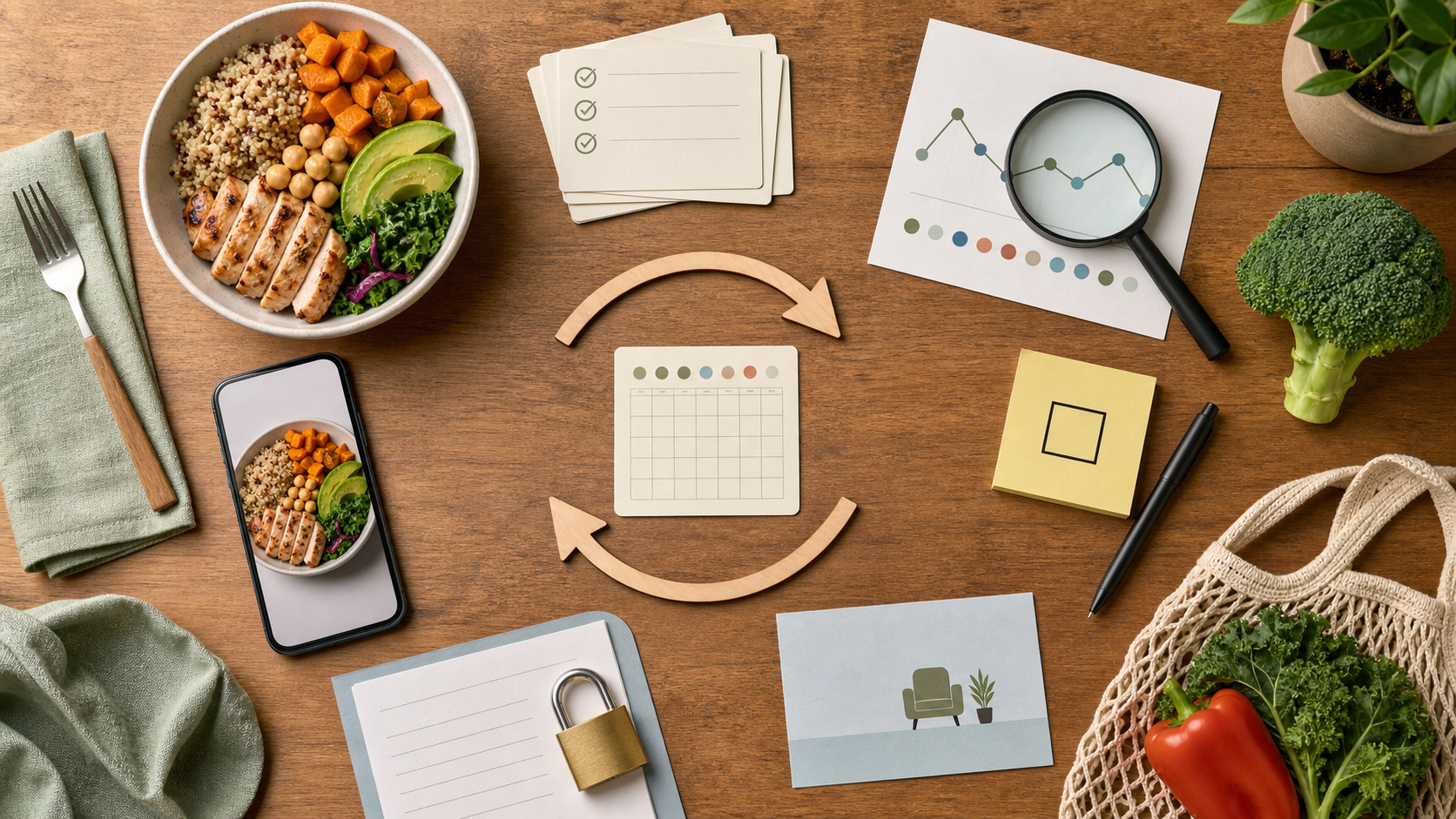
The best nutrition coaching app creates a reliable feedback loop: easy input, reviewable data, relevant guidance, a small behavior to try, and follow-up based on what happened. Personalization, evidence, privacy, and safety boundaries matter as much as AI or the number of features.
This guide is for people comparing calorie trackers, habit apps, AI nutrition assistants, and human coaching services. It focuses on general wellness and everyday nutrition—not diagnosis or medical nutrition therapy.

Photo, barcode, manual, favorites, and saved-meal options reduce friction without forcing every meal through the same method.
“Add a protein-rich option to dinner” is more useful than a red score or a generic warning that today was imperfect.
Good apps explain uncertainty, protect sensitive data, avoid diagnoses, and point users to qualified care when appropriate.
A nutrition coach app is not just a calorie counter with chat
A calorie counter records food and totals nutrients. A coaching system should interpret that information in context, help the user choose a next step, and learn from the result. The difference is not a conversational interface; it is the quality of the feedback loop.
For example, a tracker may report that lunch contained 18 grams of protein. A coach asks whether the user is hungry at 4 p.m., notices that similar lunches are followed by unplanned snacks, and suggests one feasible change using foods the person already likes. It should then check whether the change helped.
After using the app for a week, can you name one pattern you understand better and one behavior you can realistically repeat? If not, the product may be collecting data without coaching.
1. Personalization that changes the recommendation
Asking for age, height, weight, and a goal does not automatically create useful personalization. The app should also understand dietary preferences, allergies, cooking access, budget, schedule, cultural foods, activity, typical hunger, and the amount of tracking detail the user can tolerate.
Good personalization is visible in the output. A vegetarian student with a microwave and limited budget should not receive the same dinner suggestion as a person training for a marathon with a fully stocked kitchen. The recommendation should say why it fits and offer an alternative.
Personalization also needs an edit button. Goals, activity, medication, health status, preferences, and routines change. An app that keeps using old onboarding answers can become confidently irrelevant.
2. Low-friction logging with corrections built in
Coaching quality depends on the input, but demanding perfect input can destroy adherence. A strong app offers multiple ways to capture a meal:
- Photo scan for visible mixed meals and busy situations.
- Barcode or label data for packaged foods.
- Manual search and editing for known ingredients and corrections.
- Saved meals and copy tools for repeat breakfasts, recipes, and leftovers.
- Approximate or quick logging when a rough record is better than no record.
Every automated result should be reviewable. A camera cannot confirm hidden oil, the sugar in a sauce, the recipe used at a restaurant, or an exact portion weight. The app should make it easy to change the detected food, amount, preparation, calories, and macros.
USDA FoodData Central and other authoritative databases can improve the foundation, but database provenance alone does not solve portion uncertainty. The product should distinguish a known label value from an image-based estimate.
3. Feedback that is actionable, prioritized, and adaptive
Users do not need ten alerts after dinner. They need the most relevant next action. A good coach separates patterns from noise and chooses advice that is proportional to the goal.
| Weak feedback | Stronger coaching | Why it helps |
|---|---|---|
| “You exceeded your calorie goal.” | “Dinner was similar to plan; the unplanned drink changed the total. Would you rather adjust the drink or leave the day as-is?” | Identifies the decision without treating the day as failure. |
| “Protein low.” | “Breakfast and lunch were both light in protein. Add yogurt, eggs, tofu, beans, or another preferred option to one meal tomorrow.” | Links the pattern to familiar choices. |
| “Eat more fiber.” | “Your weekday lunches rarely include fruit, vegetables, beans, or whole grains. Which one is easiest to add at work?” | Turns an abstract nutrient target into a feasible action. |
| “Great job—seven-day streak!” | “You logged five of seven days, including both busy days. What made those logs easier?” | Reinforces the process instead of perfection. |
Adaptive feedback uses the response. If the suggested breakfast created more hunger, the app should not repeat it unchanged. It should ask a follow-up, revise the assumption, and offer another option.
4. Behavior support without shame or fragile streaks
Nutrition behavior is affected by time, stress, sleep, food access, social plans, appetite, and emotion. A coaching app should help users plan around those realities instead of treating every deviation as a motivation problem.
Useful behavior tools include implementation intentions (“If the meeting runs late, I will use the prepared snack”), environment changes, flexible reminders, meal planning, barrier review, and reflection on what worked. NIDDK guidance on successful weight-management programs emphasizes realistic goals, monitoring, feedback, support, and a plan for maintenance.
Streaks can motivate some users, but they can also make one missed day feel like total failure. Look for recovery language, flexible targets, and the ability to reduce reminders. The app should support autonomy rather than create guilt.
5. Evidence, explanation, and clear uncertainty
Evidence-based does not mean every recommendation needs a journal citation in the chat. It means the app’s core advice is consistent with credible guidance, data sources are named, reviewers or methods are described, and the product avoids pretending that uncertain input produces certain conclusions.
Current U.S. dietary guidance emphasizes nutrient-dense whole foods across protein foods, dairy, vegetables, fruits, healthy fats, and whole grains while reducing highly processed foods high in refined carbohydrates, added sugars, excess sodium, or unhealthy fats. A responsible app can translate that into the user’s cuisine and preferences without declaring one food morally “clean” or “bad.”
Warning signs include guaranteed weight loss, detox claims, universal supplement protocols, extreme restriction, diagnosis from a photo, advice that conflicts with prescribed treatment, or explanations that cannot acknowledge uncertainty.
6. Privacy and data control you can understand
Food logs can reveal routines, beliefs, health goals, location patterns, and sensitive conditions. Before signing up, check what the app collects, why it collects it, which service providers or advertising partners receive it, and whether AI inputs are used to improve models.
Look for clear account deletion, data export, consent controls, retention information, and optional—not forced—social sharing. Health-platform integrations should explain which data moves in each direction and what happens after disconnecting.
“Privacy-first” is a marketing phrase until the policy and controls support it. Review the actual documentation rather than relying on a badge.
7. Safety boundaries and escalation to humans
A good app knows what it cannot safely handle. It should avoid diagnosing symptoms, changing medication, prescribing medical diets, or claiming to treat an eating disorder. It should recommend qualified support when the user describes fainting, severe restriction, purging, pregnancy concerns, medication-related nutrition decisions, or a condition that needs medical nutrition therapy.
A registered dietitian or clinician can assess history, laboratory values, medications, symptoms, social context, and risk in a way a general consumer app cannot. Human support is also better suited to complex emotional eating, trauma, family dynamics, and care coordination.
AI can still be useful between appointments: recording meals, organizing questions, noticing patterns, or reminding the user of a clinician-approved plan. It should supplement care, not quietly replace it.
A ten-minute test for any nutrition coach app
- Log a mixed meal. Time how long it takes and count the corrections.
- Change a hidden ingredient. Add oil or sauce and see whether the total and advice update.
- Ask a follow-up. Challenge a suggestion with a preference, budget, or schedule constraint.
- Inspect the explanation. Does the app explain why the recommendation fits, or only produce a score?
- Look for sources and limits. Find the database, editorial or clinical review, AI limitations, and medical disclaimer.
- Check privacy controls. Locate export, deletion, advertising preferences, and health-integration permissions.
- Review the paid boundary. Confirm which logging, macro, coaching, and history features remain available after a trial.
Use the same test meal in two or three apps. A feature list cannot show whether the workflow feels calm, clear, and correctable.
How Appediet approaches nutrition coaching
Appediet approaches coaching as a loop between evidence and action. A meal photo supplies immediate context, editable food and portion data keep that context reviewable, and AppeChat can turn a specific observation into a practical next step.
For example, instead of issuing a generic “eat better” message, the workflow can begin with a concrete question: the logged lunch was light, training is later, and dinner still needs structure. The useful response is a small set of options with tradeoffs—not a diagnosis, a moral judgment, or a claim that the app knows everything about the user.
- Capture: use photo, barcode, or manual input according to the meal.
- Clarify: correct uncertain foods and portions before relying on the feedback.
- Act: ask one focused question and choose a realistic next step.
This is supportive software, not medical nutrition therapy. Appediet should not replace a registered dietitian for disease-specific care, eating-disorder treatment, pregnancy, or other situations requiring individualized clinical judgment.
Final checklist: what a good nutrition coach app should provide
- Personalization that visibly changes advice.
- Fast logging with photo, barcode, manual, and repeat-meal options.
- Corrections for foods, portions, recipes, and hidden ingredients.
- One prioritized action instead of a flood of generic alerts.
- Follow-up that adapts when the recommendation does not work.
- Behavior support that values recovery and consistency over perfect streaks.
- Named data sources, evidence-aligned guidance, and honest uncertainty.
- Understandable privacy, export, deletion, and integration controls.
- Clear medical limits and appropriate escalation to qualified humans.
FAQ
Can a nutrition coach app replace a registered dietitian?
No app should be presented as a replacement for individualized medical nutrition therapy. An app can support general meal awareness, planning, education, and habit feedback. A registered dietitian or clinician is more appropriate for medical conditions, eating disorders, pregnancy, complex symptoms, or treatment that depends on precise nutrition decisions.
What is the most important feature in a nutrition coaching app?
The most important feature is a usable feedback loop: capturing enough accurate context, turning it into one relevant action, and letting the user correct both the data and the recommendation. Sophisticated coaching cannot help if logging is abandoned or the advice ignores the user’s real constraints.
How can I tell whether nutrition advice is evidence-based?
Look for named data sources, current public-health guidance, qualified reviewers, clear uncertainty, and explanations of why a suggestion fits the goal. Be cautious with universal detoxes, guaranteed outcomes, supplement sales, extreme restriction, or advice that ignores medical context.
Should a nutrition coach app use AI?
AI can make meal recognition, pattern summaries, and follow-up questions faster, but it is not automatically safer or more accurate. The app should allow edits, explain limitations, avoid diagnosing conditions, and direct users to qualified care when the question is beyond general wellness.
What should a good nutrition app do with my data?
It should explain what it collects, why it collects it, which partners receive it, how long it is retained, and how to export or delete it. Sensitive meal, activity, body, and health-adjacent data should not require social sharing, and privacy choices should be understandable before sign-up.
Turn meal data into a practical next step
Use Appediet to capture meals by photo, review the estimate, correct the details, save repeat meals, and ask AppeChat for options that fit your day.
Download Appediet