
 Appediet
Can I Get Enough Protein Without Using Powder?
Compare regular protein foods and powder by your meals, preferences, labels, and needs. Decide whether powder adds convenience to your routine.
Often, yes. Everyday foods can supply protein, and a powder is not automatically required. The useful question is whether your usual meals cover your individual needs, preferences, health context, and training demands.

See what ordinary foods contribute
| Exact USDA food | Reference amount | Protein | Energy |
|---|---|---|---|
| Chickpeas, boiled, without salt · FDC 173757 | 100 g cooked | 8.86 g | 164 kcal |
| Whole egg, hard-boiled · FDC 173424 | 100 g edible cooked egg | 12.58 g | 155 kcal |
| Firm tofu, prepared with calcium sulfate · FDC 172475 | 100 g as described, before cooking | 17.27 g | 144 kcal |
The common 100 g basis makes the food records comparable; choose your meal amount according to your individual needs. Tofu water content, brands, preparation and the amount eaten matter. Add the protein from the actual portions across your usual meals, then compare it with an individually appropriate goal if one has been set.
USDA FDC 173757: cooked chickpeas · USDA FDC 173424: hard-boiled whole egg · USDA FDC 172475: firm calcium-sulfate tofu
Define what “enough” means before you shop
Protein needs are not identical for every adult. Age, body size, pregnancy, health conditions, total food intake, and the type and amount of training can change the question. Set a personal gram target with a clinician or dietitian who knows your situation; this guide then helps you check your usual meals against it.
Everyday meal coverage
Look across your usual day. Do breakfast, lunch, dinner, or snacks include recognizable protein-containing foods, or is one part of the day consistently missing them?
Convenience
If time, storage, travel, or appetite makes a meal difficult, you may simply be deciding between convenient foods, each of which can fit your plan.
Training
Recreational and competitive training can change protein needs. A sports dietitian can connect a target to your actual program instead of using a generic formula.
Clinical care
A clinician-directed diet, kidney condition, recovery plan, pregnancy, or persistent appetite problem needs individualized guidance before you intentionally raise protein intake.
The NIH Office of Dietary Supplements notes that athletes can often obtain protein from protein-containing foods and can use supplements if needed. That makes powder an option for a gap or a practical constraint.
Download Appediet to keep your food record.
For this step: Find ordinary protein-food options.
Find protein in everyday foods
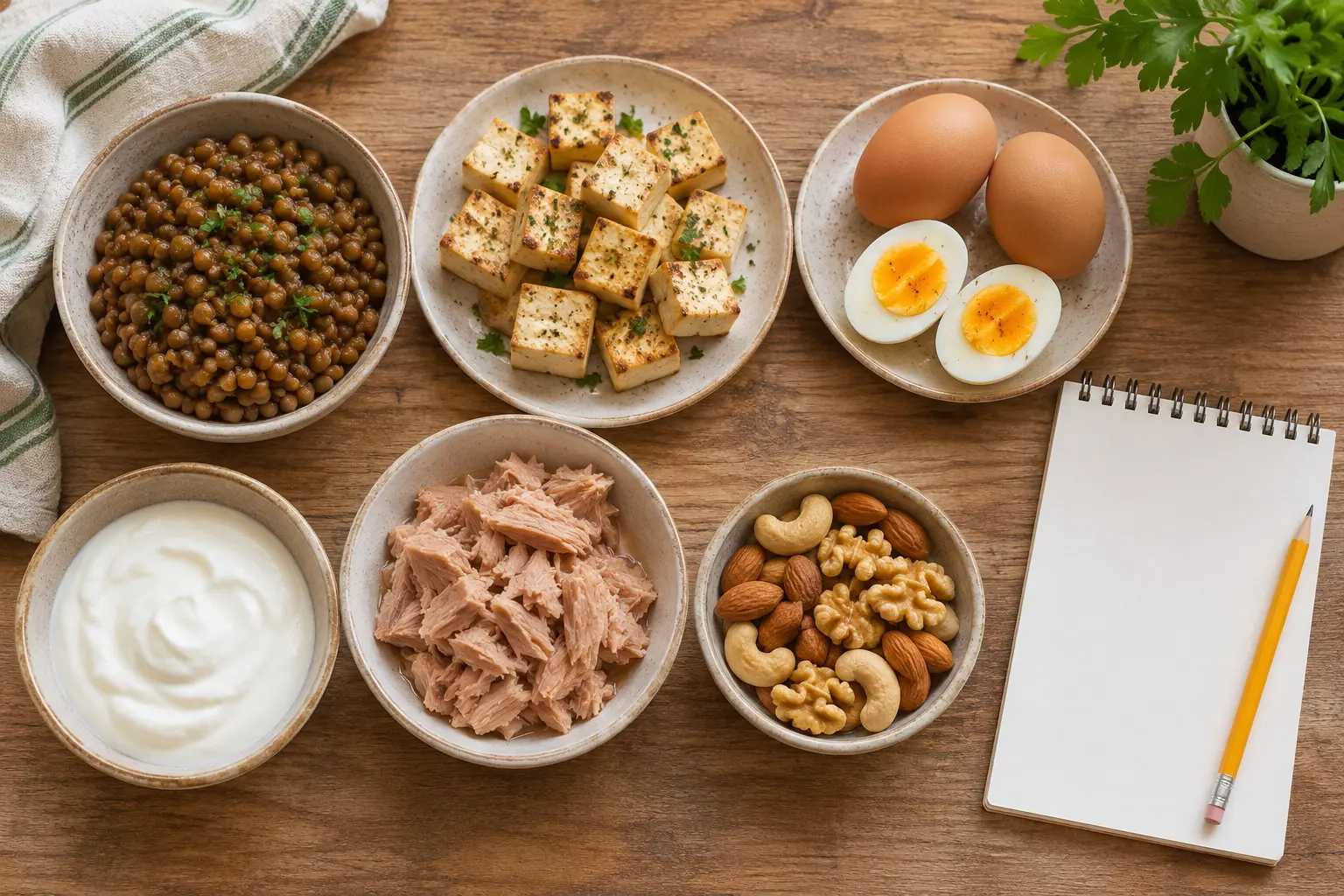
Protein is present in many animal- and plant-based foods. The NIH lists meat, poultry, seafood, eggs, dairy, beans, and nuts among common sources. A varied plant-based pattern can use different legumes, soy foods, nuts, seeds, and grains across the day.
| Source family | Everyday examples | What to verify |
|---|---|---|
| Eggs and dairy foods | Eggs, milk, plain yogurt, cottage cheese | Your actual serving, allergies or intolerance, and the package label when present |
| Beans, peas, and lentils | Lentils, chickpeas, black beans, split peas | Cooked versus dry entry, the portion eaten, and added ingredients |
| Soy foods | Tofu, tempeh, edamame, fortified soy beverage | The exact product and serving because water content and processing differ |
| Seafood, meat, and poultry | Fish, shellfish, chicken, turkey, lean meats | Raw versus cooked state, edible portion, and preparation method |
| Nuts and seeds | Peanuts, almonds, walnuts, pumpkin seeds | The amount actually eaten and whether a spread or mix contains other ingredients |
Use the table as a set of food-source options. Each group can play a different role in taste, culture, budget, allergies, convenience, and the rest of the meal. A larger protein number on one line is only one factor in whether that food is the right choice for you.
Build food-first meal opportunities without chasing a magic meal
Choose meal opportunities that fit your routine and preferences. Instead, identify a few reliable opportunities in the day and choose foods you will actually eat. Use the examples below as structures, and set the portions to fit your own day.
Choose an anchor you recognize
At breakfast that might be eggs or yogurt. At lunch it might be tofu, lentils, fish, chicken, or beans. Name the food before you estimate its nutrients.
Keep the rest of the meal visible
Protein is one part of a meal. Include the grains, vegetables, fruit, fats, sauces, and drinks that were actually present instead of reducing the meal to one nutrient.
Use another opportunity if it suits your routine
If one meal has little protein, another meal or snack may contribute. A snack could be yogurt, nuts, an egg, hummus, or another food that fits your preferences and restrictions.
Use the food-source and label checklist
For packaged foods, the Nutrition Facts label lists grams of protein per serving. The FDA explains that protein % Daily Value is not required for most products aimed at the general population unless the label makes a protein claim, so the gram line may be the field you can consistently compare.
| Write this down | Why it matters | Your note |
|---|---|---|
| Exact food or product | “Tofu,” “lentils,” and “yogurt” each cover many different entries. | |
| Prepared state | Raw, cooked, drained, dry, and ready-to-eat records can use different portion weights. | |
| Serving basis | Use the label serving or database household measure before multiplying. | |
| Amount actually eaten | One listed serving is not always the amount on your plate. | |
| Protein grams per listed serving | Copy the value from the matching label or record; do not borrow it from a different product. | |
| Other decision factors | Allergens, dietary restrictions, sodium, added sugars, cost, access, and enjoyment can affect the choice. |
USDA FoodData Central contains multiple data types, including analytically derived Foundation Foods, survey foods, branded-label data, and legacy records. Match the record to the food in front of you and keep the source visible. Accuracy comes from the matching entry.
Continue with the detail you need: Compare the actual serving on a package.
Decide whether powder adds convenience
Once you have looked at ordinary meals, a powder decision can be simple: does it solve a real practical problem that food is not solving for you? It may offer portability or an easy-to-measure serving. Those outcomes come from your overall meals and training; the powder itself only delivers protein.
If you are considering one
- Read the serving size and protein grams.
- Check the ingredient list and allergen statement.
- Count how many servings you actually use.
- Notice whether it replaces a meal or simply adds to one.
- Compare the choice with convenient foods you already enjoy.
If food is already working
- Keep the meals that fit your schedule and preferences.
- Use labels or FoodData Central only when a value helps your decision.
- Base a powder decision on your own needs and practical food options.
- Recheck the question when training, appetite, or health circumstances change.
A powder can be useful without being necessary. Food can be sufficient without every meal being optimized. The decision belongs to your actual routine and, when needed, your care team.
Know when to ask for tailored help
Use professional guidance if you have a medical condition, a clinician-set protein limit, pregnancy, significant food allergies, a highly restrictive diet, persistent low appetite, unexplained weight change, recovery from illness or surgery, or a demanding training plan. A registered dietitian or other qualified clinician can assess intake in the context of your health and medications.
FAQ
Do I need protein powder to support strength training?
Review the need in the context of your current meals. NIH guidance says athletes can often obtain protein from protein-containing foods and can use supplements if needed. Your training load, total intake, health, and individual target matter, so use tailored sports nutrition advice when the decision affects a structured training plan.
Can plant foods provide enough protein?
They can contribute substantially. NIH consumer guidance explains that plant foods contain different essential amino acid patterns and that eating different types of plant-based foods is one way to obtain all essential amino acids. Your total intake and dietary pattern still need to fit your individual needs.
Why does a protein label sometimes show grams but no % Daily Value?
FDA guidance says protein % Daily Value is required in specific situations, including when a protein claim is made. For many products aimed at people age four and older, the label can list protein grams without a protein % Daily Value.
Is extra protein always useful?
No. An individual target can change with health and training circumstances; review it before raising intake. Start with the amount and source you actually consume, and do not raise intake against a clinician-directed plan.
Sources
- NIH Office of Dietary Supplements: Exercise and athletic performance, consumer fact sheet
- NIH Office of Dietary Supplements: Exercise and athletic performance, health professional fact sheet
- FDA: How to understand and use the Nutrition Facts label
- USDA FoodData Central
- USDA FoodData Central: Data type documentation