
 Appediet
High-Protein Snacks Without Protein Bars: A Label-Smart Guide
A protein number on the front of a package does not tell you whether the serving is satisfying, affordable, balanced, or useful for your day. This guide shows how to compare the whole snack and build simple alternatives from familiar foods.
High-protein snacks do not have to come from a bar, shake, or heavily marketed package. Start with a protein food you like, add produce or a whole grain when useful, and judge packaged options by serving size, protein, calories, fiber, saturated fat, sodium, added sugars, ingredients, and price together.
This article is for general wellness and food-planning education. Protein needs vary with body size, age, activity, pregnancy, health conditions, and total diet; a single snack target is not appropriate for everyone.
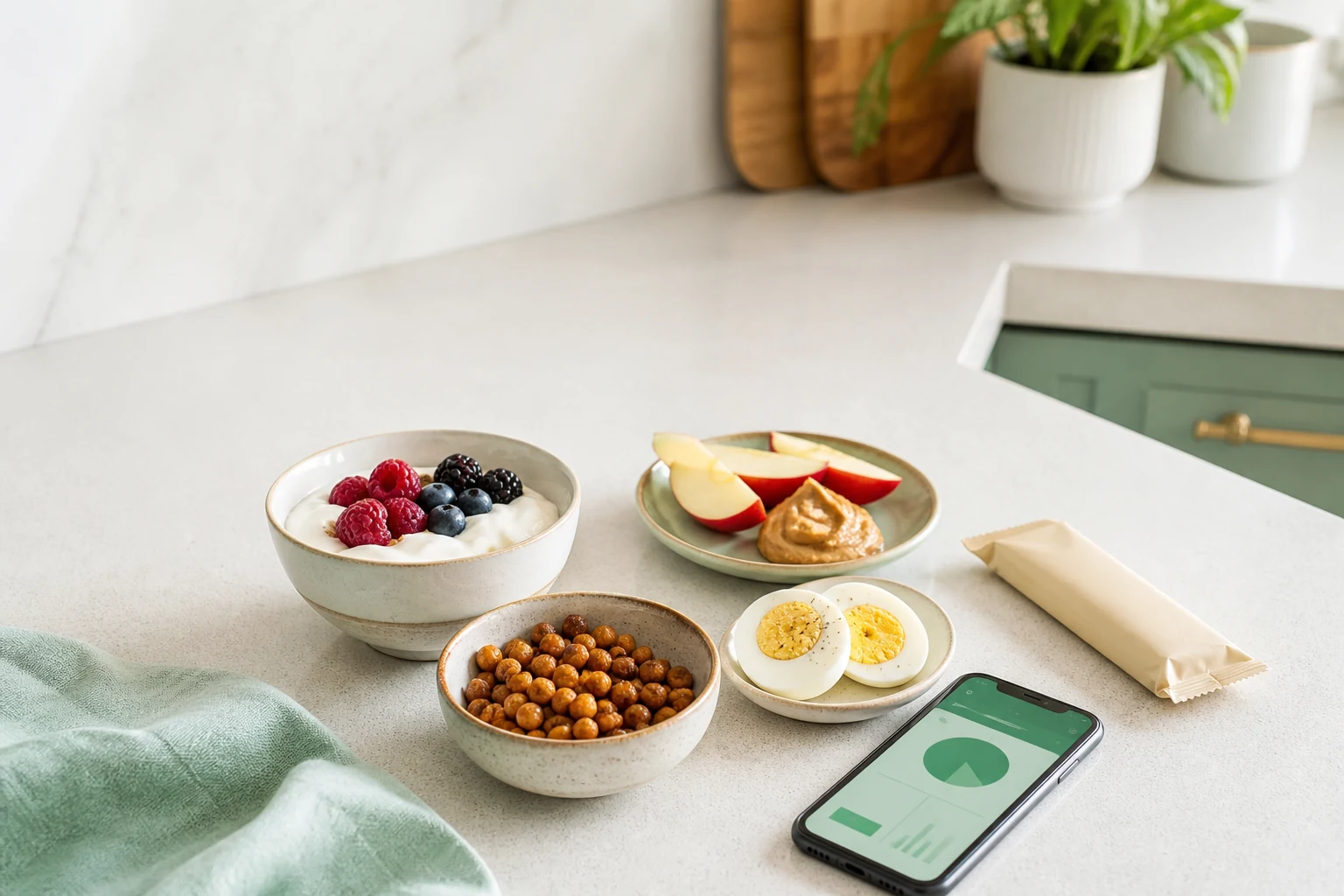
A light bridge to dinner, post-workout food, and a portable breakfast replacement are three different jobs.
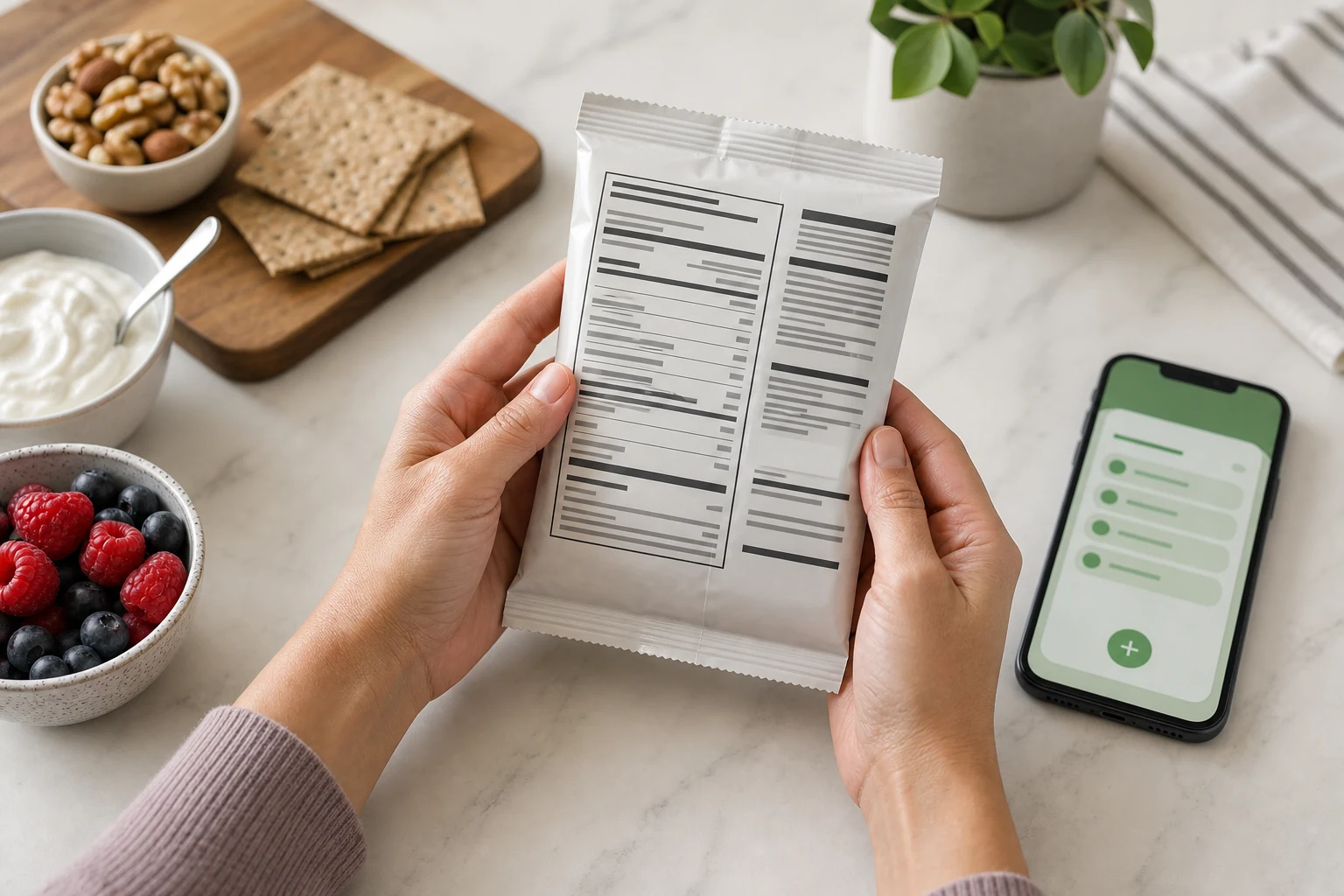
Match serving sizes, then compare protein with calories, fiber, saturated fat, sodium, added sugars, and ingredients.
Yogurt, eggs, beans, soy foods, nuts, seeds, seafood, poultry, and combinations can all contribute protein.
Why protein snacks are everywhere in 2026
Protein has become a prominent food and beverage signal. A March 2026 U.S. consumer-trends report noted that Google search volume for “protein” reached record levels, while retailers reported growth in protein-positioned yogurt, bars, and drinks. That attention can make a useful nutrient feel like a product category.
The trend does not mean everyone needs a specialized snack or more protein. MyPlate notes that most Americans obtain enough food from the Protein Foods Group, while variety and leaner choices remain important. The practical question is not “Which package has the largest number?” but “What snack fits my total pattern, preferences, budget, and next meal?”
Google Trends Explore did not return a stable, reproducible weekly U.S. index during the August 12 check. This article does not quote an invented score. The trend rationale uses a dated public report describing record U.S. Google search volume for “protein,” then verifies nutrition claims against FDA, CDC, and MyPlate guidance.
What does “high protein” mean on a snack?
For FDA-regulated nutrient-content claims, “high,” “rich in,” or “excellent source of” protein generally means the food contains at least 20% of the Daily Value per reference amount. The FDA Daily Value for protein is 50 grams for general label reference, not a personalized prescription.
Protein percentage does not appear on every label for adults and children age four or older. Unless a protein claim or another specific requirement applies, the package may list only grams. That is why comparing the serving size and grams directly is often more useful than looking for a percentage.
A snack can contribute meaningful protein without meeting a regulated “high” claim. Conversely, a high-protein product can also be high in sodium, saturated fat, added sugars, calories, price, or ingredients you do not prefer. No single number evaluates the whole food.
A six-step check for packaged high-protein snacks
| Check | What to look at | Why it matters |
|---|---|---|
| 1 Serving | Serving size and servings per container | All listed calories and nutrients apply to that amount, not automatically to the whole package. |
| 2 Protein | Grams per serving and any regulated claim | Shows contribution, but not whether the snack is balanced or suited to you. |
| 3 Energy | Calories for the portion you plan to eat | A snack and a meal replacement may reasonably have very different energy content. |
| 4 Nutrients | Fiber, saturated fat, sodium, and added sugars | The FDA uses 5% DV as a general low guide and 20% DV as a general high guide for nutrients with a %DV. |
| 5 Ingredients | Allergens, sweeteners, oils, and ingredient order | Helps with preferences, tolerance, and understanding what makes up the product. |
| 6 Real use | Price, portability, taste, storage, and hunger | A theoretically ideal snack is not useful if it is unaffordable, inconvenient, or left uneaten. |
To compare two products fairly, first align the amount. If one package lists a 28-gram serving and another lists 50 grams, comparing the bold protein numbers alone can be misleading. Calculate or visualize the portion you will actually eat before drawing conclusions.
High-protein snack combinations without protein bars
Think in flexible combinations rather than rigid recipes. Start with one protein-containing food, then add a fruit, vegetable, or whole grain if you want more volume, texture, carbohydrate, or fiber.
- Plain Greek yogurt plus berries: choose the fat level and portion that fit your preferences; add nuts or seeds for crunch.
- Egg plus fruit and whole-grain crackers: portable when kept safely cold and easy to adjust in size.
- Roasted chickpeas plus a piece of fruit: plant-based, shelf-stable options vary in sodium and oil, so check the label.
- Hummus with vegetables and whole-grain pita: a mix-and-match snack that can scale toward a small meal.
- Edamame with fruit: a soy-based option that works chilled or thawed according to package directions.
- Cottage cheese with tomatoes or fruit: compare sodium and added sugars across varieties.
- Tuna or salmon pouch with crackers: convenient and protein-rich; check sodium and follow storage directions after opening.
- Peanut or seed butter with apple and yogurt: useful when one food alone does not feel substantial enough.
These are examples, not universal prescriptions. Allergies, dietary patterns, chewing or swallowing needs, food access, refrigeration, and medical conditions change what is appropriate.
Match the snack to the job it needs to do
A short bridge between meals
If dinner is soon, a smaller combination may be enough. Choose something easy to portion and pleasant to eat, rather than turning every snack into a mini meal.
A long afternoon gap
When lunch and dinner are far apart, pairing protein with fruit, vegetables, beans, or whole grains can make the snack more complete. Water and a realistic eating break matter too.
Before or after activity
Activity type, duration, timing, and individual tolerance affect what works. Protein is only part of the picture; carbohydrate, fluid, total energy, and comfort may also matter. Competitive athletes or people with specific performance goals can benefit from individualized sports-nutrition guidance.
A rushed meal substitute
If the snack regularly replaces breakfast or lunch, evaluate it as a small meal: enough food, multiple food groups, practical storage, and a plan for the next eating occasion. Repeatedly under-eating through the day can lead to a difficult evening.
Common mistakes when comparing protein snacks
- Ranking only by protein grams. More is not automatically better for your goal or total diet.
- Ignoring serving-size differences. The headline number may apply to a portion you do not eat.
- Treating “natural” as a nutrition analysis. Front-of-pack language does not replace the Nutrition Facts label.
- Forgetting sodium and added sugars. Products with similar protein can differ substantially elsewhere.
- Assuming a bar is automatically portable. Some melt, crumble, require water, or do not satisfy you.
- Moralizing the choice. Convenience foods are tools. The best option is the one that safely fits the situation and overall pattern.
How Appediet can support a label-smart snack routine
Appediet can serve as a comparison notebook rather than a judge. Scan a packaged snack by barcode when product data is available, photograph an unpackaged combination, and correct the serving or ingredients before saving. Then compare what you actually ate across several afternoons—not just what the wrapper promised.
A useful experiment is to save three repeat options: one shelf-stable snack, one refrigerated snack, and one mix-and-match option. Record hunger context and the next meal in a short note. AppeChat can help organize the pattern into practical questions, such as whether the problem is portion, timing, portability, or simply that you dislike the food.
Appediet provides general tracking and educational support, not a protein prescription or medical nutrition therapy. Use qualified care for disease-specific needs, pregnancy, eating-disorder treatment, or other individualized clinical decisions.
Bottom line
High-protein snacks do not require protein bars. Choose a food or combination you enjoy, match it to the gap between meals, read packaged labels from serving size outward, and consider protein alongside the rest of the nutrient panel, ingredients, cost, storage, and your actual experience.
FAQ
What counts as a high-protein snack?
There is no single snack target that fits everyone. On packaged foods, an FDA-regulated “high” protein claim generally means at least 20% of the Daily Value per reference amount. In everyday planning, compare protein grams, serving size, calories, fiber, sodium, added sugars, and how the snack fits the rest of your meals.
Are protein bars necessary to get enough protein?
No. Many people can meet their needs with ordinary foods such as yogurt, eggs, beans, lentils, nuts, seeds, soy foods, seafood, poultry, or combinations of foods. Bars can be convenient, but they are one option rather than a requirement.
Should a snack include fiber as well as protein?
It can be useful to pair protein with fruit, vegetables, beans, whole grains, nuts, or seeds when that suits your needs. The combination adds food variety and may make the snack more substantial, but individual tolerance and goals differ.
How do I compare two packaged protein snacks?
Start by matching serving sizes. Then compare protein grams, calories, saturated fat, sodium, added sugars, dietary fiber, ingredients, price, and whether you would actually enjoy and use the product. Front-of-pack protein claims should not replace the full Nutrition Facts label.
Who should get individualized advice about protein?
People with kidney disease, pregnancy-related needs, allergies, eating-disorder concerns, significant digestive symptoms, or nutrition goals tied to medical treatment should ask a registered dietitian or clinician for individualized guidance.
Compare the snack you actually eat
Use Appediet to log a package by barcode or capture a snack by photo, correct the portion, save repeat combinations, and review patterns across your week.
Download Appediet