
 Appediet
The “De-Bloat” Smoothie Explained: Potassium Foods for Salty Days and Workouts

Online “de-bloat” smoothie recipes often combine coconut water or fruit, leafy greens, and a banana. The useful part is not a promise that one drink will change your face. It is a convenient way to include potassium-rich foods after a salty day or alongside an ordinary workout—while still managing sodium and drinking normally.
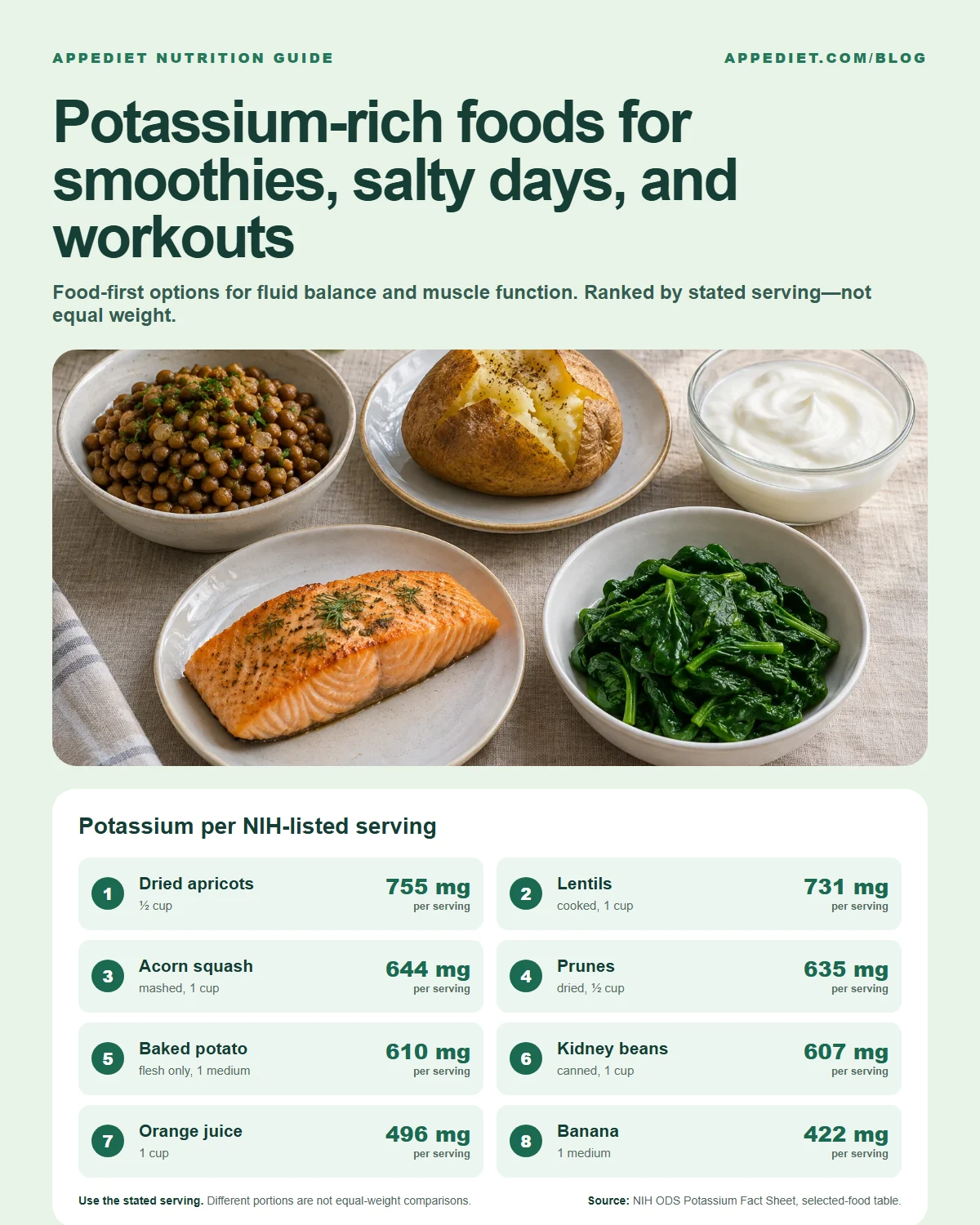
Compare the serving you actually eat. One cup of cooked lentils provides 731 mg, a medium baked potato provides 610 mg, and a medium banana provides 422 mg; the amount changes with the food, preparation, and portion.
A food-first “de-bloat” smoothie template
This combination follows a familiar online green-smoothie format. It is an editorial serving idea, not a clinically tested treatment or a guaranteed way to look different on the same day.
- 1 cup plain, unsweetened coconut water
- 1 small banana
- 1/2 cup pineapple chunks
- 1 cup raw spinach
- Ice, as needed
Blend until smooth and drink it as food, not as a cleanse. Brand, produce size, and preparation change the nutrition, so this article does not assign the glass a fixed potassium total. The recipe also does not cancel out a very salty meal. Reducing excess sodium across the day, eating normally, and staying normally hydrated matter more than chasing one “de-bloat” ingredient.
Potassium by everyday serving
Use these NIH ODS serving values to compare options that fit your meals.
| Food group | Food and specified serving | Potassium |
|---|---|---|
| Legumes and starches | Lentils, cooked, 1 cup | 731 mg |
| Legumes and starches | Acorn squash, mashed, 1 cup | 644 mg |
| Legumes and starches | Potato, baked, flesh only, 1 medium | 610 mg |
| Legumes and starches | Kidney beans, canned, 1 cup | 607 mg |
| Fruit | Dried apricots, 1/2 cup | 755 mg |
| Fruit | Prunes, dried, 1/2 cup | 635 mg |
| Fruit | Orange juice, 1 cup | 496 mg |
| Fruit | Banana, 1 medium | 422 mg |
| Dairy and alternatives | Milk, 1%, 1 cup | 366 mg |
| Dairy and alternatives | Greek yogurt, plain, nonfat, 6 ounces | 240 mg |
| Protein foods | Chicken breast, boneless, grilled, 3 ounces | 332 mg |
| Protein foods | Salmon, Atlantic, farmed, cooked, 3 ounces | 326 mg |
| Vegetables | Spinach, raw, 2 cups | 334 mg |
| Vegetables | Broccoli, cooked, chopped, 1/2 cup | 229 mg |
These numbers describe the stated servings, not equal weights. One cup of lentils is not directly comparable to three ounces of salmon as a meal portion. The table is most useful for seeing how different foods can contribute within different eating patterns.
What the “de-bloat” label gets right—and wrong
Too much sodium can make your body retain water, which may show up as puffiness or bloating. That explains why potassium-rich foods and lower-sodium meals appear in online “de-bloat” content. It does not prove that one smoothie removes facial puffiness, causes fat loss, or works on a fixed timeline. Use food as part of a normal eating pattern—not as a same-day cosmetic hack. Cutting excess sodium matters more than adding one high-potassium food to an otherwise salty day.
Potassium is also required for normal nerve transmission and muscle contraction. That makes potassium-rich foods relevant to active people, but they do not replace water, adequate energy, carbohydrates, protein, sleep, or an individualized sports-nutrition plan.
The DASH eating pattern is a useful example. It emphasizes vegetables, fruit, whole grains, beans, nuts, fish, poultry, and low-fat dairy while limiting sodium, saturated fat, and added sugars. It supplies potassium along with calcium, magnesium, fiber, protein, and other dietary changes. NIH notes that because several nutrients and foods change together, potassium's independent contribution cannot be cleanly separated from the whole pattern.
For a practical food decision, ask two questions together:
- Does this meal include one or more foods that naturally contribute potassium?
- Is sodium also being managed across the meal and the day?
Adding beans to a low-sodium soup is different from adding a banana to a day dominated by very salty foods. Both foods can fit, but only the first example changes potassium and sodium in the same meal.
Build meals from several food groups
You do not need to create a potassium-focused menu. Use ordinary combinations that also make sense for appetite, culture, budget, and other nutrition needs.
- Breakfast: plain yogurt with fruit and oats, or eggs with potatoes and vegetables.
- Lunch: lentil soup with whole-grain bread, or a bean bowl with vegetables and rice.
- Dinner: salmon or chicken with squash and greens, or tofu with broccoli and a grain.
- Snacks: fruit, yogurt, or a small portion of dried fruit paired with another food.
Dried fruit is concentrated, so its half-cup serving is much smaller by volume than a cup of fresh fruit. Juice can contribute potassium, but it is easy to drink quickly and does not provide the same fiber as whole fruit. Those differences matter even when the potassium number looks useful.
Canned beans can be practical. Their potassium value remains relevant, but sodium varies by product. Compare labels within the same category, and use a lower-sodium version or rinse when that fits the recipe and label instructions.
Use labels and food records carefully
Potassium appears on U.S. Nutrition Facts labels, but a food database may show a value for a different preparation. Match the details before copying a number:
- raw versus cooked;
- canned versus home-cooked;
- drained versus including liquid;
- flesh only versus skin included;
- plain versus flavored;
- serving size and unit.
If you log food in Appediet, select the entry that matches the preparation and serving you used. A photo can help identify visible foods, but it cannot confirm a package's potassium value, whether beans were drained, or how much salt was added. Correct the food entry or quantity when the source information is known.
Reviewing several days is more informative than grading one meal. Look for repeat opportunities: a breakfast with little fruit or dairy, lunches with no legumes or vegetables, or dinners where a potato, squash, beans, fish, or greens would fit naturally.
When a high-potassium list is not safe to follow
Potassium advice changes when the body cannot excrete potassium normally. Chronic kidney disease is the clearest example, but abnormal blood potassium, heart failure, adrenal disorders, and some other conditions can also change the plan.
Medicines matter as well. ACE inhibitors, angiotensin receptor blockers (ARBs), and potassium-sparing diuretics can raise hyperkalemia risk in some people. Other diuretics can lower potassium. Do not change a medicine or add potassium based on a food list; the appropriate plan depends on laboratory results, kidney function, the full medication list, and clinical guidance.
Salt substitutes deserve special caution because many replace sodium chloride with potassium chloride. NIH ODS reports that potassium content varies widely among these products. A “low sodium” label therefore does not automatically mean a product is appropriate for someone who needs potassium restriction.
If you have kidney disease, have been told your potassium is high or low, or take a medicine that affects potassium, ask your clinician, pharmacist, or registered dietitian before intentionally increasing potassium or using a potassium-based salt substitute.
Common questions
Is a banana a high-potassium food?
A medium banana provides 422 mg in the NIH ODS table. It is a useful source, but many other foods contribute similar or larger amounts in their stated servings. Variety is more practical than treating one fruit as mandatory.
Will eating more potassium lower my blood pressure?
Potassium-containing foods can be part of a blood-pressure-supportive pattern, especially when the overall pattern also manages sodium. Individual response varies, and food does not replace prescribed treatment or blood-pressure monitoring.
Are potassium supplements the same as potassium-rich foods?
No. Supplements and potassium-based salt substitutes can deliver concentrated potassium and can interact with kidney function or medicines. This guide compares foods and does not recommend a supplement dose.
Should someone with chronic kidney disease avoid every food in the table?
Not automatically. Potassium needs in CKD depend on stage, laboratory results, medicines, and treatment. A renal dietitian or clinician can help select portions and foods for the individual's plan.
Sources
- NIH Office of Dietary Supplements: Potassium — Fact Sheet for Health Professionals.
- American Heart Association: Effects of Excess Sodium.
- American College of Sports Medicine: 9 Facts About Hydration and Electrolytes.
- Food Network: Healthy Green Smoothie, used only as an example of the familiar coconut-water, spinach, pineapple, and optional-banana recipe format—not as evidence of a “de-bloat” effect.
- National Heart, Lung, and Blood Institute: DASH Eating Plan and Living with DASH.
- National Institute of Diabetes and Digestive and Kidney Diseases: Healthy Eating for Adults with Chronic Kidney Disease.
- Appediet download page, checked November 4, 2026.