
 Appediet
16 Iron-Rich Foods for Your Period: Animal & Plant Picks
Compare eight animal foods with eight plant-based or fortified foods using the serving sizes in the NIH iron table, then turn those examples into balanced meals with vitamin C-rich ingredients.
If you are looking for iron-rich foods during your period, you do not have to choose between animal foods and plant foods. Both can contribute iron, and a meal that combines them may also make nonheme iron easier to absorb.
Menstruation involves blood loss, but having a period does not automatically mean you have iron deficiency. The concern becomes more important when bleeding is heavy or prolonged, when your usual iron intake is low, or when a health condition affects iron absorption.
Quick answer
- Animal, plant, and fortified foods can all contribute iron; the lists below keep the groups separate without ranking one group above another.
- Vitamin C-rich foods such as peppers, tomatoes, broccoli, strawberries, and citrus can support absorption of nonheme iron.
- Food supports intake, but heavy bleeding, persistent symptoms, suspected deficiency, and supplement decisions need qualified assessment.
Download Appediet to try it with your next meal.
8 animal-based iron sources
Animal foods can provide both heme and nonheme iron. The following order reflects only the rounded iron values and exact servings in the NIH table.
| Order in this selected group | Food and preparation | Listed serving | Iron |
|---|---|---|---|
| 1 | Eastern oysters, cooked with moist heat | 3 oz | 8 mg |
| 2 | Beef liver, pan-fried | 3 oz | 5 mg |
| 3 | Atlantic sardines, canned in oil, drained solids with bone | 3 oz | 2 mg |
| 4 | Beef bottom round, braised, fat trimmed | 3 oz | 2 mg |
| 5 | Chicken, roasted, meat and skin | 3 oz | 1 mg |
| 6 | Light tuna, canned in water | 3 oz | 1 mg |
| 7 | Turkey, roasted breast meat and skin | 3 oz | 1 mg |
| 8 | Egg, hard-boiled | 1 large | 1 mg |
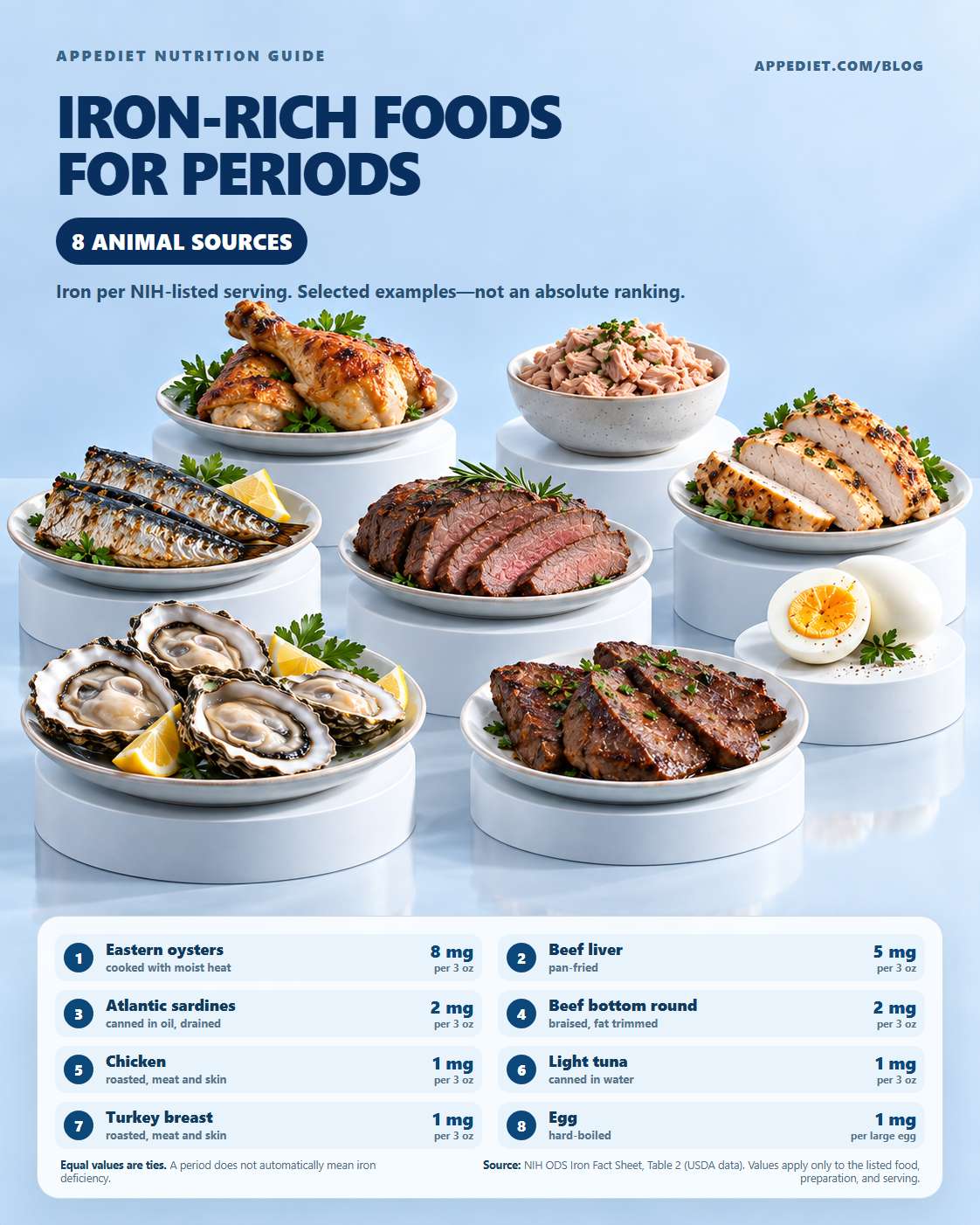
Oysters and liver contain more iron per listed serving than the other animal foods in this selected table. That does not mean they should be eaten daily or suit everyone. Availability, seafood allergy, sodium, food safety, personal preference, and individual medical needs can change the appropriate choice.
Beef, sardines, poultry, tuna, and eggs contribute smaller amounts per listed serving, but they can still add to total intake across a varied eating pattern. Amount is only one part of the meal.
8 plant-based and fortified iron sources
Plant foods and iron-fortified products provide nonheme iron. The cereal entry below is a specific fortified example, not a value that applies to every cereal.
| Order in this selected group | Food and preparation | Listed serving | Iron |
|---|---|---|---|
| 1 | Breakfast cereal fortified with 100% of the Daily Value for iron | 1 serving | 18 mg |
| 2 | White beans, canned | 1 cup | 8 mg |
| 3 | Lentils, boiled and drained | ½ cup | 3 mg |
| 4 | Spinach, boiled and drained | ½ cup | 3 mg |
| 5 | Firm tofu | ½ cup | 3 mg |
| 6 | Kidney beans, canned | ½ cup | 2 mg |
| 7 | Chickpeas, boiled and drained | ½ cup | 2 mg |
| 8 | Cashews, oil-roasted | 1 oz (about 18 nuts) | 2 mg |
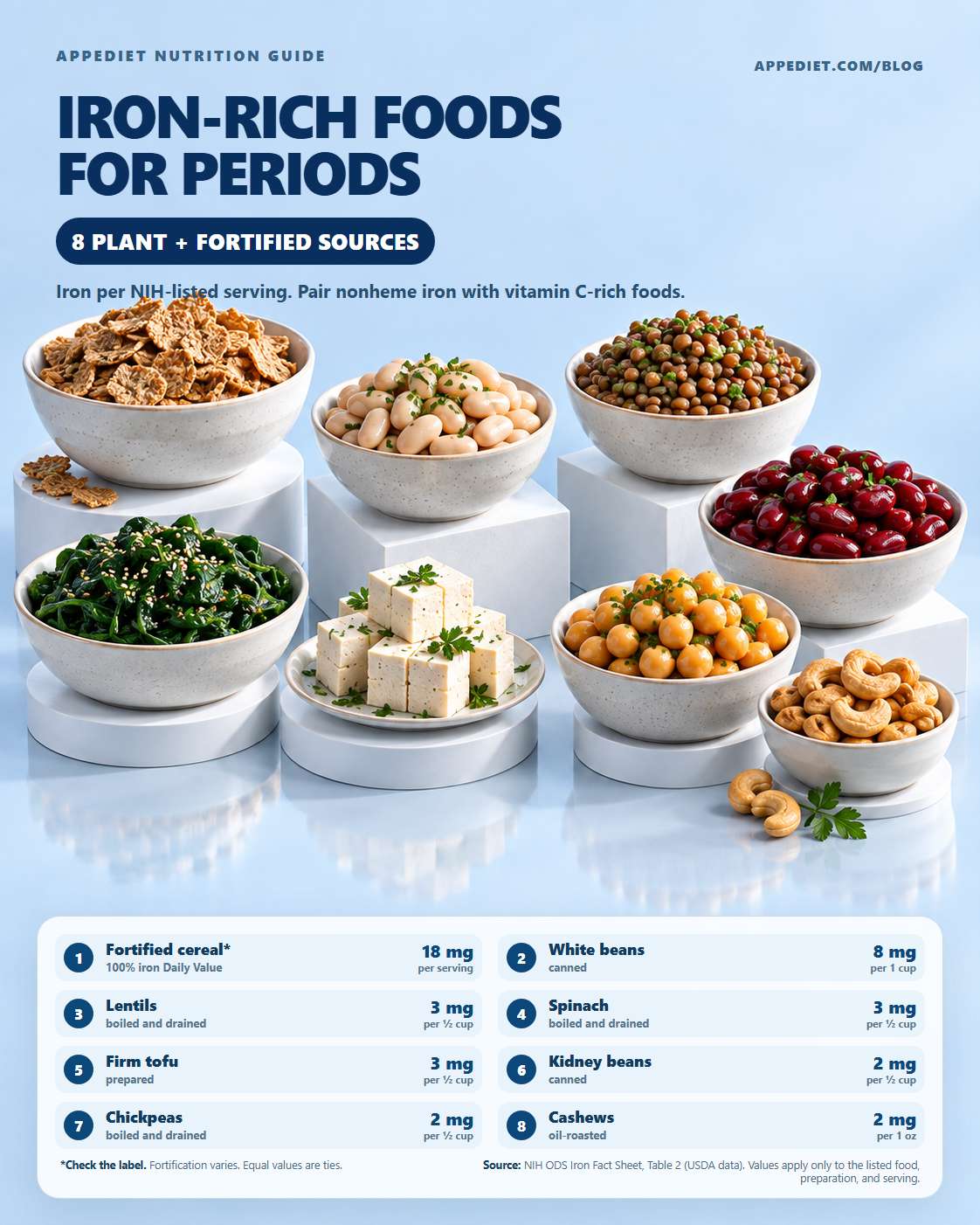
Beans, lentils, tofu, chickpeas, spinach, and cashews can contribute iron together with fiber, protein, carbohydrate, and other nutrients. Spinach is also a useful example of why milligrams alone do not tell the whole story: it contains iron, but it also contains compounds that can reduce bioavailability. That does not make spinach a poor food; it supports variety and thoughtful pairing.
The FDA Daily Value for iron is 18 mg for label comparison. NIH lists different recommended amounts by age, sex, and life stage, including 18 mg per day for women ages 19-50, 8 mg for men ages 19-50, 8 mg for adults 51 and older, and 27 mg during pregnancy. These are daily reference amounts, not extra iron to add only on period days.
How to read the serving sizes and iron values
The two tables above separate animal foods from plant-based or fortified foods. Within each table, items are ordered by the iron amount in the exact serving shown in the NIH Office of Dietary Supplements table. Use them as practical examples rather than an absolute top-16 ranking.
The serving sizes are not equal: one entry may use half a cup, another one cup, and another three ounces. Preparation and product also matter. Canned beans vary by brand, fortified cereals vary substantially, and one cut of meat cannot stand in for every other cut. Equal rounded values are ties.
Iron per serving is only one decision factor. Protein, fiber, sodium, saturated fat, cost, food access, cultural fit, environmental impact, allergies, and suitability for your diet may change which food works for you. Use the package label or USDA FoodData Central when a specific product matters.
Serving size can change the order
The 18 mg cereal entry applies specifically to a cereal fortified with 100% of the Daily Value for iron; it does not describe every breakfast cereal. The same need for specificity applies to tofu, canned beans, meat cuts, and cooked or drained foods. Brand, preparation, and the portion actually eaten can change the number.
The NIH table rounds these examples to whole milligrams, so foods with the same displayed value should be treated as ties. For a product-specific comparison, use its current Nutrition Facts label. For an unbranded food, match the food description and preparation as closely as possible in USDA FoodData Central.
Periods, iron loss, and iron deficiency are not the same thing
Iron helps the body make hemoglobin, the protein in red blood cells that carries oxygen. Menstrual bleeding removes iron along with the lost blood, so the risk of low iron rises when bleeding is heavy or prolonged and those losses are not fully replaced over time. Usual iron intake, absorption, pregnancy, and other health conditions also affect iron status.
The CDC lists warning signs of heavy menstrual bleeding such as bleeding for more than seven days, needing a new pad or tampon in less than two hours, soaking through products hourly for several hours, passing large clots, or feeling tired or short of breath. ACOG also notes that heavy bleeding can have several causes and may lead to iron-deficiency anemia.
If bleeding is heavy or prolonged, or weakness, fatigue, breathlessness, dizziness, or reduced exercise tolerance persists, discuss the pattern with a qualified health professional. Assessment may include blood tests and evaluation of the bleeding itself.
What testing can add when a food list cannot
Fatigue, weakness, difficulty concentrating, and reduced exercise tolerance can occur with iron-deficiency anemia, but these symptoms are not specific to iron. Iron stores can also decline before hemoglobin falls into the range used to identify anemia. A symptom checklist, food log, or menstrual period alone cannot confirm iron deficiency.
When bleeding is heavy or symptoms persist, a clinician may consider more than one measure, often including a complete blood count and ferritin together with medical history. Ferritin reflects iron stores but can be influenced by inflammation, so results need clinical context. The goal is to understand both whether iron is low and why.
Who may need a more individualized iron plan?
Iron needs and the risk of low iron are shaped by more than menstruation. NIH identifies heavy menstrual bleeding, pregnancy, frequent blood donation, and some gastrointestinal disorders or surgeries as situations in which iron status may deserve closer attention. Age, usual intake, medicines, and the ability to absorb iron can also matter.
People who follow vegetarian diets have higher reference requirements for dietary iron because nonheme iron is less bioavailable on average. That planning difference does not mean a plant-based diet causes deficiency, and it does not make supplements automatic. A clinician or registered dietitian can consider food intake, blood loss, absorption, laboratory results, pregnancy, and medicines together.
Heme iron, nonheme iron, and vitamin C
Heme iron is found in animal foods. Meat, seafood, and poultry also contain some nonheme iron. Plant foods and iron-fortified products contain nonheme iron. The body generally absorbs heme iron more readily, while nonheme absorption varies more with the rest of the meal.
Vitamin C is a practical partner for plant iron. Try lentils with sweet peppers, tofu with broccoli, white beans with tomatoes, fortified cereal with strawberries, chickpeas with lemon juice, or spinach with citrus. NIH also notes that meat, poultry, and seafood can improve absorption of nonheme iron eaten in the same meal.
This difference in absorption does not establish a universal preference for one food group. Preferences, culture, budget, allergies, availability, medical needs, and the overall dietary pattern all matter. NIH notes that people following vegetarian diets need more dietary iron because nonheme iron is less bioavailable; that does not mean plant iron is ineffective.
Do iron absorption "blockers" require strict food rules?
Phytate, some polyphenols, and calcium can affect iron absorption under certain conditions, but that does not mean beans, grains, dairy foods, or other nutritious foods need to be removed from a balanced diet. NIH notes that the effects of enhancers and inhibitors are reduced within a typical mixed diet and have little effect on iron status for most people.
A practical approach is to add a vitamin C-rich food to meals containing plant iron rather than build a long list of foods to avoid. If testing confirms low iron or a clinician prescribes a supplement, ask about timing around medicines, calcium supplements, and other products instead of changing them independently.
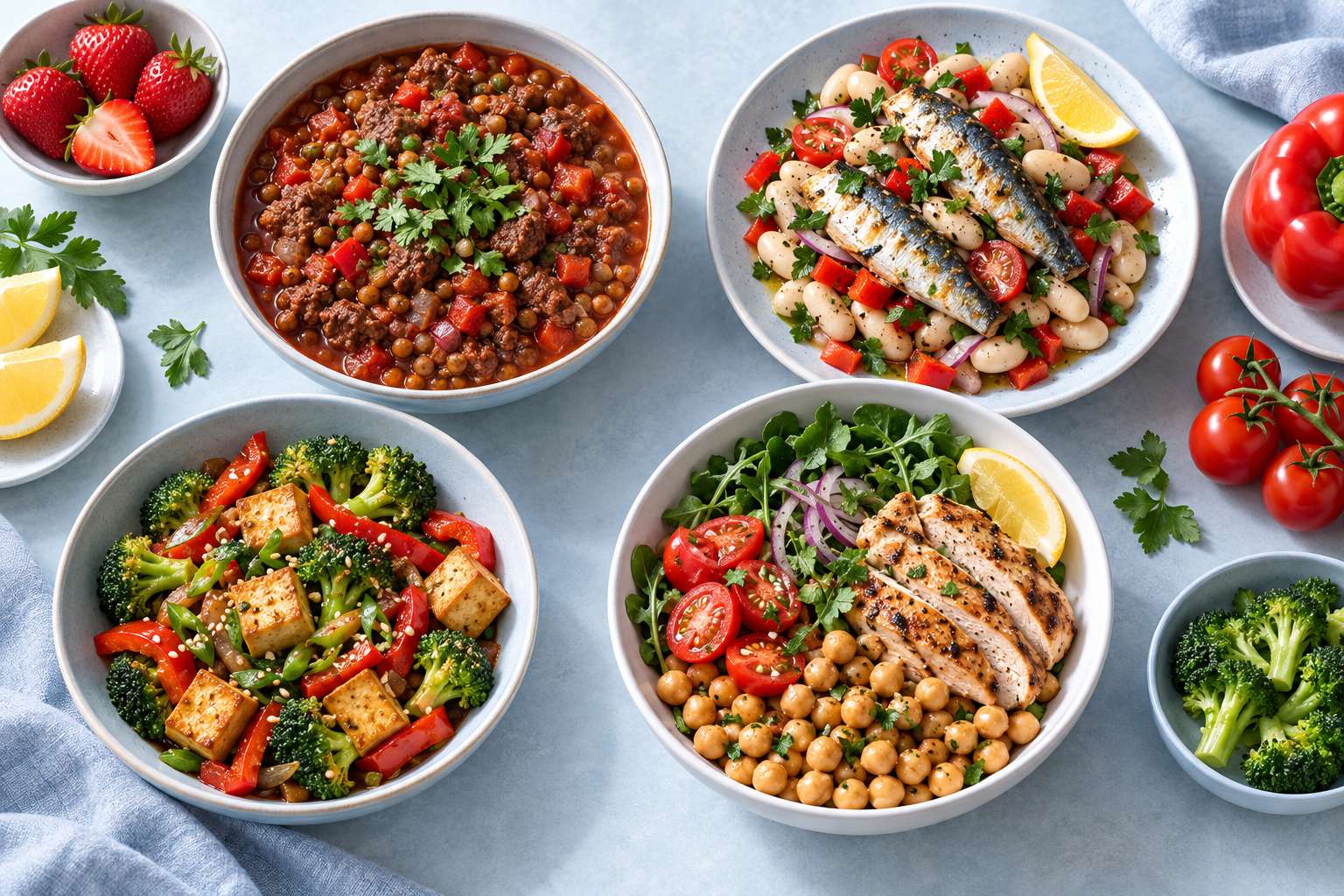
4 meals that combine animal and plant iron sources
These are flexible meal concepts, not prescribed menus. Adjust portions and ingredients for appetite, allergies, health needs, budget, culture, and preference.
1. Beef, lentil, and sweet pepper bowl
Combine sliced beef with cooked lentils, roasted red or yellow peppers, tomatoes, and a grain of your choice. Beef and lentils contribute iron, while peppers and tomatoes add vitamin C. A modest portion of meat can sit alongside a larger serving of legumes and vegetables.
2. Sardine and white bean tomato salad
Mix drained sardines with white beans, chopped tomatoes, parsley, cucumber, and lemon juice. Serve it over greens or with whole-grain bread. Sardines and beans provide iron from different sources; tomato and lemon add vitamin C and brightness.
3. Turkey, chickpea, and broccoli skillet
Cook turkey with chickpeas, broccoli, onions, and a tomato-based sauce. Season it for the cuisine you enjoy and serve it as a bowl, wrap filling, or pasta topping. Turkey provides animal-source iron, chickpeas provide nonheme iron, and broccoli and tomato support the vitamin C pairing.
4. Egg, spinach, and baked potato plate
Top a baked potato with cooked spinach, sliced hard-boiled egg, and tomato salsa. Add a squeeze of lemon or a side of fruit if desired. This accessible combination shows that an iron-supportive meal does not require a large portion of meat.
What to track before talking with a clinician
If bleeding seems heavier than usual, record the start and end dates, the number of heavy-flow days, how often period products need to be changed, nighttime changes, large clots, and whether bleeding limits ordinary activities. Also note persistent tiredness, weakness, shortness of breath, medicines, supplements, and recent blood donation.
This record cannot diagnose heavy menstrual bleeding or iron deficiency, but it can make a medical conversation more specific. CDC and ACOG both recommend describing the duration and pattern of bleeding; evaluation may also consider possible causes of the bleeding rather than treating it only as a nutrition issue.
Should you take an iron supplement during your period?
A monthly period by itself is not a reason to start an iron supplement or choose a dose on your own. Supplements may be appropriate when a clinician identifies iron deficiency, iron-deficiency anemia, pregnancy-related need, or another clear reason. Dose and duration depend on laboratory findings, symptoms, health history, medicines, and the cause of low iron.
Too much supplemental iron can cause nausea, constipation, abdominal pain, vomiting, diarrhea, and more serious harm at very high doses. Iron can interact with some medicines and other supplements. Products containing iron must be kept out of the reach of children because accidental overdose can be dangerous.
If periods are heavy or prolonged, the goal is not only to replace iron. The cause of the bleeding may also need evaluation and treatment.
FAQ
What are practical iron-rich foods to eat during a period?
No single food fits everyone. Oysters, beef, sardines, beans, lentils, tofu, spinach, chickpeas, eggs, and appropriately fortified cereals can all contribute iron. Choose foods that fit your diet and pair plant iron with vitamin C.
Does having a period mean I am iron deficient?
No. Menstruation involves iron loss, but deficiency depends on the amount and duration of bleeding, dietary intake, iron stores, pregnancy, health conditions, and other factors. Heavy periods raise risk and deserve medical assessment.
Can plant foods provide iron?
Yes. Beans, lentils, tofu, fortified foods, nuts, seeds, vegetables, and grains can make a meaningful contribution. Because nonheme iron is absorbed less efficiently, varied sources and vitamin C pairings are useful.
Is spinach the best plant source of iron?
Spinach contains about 3 mg in the half-cup cooked serving listed by NIH, but it is not automatically the best. White beans and some fortified cereals provide more per listed serving, while portion and bioavailability make simple rankings incomplete.
Should I take an iron supplement every month?
Not automatically. If you suspect deficiency or have heavy bleeding, ask a health professional whether testing is appropriate. Use an iron supplement and dose only when it fits your assessed needs.
Can feeling tired during my period prove that I am low in iron?
No. Fatigue can occur with iron-deficiency anemia, but it has many possible causes. Heavy bleeding or persistent symptoms are reasons to discuss whether testing is appropriate, not reasons to diagnose yourself from symptoms.
Does the 18 mg cereal value apply to every breakfast cereal?
No. It refers to the NIH example of a cereal fortified with 100% of the iron Daily Value. Fortification and serving sizes vary, so check the current label for the product you eat.
Do I have to eat liver to get enough iron?
No. Liver is one example in the NIH table, not a required food. Seafood, meat, poultry, eggs, beans, lentils, tofu, greens, nuts, and appropriately fortified foods can all contribute in different amounts.
The takeaway
Iron-rich foods for periods can come from animal foods, plant foods, fortified foods, or a combination. Instead of chasing one ranked answer, build varied meals, pair plant iron with vitamin C, and compare values using the portion you actually eat.
Most importantly, do not treat persistent heavy bleeding as a nutrition problem alone. Food can support iron intake, but abnormal bleeding and suspected iron deficiency need appropriate evaluation.
Log the meal you actually eat
Use Appediet to record foods and portions, review the entry, and keep repeat meals easier to find. For iron values, verify the exact product label or an authoritative food database.
Download Appediet