
 Appediet
Black Sesame: Nutrition, Portions and Uses
Black sesame can appear as whole seeds, paste, a sweetened spread, or oil. Each form changes what you eat and how you log it, so start with the product and portion rather than the “superfood” label.
General nutrition information only. For sesame allergy or condition-specific advice, follow guidance from a qualified healthcare professional.
The short answer: black sesame is a flavorful, energy-dense seed that can contribute unsaturated fat, protein, fiber, and minerals. But the form and portion decide what actually reaches your plate.
A spoon of whole seeds, a spoon of plain paste, a spoon of sweetened black sesame spread, and a spoon of sesame oil may look related. Nutritionally, they are not interchangeable. The most useful way to understand black sesame is to start with the food in front of you, not with a dramatic claim attached to the ingredient.
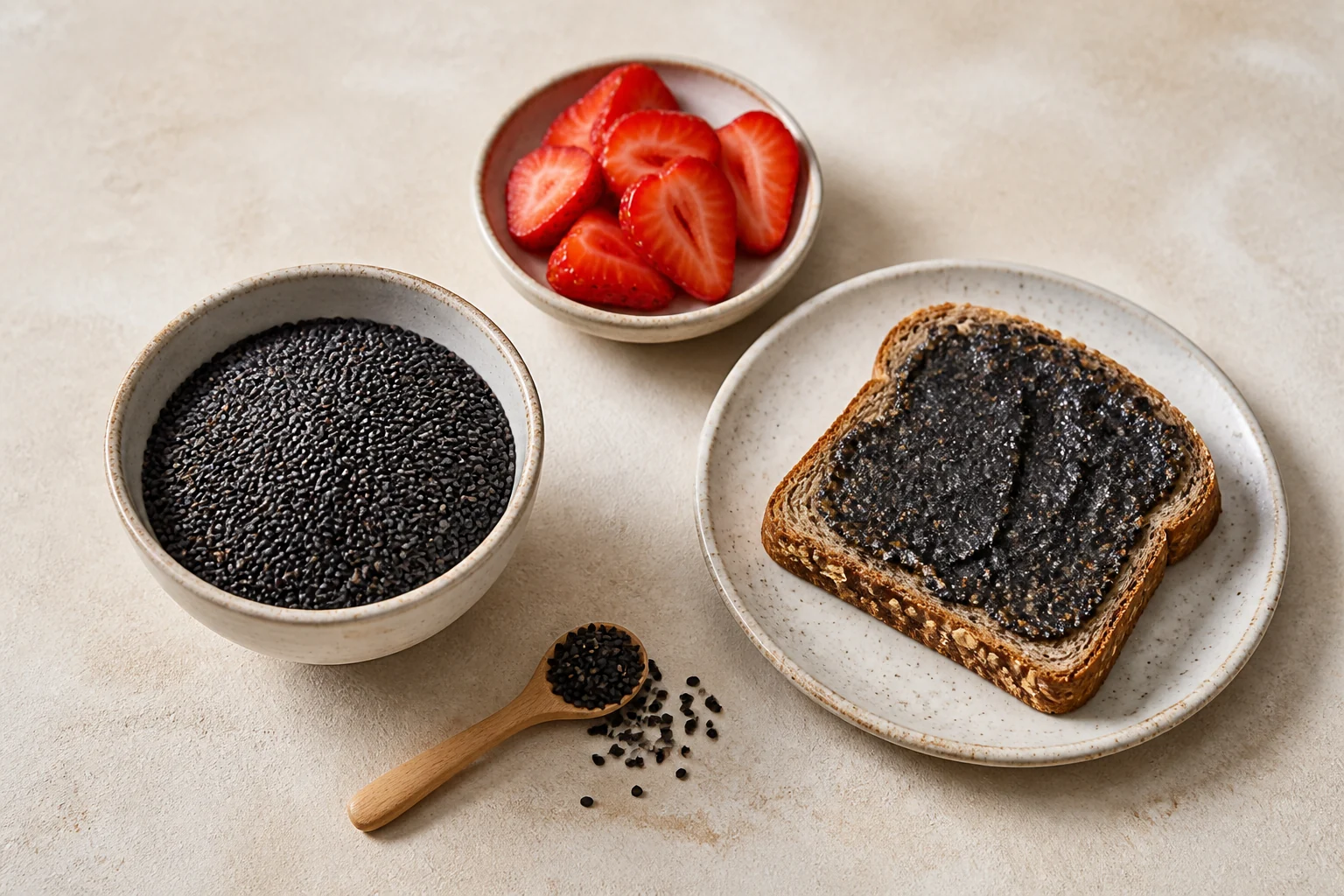
It is a marketing term, not a regulated nutrition category.
Seeds, paste, sweetened spread, and oil require different entries.
Measure your usual spoon once, then reuse that reference.
What “superfood” can—and cannot—tell you
Black sesame has moved from a familiar ingredient in many Asian cuisines to a highly visible flavor in lattes, pastries, ice cream, cookies, noodles, and packaged snacks. Google’s Summergeist report, which summarizes U.S. Google Trends data, says searches for “black sesame” reached a new high in 2026 and that black sesame ice cream and cookies were breakout searches during the report period. That is good evidence of interest. It is not evidence that black sesame prevents disease, changes body weight, or deserves unlimited portions.
“Superfood” has no single scientific or regulatory definition. In practice, the word usually signals that a food contains nutrients or plant compounds people find interesting. That can be a useful invitation to try an ingredient, but it does not turn one food into a complete eating pattern. Black sesame can contribute useful nutrients; vegetables, fruit, grains, legumes, dairy or fortified alternatives, and other protein foods still do jobs that sesame does not.
The seed’s energy comes largely from fat, much of it unsaturated. It also provides protein and fiber, along with minerals whose amounts depend on variety, seed coat, processing, and the data source. This combination is why black sesame tastes rich and why a small amount can be satisfying in a dish. It is also why a 100-gram database value can mislead someone who only sprinkled a teaspoon over lunch.
A nutrient-dense ingredient can still be portioned. A dessert made with black sesame is still a dessert if it also contains substantial sugar, cream, butter, or pastry. The sesame does not erase the rest of the recipe, and the rest of the recipe does not make sesame “bad.”
Color alone is not a reliable shortcut for ranking sesame products. Black and white seeds may differ by cultivar, whether the hull is present, and how they are roasted or processed. A package label or a food-database entry that matches the actual product is more useful than a broad claim that one color is always the more nutritious choice.
Seeds, paste, spread, and oil are different foods
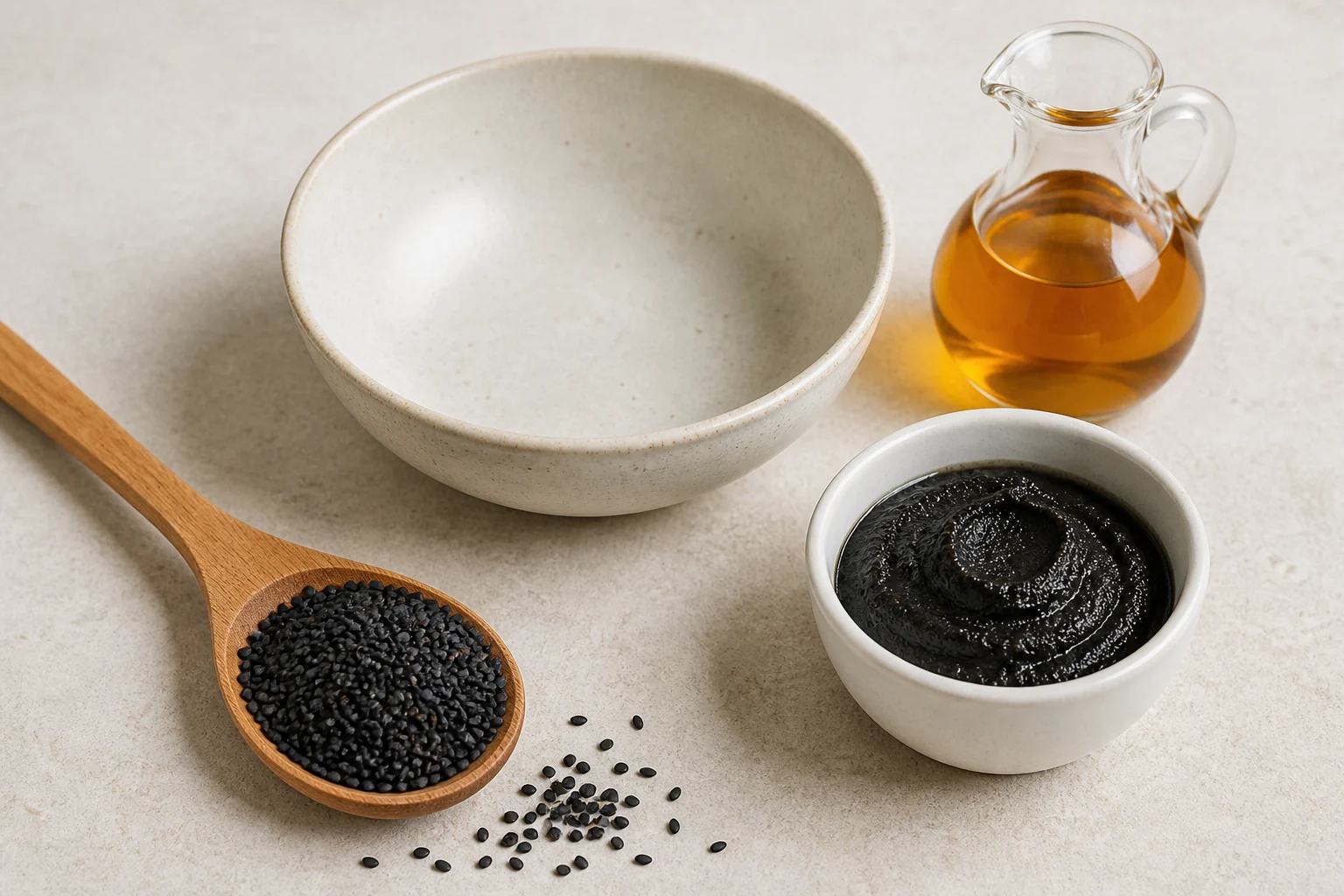
Before you buy, cook with, or log black sesame, identify the form. Processing changes texture and concentration; recipes can add sugar, salt, oil, or dairy; and sesame oil separates the fat from most of the seed’s protein and fiber. Whole seeds, plain paste, sweetened spread, and oil therefore need to be assessed as different foods.
| What you have | What to check | Common logging mistake |
|---|---|---|
| Whole or ground seeds | Roasted or raw, hulled or unhulled, salted or plain; serving weight | Choosing a 100-gram value for a light garnish |
| Plain black sesame paste | Whether sesame is the only ingredient; serving size; separation of natural oil | Assuming every paste has the same density as dry seeds |
| Sweetened black sesame spread or filling | Added sugar, syrup, oil, milk ingredients, and the serving listed on the jar | Logging it as unsweetened tahini or plain seeds |
| Sesame oil | Volume used and whether it was added during cooking or finishing | Giving the oil the protein and fiber of whole seeds |
| Restaurant dessert or latte | Full recipe, portion size, sweetener, dairy, toppings, and pastry or ice-cream base | Logging only “black sesame” and missing most of the dish |
Whole and ground seeds
Whole seeds work well as a garnish because their flavor is concentrated and their texture stays visible. Ground seeds disperse through oatmeal, dough, sauces, and drinks, so the amount can be harder to see. Grinding does not remove the need for a portion; it simply makes the ingredient easier to spread through a recipe. If you grind your own, weigh or measure the amount before grinding and record the batch yield.
Plain paste versus sweetened spread
Plain black sesame paste may contain only ground sesame, or it may include extra oil or salt. A dessert spread can include sugar, syrup, oil, milk powder, or stabilizers. The front of both jars may feature the same large words—“black sesame”—while their Nutrition Facts panels tell different stories. For packaged products, the brand label should take priority over a generic seed entry.
Sesame oil
Sesame oil is useful for aroma and cooking, but it is not nutritionally equivalent to eating the whole seed. Oil contributes fat and energy without the same fiber and protein. Because it is easy to pour directly from a bottle, a practical habit is to measure the amount used in the pan or dressing once. If the oil is divided across four portions, divide the logged amount across those four portions too.
From a tablespoon to a complete meal
USDA’s legacy entry for whole dried sesame seeds lists 573 calories, 17.7 grams of protein, 49.7 grams of fat, and 11.8 grams of fiber per 100 grams. The same source gives 9 grams as a tablespoon measure. Multiplying the 100-gram values by 0.09 produces an illustrative tablespoon: about 52 calories, 1.6 grams of protein, 4.5 grams of fat, and 1.1 grams of fiber.
Use that calculation as a scale check, not as a universal value. Your spoon might hold more than 9 grams, and paste can pack into it differently. Roasting, hulling, added ingredients, and brand formulation can also change the label. Most importantly, a 9-gram tablespoon is only nine percent of a 100-gram reference.
| Example use | What to record | What the record helps you remember |
|---|---|---|
| Oatmeal with a spoon of ground seeds | Oats, milk or water, fruit, and measured sesame | The seeds are one component, not the whole breakfast |
| Toast with black sesame spread | Bread, the branded spread, and actual spoon or gram amount | Sweetened spread is not the same as plain paste |
| Black sesame dressing for four bowls | Paste, water, citrus, soy sauce, oil, sweetener, and batch yield | The recipe must be divided by servings |
| Black sesame ice cream | The exact product label or the shop’s published information when available | Most of the serving is an ice-cream recipe, not seeds alone |
Portion awareness does not require weighing every meal forever. One useful compromise is to measure your regular spoon, jar scoop, or homemade recipe once. That creates a personal reference you can reuse. If your usual “tablespoon” of paste weighs 16 grams, saving 16 grams is more honest than repeatedly selecting a generic 9-gram seed serving.
For baking and desserts, work from the whole batch. Log the flour, sugar, fat, eggs or alternatives, sesame, and other ingredients; then divide by the number of pieces you actually made. If twelve cookies became ten large cookies, dividing the recipe by twelve would understate each serving. The same logic applies to a loaf, pudding, energy bites, or a homemade black sesame filling.
For restaurant food, precision may not be available. You can still make the record useful by naming the dish accurately, noting its size, and distinguishing a light seed garnish from a paste-heavy sauce or dessert. A reasonable range is more honest than an exact number created from a photograph alone.
Buy and use black sesame with the whole recipe in mind
Start at the back of the package. The ingredient list tells you whether sesame is the only ingredient or part of a blend. The Nutrition Facts panel tells you the serving size used for the numbers. “Natural,” “traditional,” “roasted,” and “premium” may describe a product, but they do not replace the serving information.
For a plain seed product, compare the listed serving with how you use it. For a spread, check total and added sugars, fat, protein, and sodium on the same serving basis. For oil, pay attention to the tablespoon or teaspoon listed. If you are comparing two products, convert them to the same weight or volume before deciding that one is meaningfully different.
Everyday uses that keep the ingredient visible
- Breakfast: stir a measured spoon of ground sesame into oatmeal or yogurt, then add fruit for contrast. If you use a sweetened paste, log the product rather than treating it as plain seeds.
- Savory bowl: sprinkle seeds over rice, tofu, eggs, fish, or vegetables. The meal’s protein, vegetables, grain, sauce, and cooking oil still need their own places in the record.
- Dressing: thin plain paste with water and an acidic ingredient, then season it. Record any extra oil or sweetener instead of assuming it is already represented by the paste.
- Baking: add sesame to a recipe for flavor and color, but calculate the finished batch. The presence of a nutrient-dense seed does not make sugar or butter disappear.
- Drinks and desserts: ask whether the shop uses ground seeds, a sweetened paste, a premixed powder, or syrup. That answer changes the estimate more than the black color does.
Store the product according to its label. Seeds and pastes contain oils that can develop off flavors over time, especially after opening or when exposed to heat and light. A cool, dry cupboard may suit a sealed seed product, while some pastes may instruct refrigeration after opening. The manufacturer’s directions are the safest specific guide.
Sesame allergy is not a small-print issue
In the United States, the FDA identifies sesame as the ninth major food allergen. Packaged foods containing sesame must declare it under federal labeling requirements, but people with an allergy should still read the ingredient list every time because formulations can change. Sesame may appear as seeds, tahini, paste, flour, oil, seasoning, or an ingredient inside a sauce.
Black sesame is not a different allergen from white sesame. At a restaurant or bakery, ask what form is used and whether there is cross-contact from shared utensils or equipment. A camera, calorie estimate, or ingredient-recognition feature cannot certify that a meal is allergen-free. Anyone managing a diagnosed allergy should follow their clinician’s plan rather than relying on a food log.
A realistic way to track black sesame
A useful food log is not the one with the most impressive number. It is the one that preserves what you actually know and makes uncertainty visible. Black sesame is a good example because it can be obvious as seeds, invisible inside a paste, or only one part of a sweet product.
- Name the form before searching. Write “black sesame seeds,” “plain black sesame paste,” “sweetened black sesame spread,” or “sesame oil.” This prevents the first visually similar result from becoming the default.
- Prefer the package label when you have it. Match the brand, serving weight, and ingredients. If the jar says two tablespoons per serving and you used one, adjust the quantity rather than changing to a generic entry.
- Measure your normal amount once. Weigh the spoon you naturally use or use a measuring spoon. Save that personal portion for repeat breakfasts, dressings, or snacks.
- Log the full recipe. A black sesame latte includes the milk and sweetener. A cookie includes flour and fat. A noodle sauce may include oil, soy sauce, and sugar. Recording only sesame makes the entry look precise while leaving out most of the food.
- Keep restaurant estimates editable. Note the size and whether the dish seemed lightly garnished, paste-based, or dessert-style. Update the entry if the restaurant later provides nutrition or ingredient information.
In Appediet, a meal photo can serve as a memory aid for the plate and visible garnish. It cannot reveal the grams of paste inside a bun, the sugar in a premix, or whether a sauce contains sesame. After the first estimate, add the ingredient explicitly, choose the matching form, and correct the quantity from a label or recipe when possible.
Consider a homemade dressing made with black sesame paste, water, citrus, soy sauce, and a small amount of sweetener. A photo of one bowl cannot know how much of the batch was used. A more useful workflow is to create the full dressing recipe, record the finished yield, and assign the amount poured over the meal. The next time, you can reuse the recipe and change only the portion.
The same approach works without an app. A note that says “one level jar spoon of sweetened spread” is more informative than pretending you know an exact value from appearance alone. Consistency and honest assumptions usually make a log easier to revisit.
Black sesame can be an enjoyable, nutrient-dense ingredient. Treat “superfood” as an invitation to learn, not a promise. Identify the form, use the product label when available, measure a realistic portion, and keep the rest of the meal in view.
Frequently asked questions
Is black sesame really a superfood?
“Superfood” is a marketing term, not a regulated nutrition category. Black sesame is a nutrient-dense seed, but its value still depends on the form, portion, and overall eating pattern.
How many calories are in a tablespoon of black sesame seeds?
Using a USDA legacy entry, a level 9-gram tablespoon of whole dried sesame works out to about 52 calories. Actual spoon weight and packaged products vary, so use the label when available.
Is black sesame paste the same as black tahini?
The names can overlap, but products differ. Check whether the seeds are hulled or roasted and whether sugar, oil, salt, or other ingredients were added.
Can someone with a sesame allergy eat black sesame?
No. Black sesame is sesame. Follow clinician guidance, read labels every time, and ask restaurants about ingredients and cross-contact.
Track the ingredient you actually used
Start with the meal, then correct the sesame form, portion, and recipe details you know.
Download Appediet