
 Appediet
Choosing a Tracker for Home Cooking? Try These Three Meal Tasks
Use a simple plate, a known mixed recipe and an uncertain shared dish to check whether a food-recording workflow fits your home cooking.
For home cooking, check whether a workflow lets you preserve ingredients, portions and uncertainty after the first input. A photo result is only a starting point when oil, recipe yield or serving share is not visible. Try specific meal tasks before deciding which tool fits.
Use tasks that resemble your own kitchen
Choose three situations rather than a list of brands: a meal with separate visible components, a mixed recipe with known ingredients, and a dish whose ingredients or portion share are uncertain. These cases reveal different information needs.
Keep the same task description when trying a workflow. Note what you supplied, what the resulting record preserved, and what you still had to explain. This is a personal evaluation checklist, not a published performance test or a ranking.
Do not judge only the first result. The important part is whether the saved record remains understandable after a correction, a different portion or a change to the recipe.
| What you have | What to match | What to check |
|---|---|---|
| Separate components | Rice, cooked beans and vegetables | Can each amount and preparation state be checked? |
| Known mixed recipe | A chickpea-and-vegetable stew with an ingredient list | Can the batch and personal serving remain distinct? |
| Uncertain dish | A shared meal with an incomplete recipe | Can uncertainty remain visible without invented detail? |
Use a known recipe to test the record structure
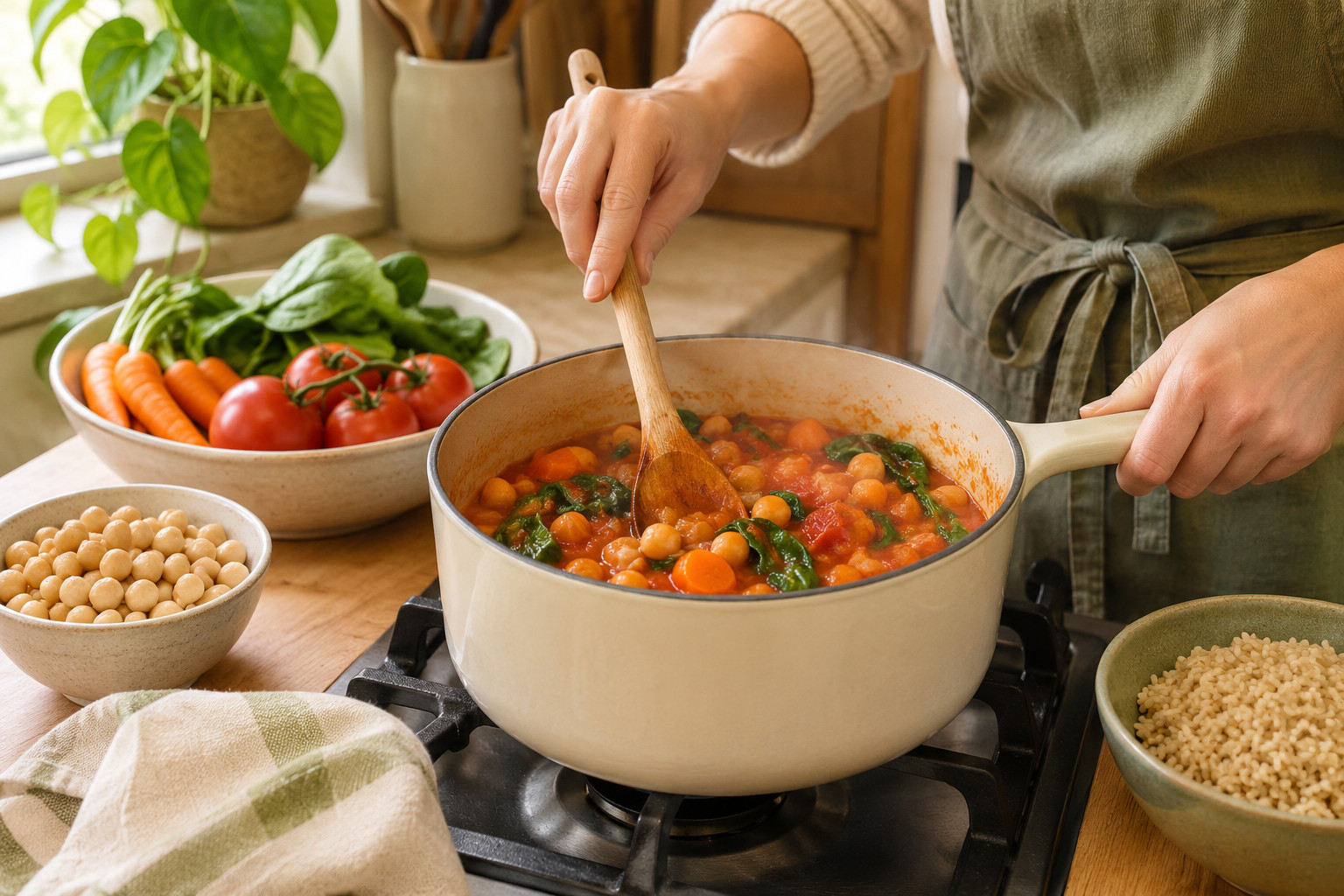
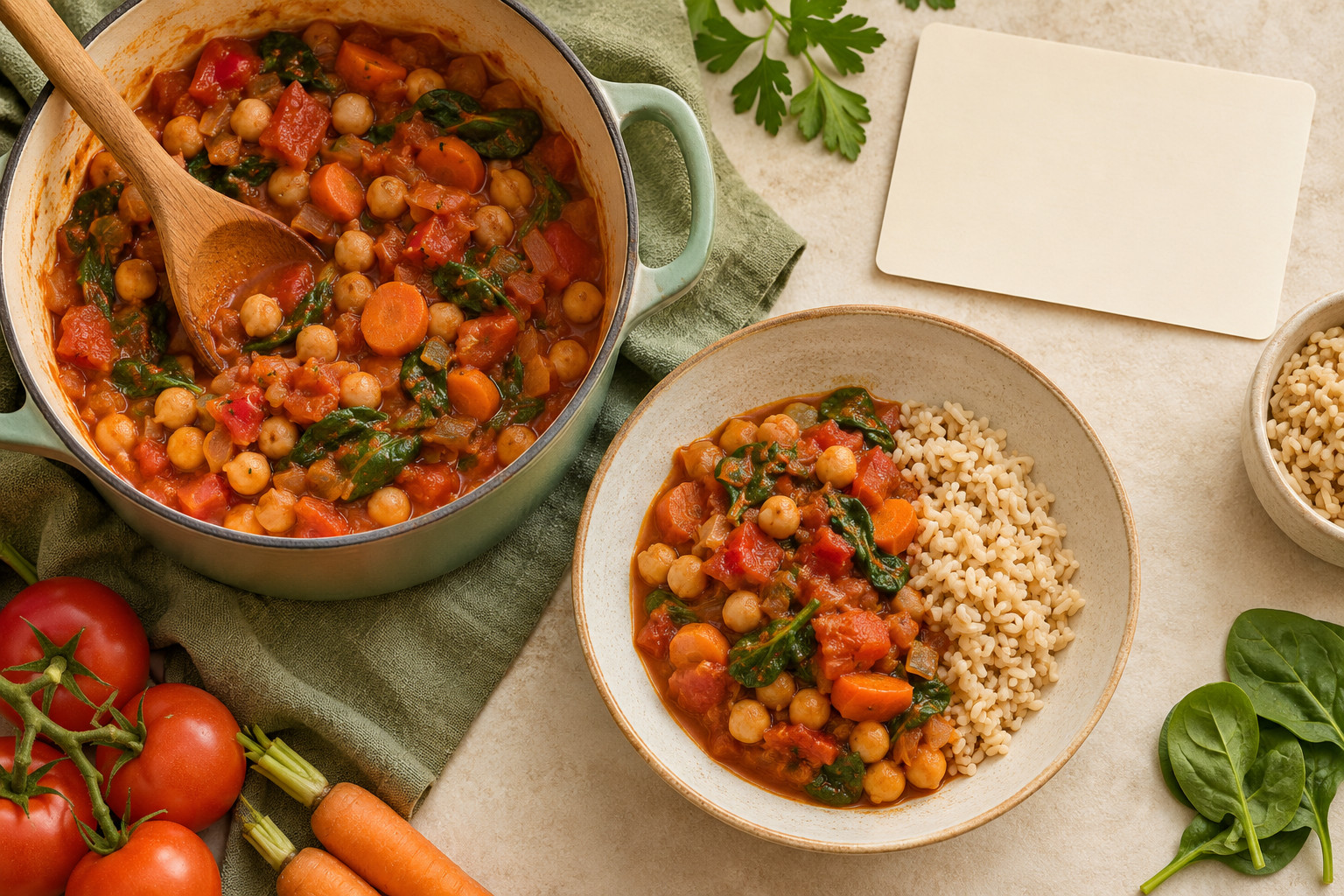
A stew of chickpeas, tomatoes, carrots and spinach provides a clear mixed-dish example. The ingredient list can be known even when the individual ingredients are no longer easy to separate in the finished bowl. Keep any oil, stock and seasoning with that list.
If you cook the dish yourself, keep the actual ingredient amounts and finished edible yield. Those details belong to that batch. The photograph here represents the cooking situation; it does not establish a tested recipe yield or nutrient total.
USDA FoodData Central documents different food data types and sources. When choosing ingredient records, inspect their descriptions and units. A close visual resemblance does not prove that two food records represent the same preparation.
Run the three checks without filling evidence gaps
For the separate-component meal, check whether you can identify the foods and match their units to the amounts you know. Review what happens when one component is wrong. Record the correction process without turning it into an unsupported speed claim.
For the known recipe, check whether the workflow can represent your ingredient list and the portion you eat. If the tool offers recipe or saved-entry functions, verify them in the current version instead of assuming that a feature name guarantees the whole process.
For the uncertain dish, check whether you can keep a note or another record of what remains unknown. A tool that returns a precise-looking number has not necessarily obtained the missing ingredient or portion information. Do not fill a test worksheet with made-up reference values.
Check reuse after a real change
Change one meaningful detail in your own trial: a different serving, an omitted ingredient or a new sauce. Check whether the saved record still describes the changed meal and whether the old batch remains understandable.
Separate a reusable description from a fixed portion. A stew name can stay the same while the ingredient amounts change. A saved entry that is convenient to find still needs the correct amount basis when it is reused.
Check the current terms and platform availability if a necessary function is part of a paid offer. Do not rely on a feature list or an old screenshot for the terms attached to your account. This checklist does not supply a price or entitlement matrix.
Choose from the evidence your tasks produced
Review each case against the question it was meant to answer. Could you inspect a mistaken component? Could you preserve the known recipe and your serving? Could you keep the uncertainty of a shared dish visible?
Keep the task notes alongside your decision. They document the needs of your kitchen and the observations from your own trial. If your existing method already preserves the information you need, that is relevant evidence too.
A food record cannot reconstruct an unknown recipe merely because the interface supports photo input. Choose the workflow you can verify with your own foods, and keep the limits of those foods separate from the tool’s feature claims.
Questions you may have
Does this checklist rank calorie-tracking apps?
No. It gives three meal tasks to try using your own information and current access, without assigning winners or a fixed recommendation order.
Do I need an exact reference value for every dish?
No. Where the recipe is incomplete, retain the uncertainty rather than inventing a reference total.
Can a saved recipe be reused without checking it?
Only when the ingredients and portion basis still match. A changed batch or serving needs another check.