
 Appediet
How AI Estimates Food Calories
Learn how AI estimates food calories from photos, why portion size is difficult, and how Appediet helps users confirm smarter nutrition logs.
June 18, 2026
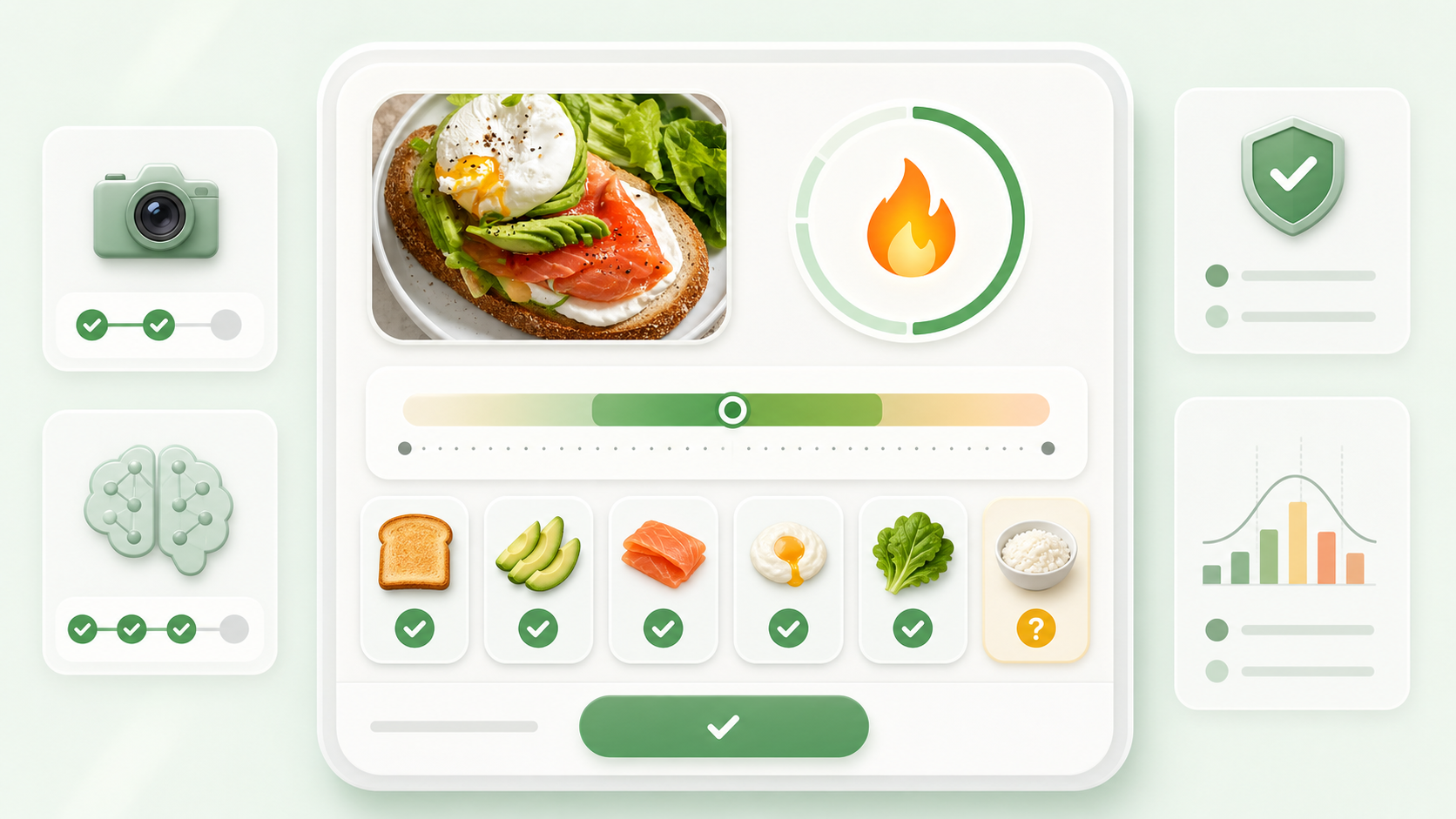
Appediet estimates calories by recognizing foods in a photo, separating each visible item, estimating portion size, matching the result to nutrition data, and letting the user correct anything uncertain.
The estimate is not magic and not a medical measurement. It is a practical first draft of a food log: Appediet handles the tedious recognition work, while the user confirms portions, sauces, and hidden ingredients.
Anyone curious about how AI calorie tracking works — dieters, fitness enthusiasts, health-conscious eaters, or developers building nutrition apps. No technical background needed.
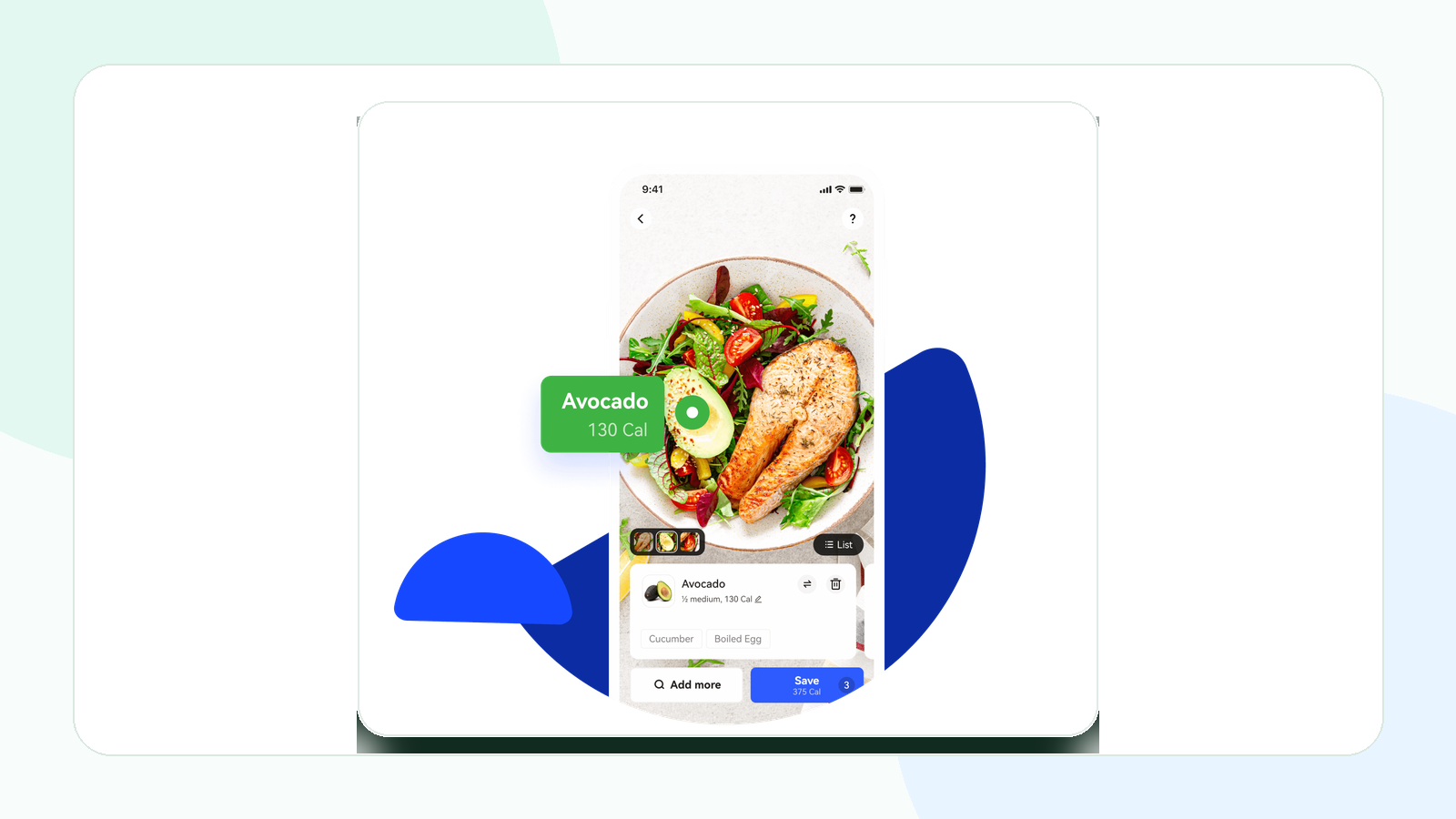
What an AI food scanner actually sees
A human sees "salmon bowl." Appediet's model sees color, texture, edges, shapes, depth clues, surrounding objects, and patterns learned from labeled examples. Modern AI scanners like Appediet usually combine several tasks:
Step by step: from photo to calories
The app checks image quality
Before nutrition math begins, the app evaluates blur, lighting, angle, occlusion, and whether the whole plate is visible.
Computer vision identifies foods
The model predicts candidate labels such as brown rice, grilled salmon, mixed greens, or sesame dressing.
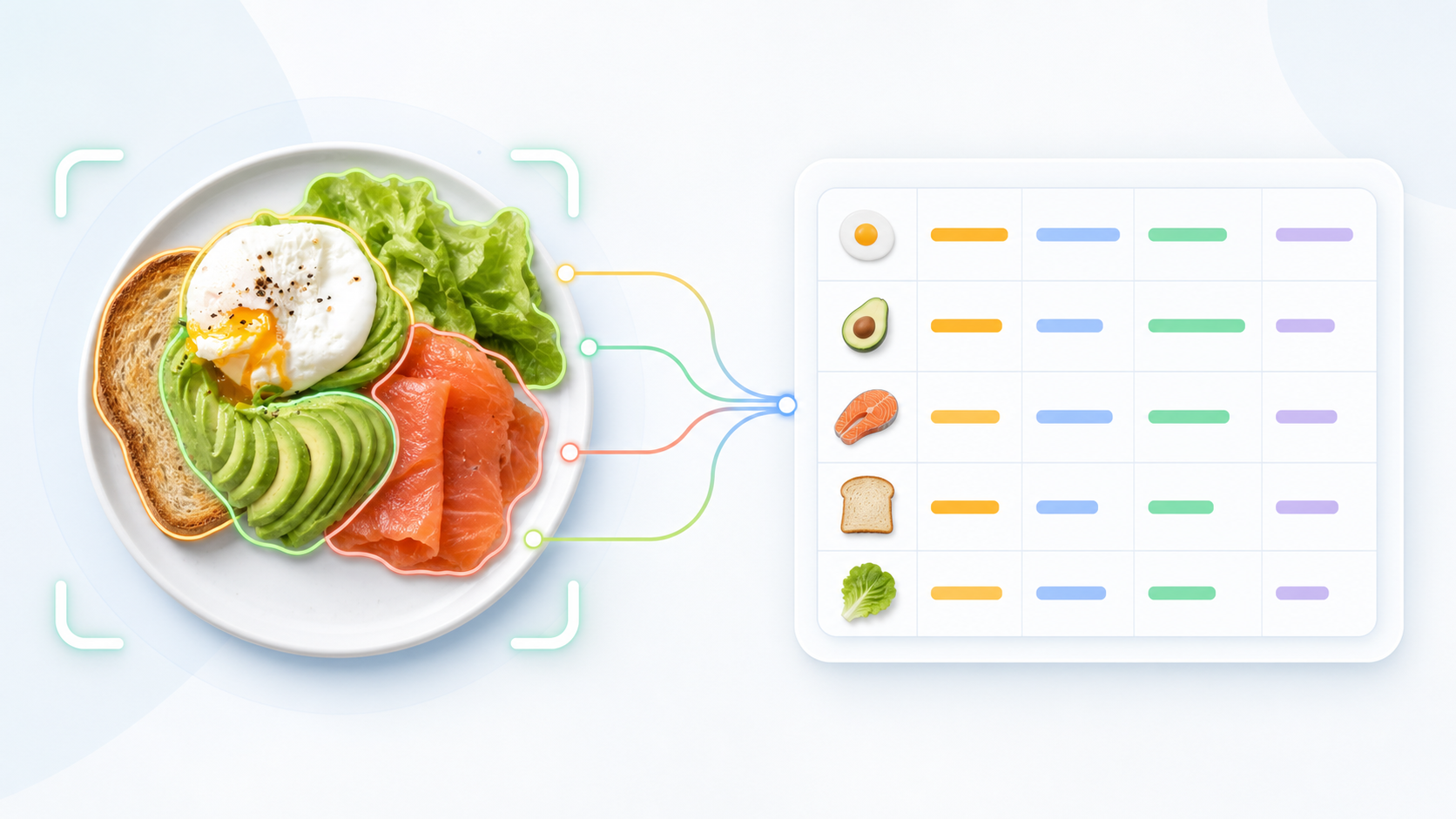
Segmentation separates the meal
The scanner outlines visible items instead of treating the whole plate as one generic dish.
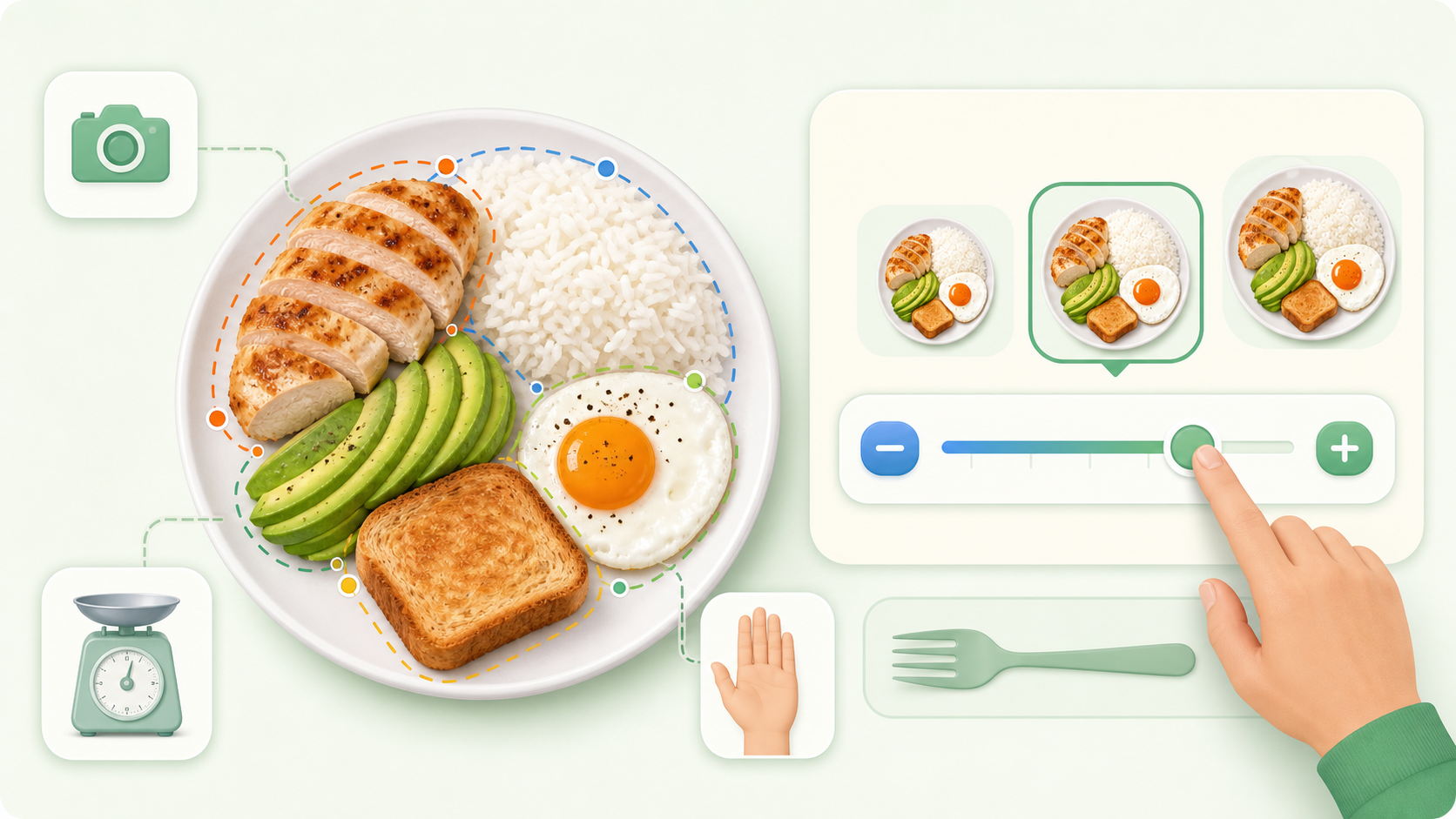
Portion size is estimated
The app uses plate size, camera metadata, depth clues, and learned serving patterns to approximate grams, cups, or pieces.
Nutrition data completes the estimate
Each item is matched to a database entry, then calories and macros are calculated and refined with user corrections.
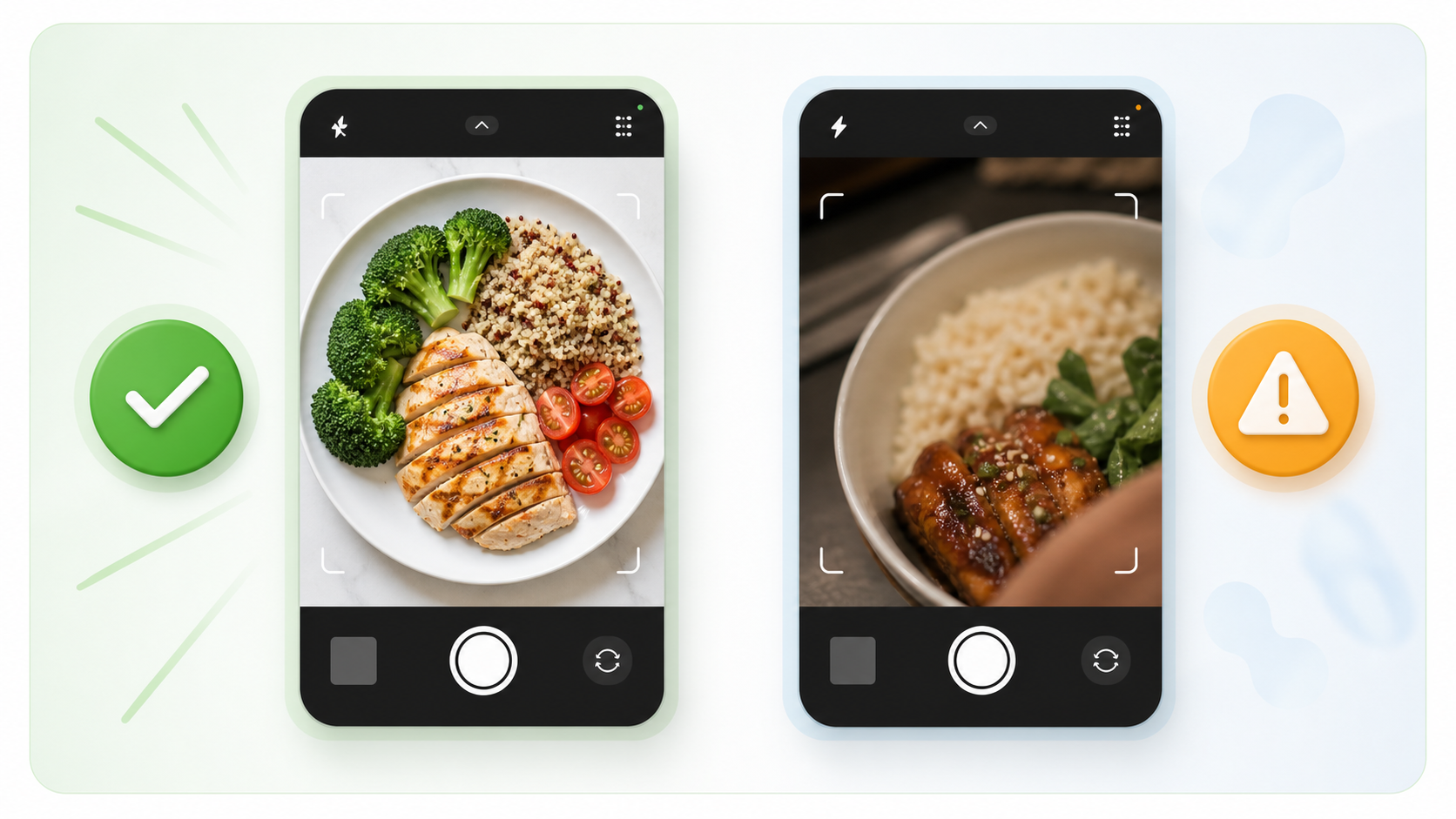
Why portion size is the hard part
Food recognition gets attention, but portion estimation is usually where the biggest calorie error appears. A model may correctly identify pasta, but the difference between one cup and two cups can be hundreds of calories.
The calorie math behind the estimate
Once the app has a food label and portion estimate, the calculation is straightforward: estimated amount multiplied by calorie density, summed across each item in the meal.
Where nutrition data comes from
AI scanners do not invent calorie values from the image. They connect predictions to structured sources such as public food databases, branded product databases, restaurant menus, barcode datasets, and user-created recipes.
How accurate are AI calorie scanners?
Accuracy depends on the meal and the user workflow. A separated home-cooked plate is easier than a sauced, layered, mixed, or restaurant-prepared dish.
How to get better estimates from food photos
What separates a good scanner from a gimmick
The best AI nutrition tools like Appediet are not just camera tricks. They combine automation with transparent controls: editable predictions, confidence indicators, multiple input modes, macro visibility, personal memory, and privacy controls.
How Appediet does it
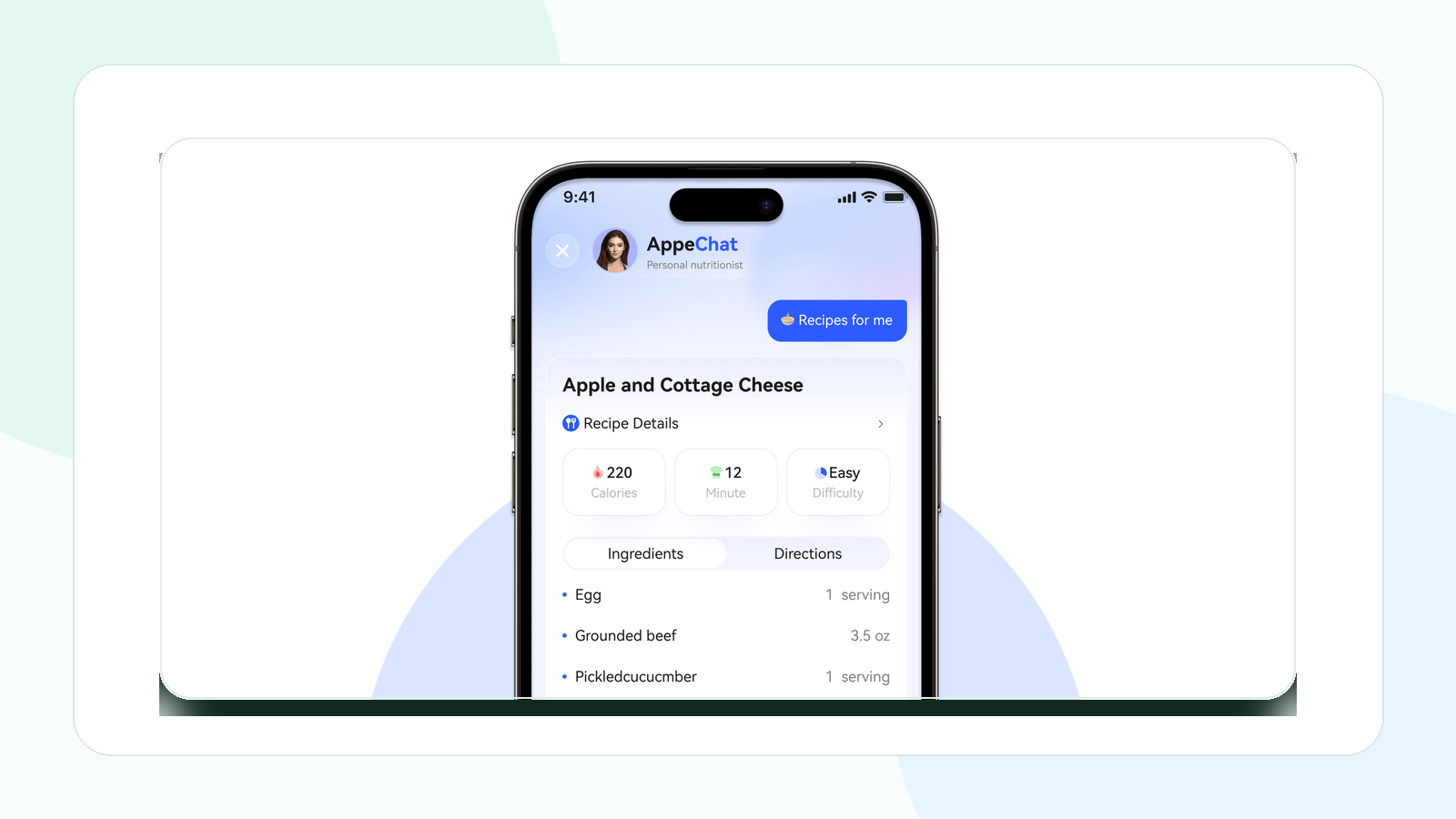
Appediet combines photo scanning, barcode lookup, and AI chat into one workflow:
The bottom line
Appediet estimates calories by combining image recognition, portion estimation, nutrition databases, and user feedback. It reduces friction and makes daily tracking easier, while still letting users confirm results when meals hide ingredients or lack scale.
FAQ: AI food scanners and calorie estimates
How does an AI food scanner estimate calories from a photo?
It recognizes visible foods, separates food regions, estimates portion size, maps each item to nutrition data, and lets the user correct labels or servings.
Are AI calorie estimates exact?
No. They are practical approximations affected by lighting, visibility, hidden ingredients, portion size, and nutrition database quality.
When is barcode scanning better?
Barcode scanning is usually better for packaged foods. Photo scanning is more useful for plates, bowls, restaurant meals, and mixed meals.
Track smarter with Appediet
Appediet helps turn meals into useful nutrition insights with fast logging, photo-based estimates, macro tracking, and simple corrections for real-life eating.
Start tracking smarterRelated pages
Further reading
- USDA FoodData Central for structured food composition data.
- FDA Food Labeling & Nutrition for U.S. food labeling and nutrition facts context.
- NIST Artificial Intelligence resources for broader AI measurement and trust concepts.