
 Appediet
Electrolyte Drinks vs Water in Hot Weather: What Do You Need?
Water is the default for most ordinary summer days. Electrolyte drinks have a narrower job: helping replace fluid and minerals during prolonged, strenuous, sweat-producing activity or when qualified guidance says they are appropriate.
Choose the drink for the situation, not the marketing. Heat, humidity, activity, duration, sweat rate, access to regular meals, medications, and health conditions all change whether plain water is enough.
This article covers general hydration for healthy adults. It does not replace emergency care or individualized advice for kidney, heart, endocrine, or other medical conditions. People with fluid or sodium restrictions should follow their clinician’s plan rather than a general electrolyte recommendation.
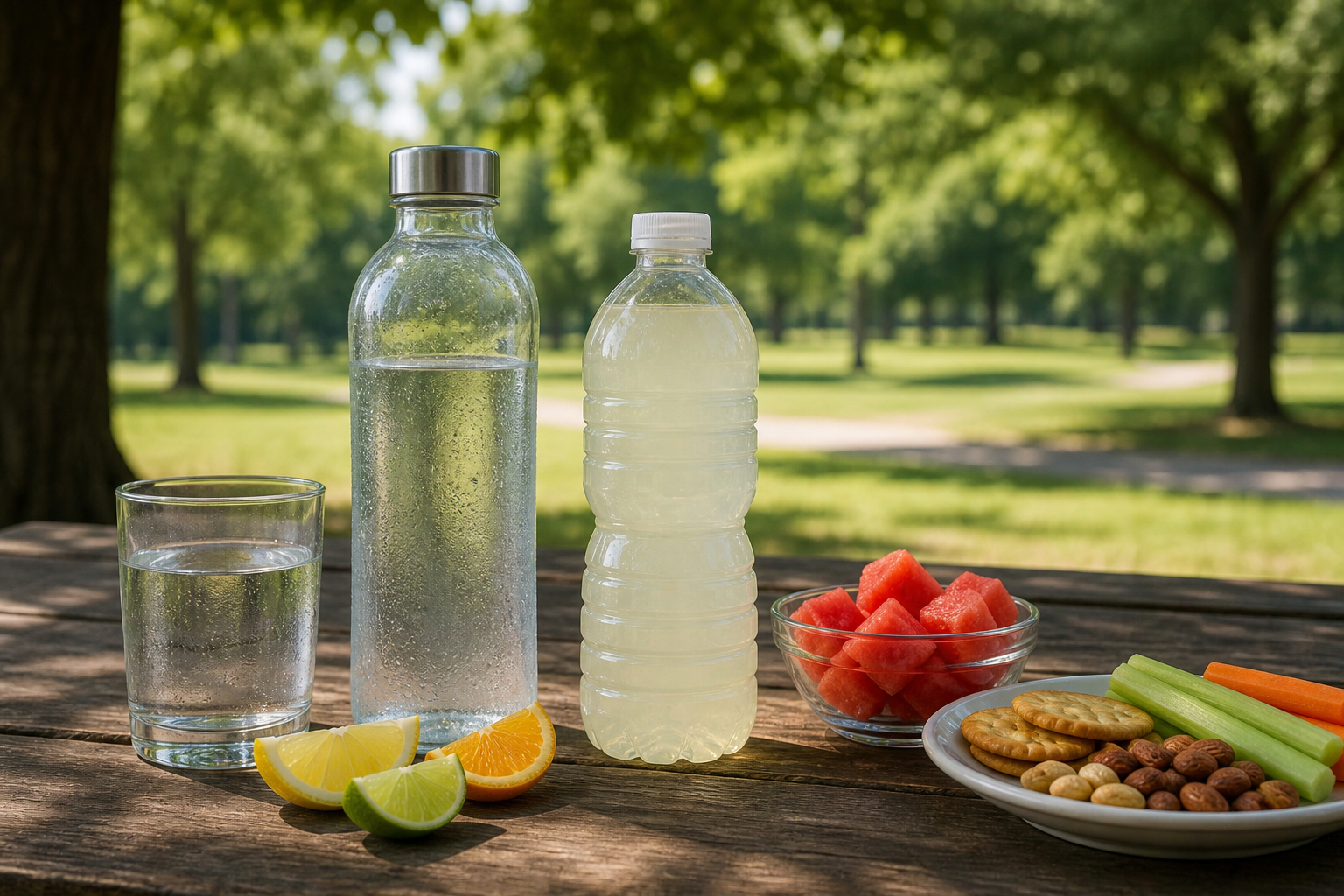
Water and regular meals are usually enough for ordinary activity, errands, commuting, and shorter time in the heat.
Electrolyte-containing fluids become more relevant during prolonged, strenuous work or exercise in hot conditions.
Stop activity and cool down when heat symptoms appear; confusion or fainting can be an emergency, not a beverage choice.
Water and electrolytes do different jobs
Water helps regulate body temperature, transport substances, lubricate tissues, and replace fluid lost through sweat. Electrolytes are charged minerals—including sodium, potassium, chloride, magnesium, and calcium—that participate in fluid balance, nerve signaling, and muscle function.
Sweat contains water and electrolytes, especially sodium and chloride. But losing some sweat does not automatically mean you need a special product. A person walking the dog for 25 minutes and eating regular meals has a different problem from a worker or athlete sweating heavily for several hours.
“Electrolyte” also does not describe one standard formula. Products vary widely in sodium, carbohydrate, sweeteners, serving size, and intended use. Some are essentially flavored water; others are designed for prolonged activity; oral rehydration solutions are medical formulations for specific circumstances and are not interchangeable with ordinary sports drinks.
Ask what you are replacing: ordinary daily fluid, hours of sweat, energy during endurance activity, or fluid lost through illness. The correct answer—and when to seek care—changes with the job.
When water is usually enough
For daily living, shorter workouts, light yard work, errands, and brief time outdoors, water plus normal meals is generally a sensible starting point. CDC guidance emphasizes drinking water on hot days, and occupational guidance notes that water and regular meals are usually sufficient for many workers.
Drink regularly rather than waiting until you are intensely thirsty, especially when the weather changes suddenly or you are not acclimatized. Carrying a refillable bottle, choosing shaded breaks, and moving strenuous activity away from the hottest part of the day often matter more than buying a specialized powder.
There is no single fluid number that fits every adult. Body size, climate, pregnancy, activity, illness, food, and medications affect needs. Urine color can be a rough everyday clue, but it is not a diagnostic test and some foods, supplements, and medications change it.
When an electrolyte drink may be useful
Electrolyte-containing fluids become more relevant when sweat losses are substantial or prolonged. OSHA recommends access to electrolyte beverages for work lasting two hours or more in the heat, while continuing to emphasize frequent cool water and rest. Sports guidance similarly focuses on prolonged exercise, high sweat rates, and hot or humid conditions.
| Situation | Practical starting point | Why |
|---|---|---|
| Ordinary day or short light activity | Water plus regular meals | Food commonly replaces minerals lost through modest sweating. |
| Long, strenuous, sweat-producing work or exercise | Water, scheduled breaks, food, and an appropriate electrolyte option | Prolonged sweat increases fluid and sodium losses. |
| Endurance activity that also needs fuel | Use a sports plan that considers carbohydrate, sodium, fluid, and tolerance | The drink may need to provide energy as well as fluid. |
| Vomiting, diarrhea, confusion, fainting, or severe symptoms | Follow clinical or emergency guidance | A consumer sports drink is not a substitute for medical assessment or oral rehydration therapy. |
Individual sweat sodium varies. A visible white salt crust, very salty-tasting sweat, long duration, and repeated heavy sweating can inform a sports or occupational plan, but guessing from one workout is imprecise. Athletes with performance goals can work with a sports dietitian to build and test a plan.
How to read an electrolyte drink label
Serving size and mixing directions
A packet may be intended for 16, 20, or 32 ounces. Doubling powder without doubling water changes concentration, taste, carbohydrate, and sodium. Follow the labeled preparation unless a qualified plan says otherwise.
Sodium per serving
Sodium is the main electrolyte lost in sweat, but more is not automatically better. Compare the amount with the duration and intensity of activity, the rest of your diet, and any medical limits. Many Americans already consume excess sodium from prepared and restaurant foods.
Carbohydrate and added sugar
Carbohydrate can provide useful fuel during prolonged exercise. For a routine desk day, the same sugar may add energy without serving that purpose. A zero-sugar product is not universally superior; it simply does a different job.
Caffeine and extra ingredients
Some hydration products also contain caffeine, vitamins, herbs, or proprietary blends. High caffeine can add cardiovascular strain during heat and strenuous work. Do not assume every “hydration” product is a simple electrolyte drink.
Food can replace electrolytes too
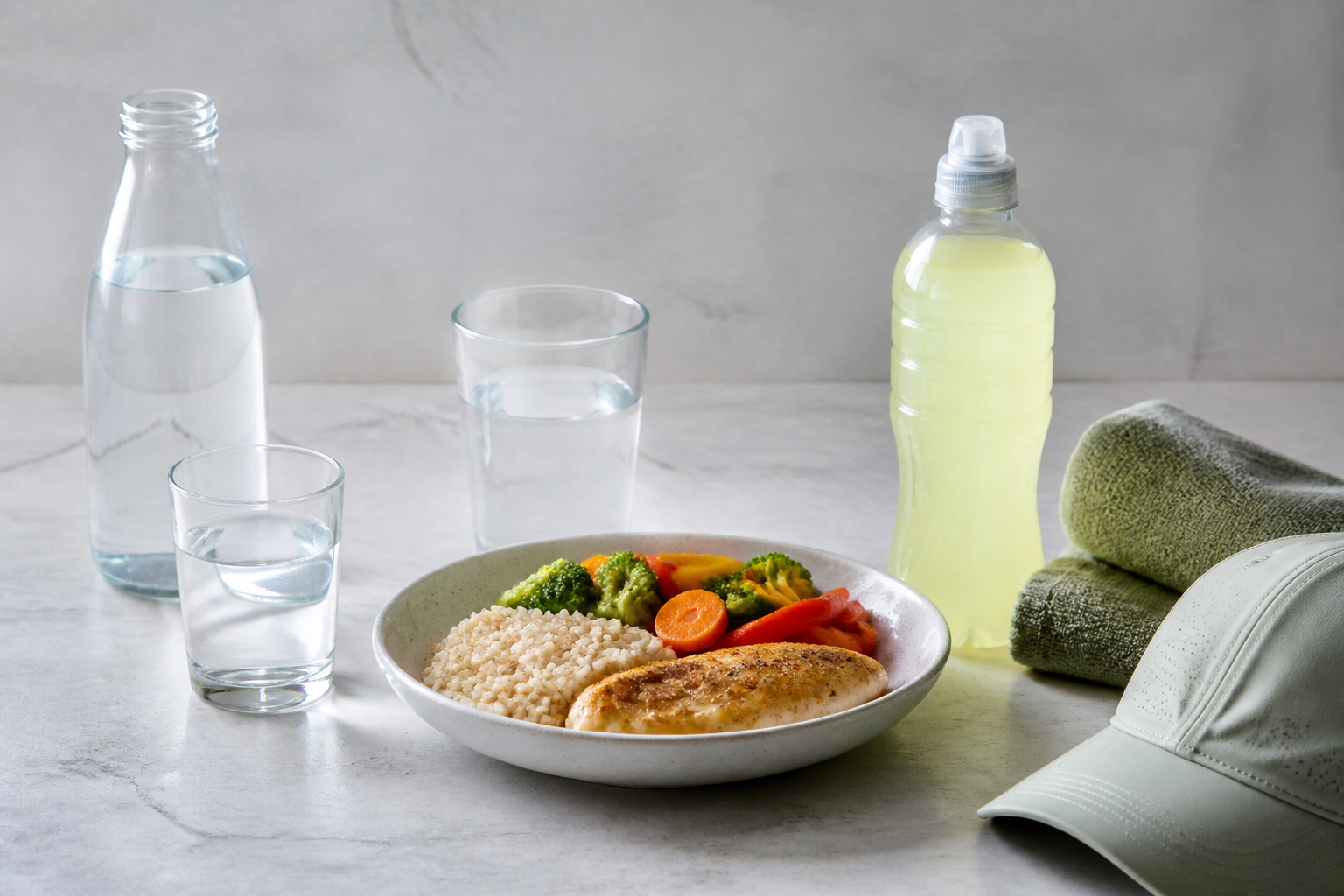
Regular meals provide sodium, potassium, magnesium, calcium, carbohydrate, and fluid. After ordinary activity, water with a meal can be an effective and less expensive recovery option. Fruits and vegetables contribute water and potassium; dairy or fortified alternatives, beans, grains, nuts, seeds, and many protein foods contribute other minerals.
After prolonged sweat, a meal or snack with fluid and some sodium can support rehydration. The exact combination depends on appetite, timing, dietary needs, and how soon another demanding session begins. This does not mean adding unlimited salt; it means recognizing that replacement can come from both drinks and food.
Water-rich foods are helpful, but they do not make a person immune to heat illness. Shade, rest, acclimatization, work intensity, clothing, and early recognition of symptoms remain essential.
Common hydration mistakes
- Waiting for severe thirst. Plan access and regular drinking before a long hot shift or workout.
- Forcing excessive fluid. Drinking much more than the body can handle can dangerously dilute blood sodium.
- Using energy drinks as hydration. High-caffeine products are not the same as sports drinks and can complicate heat strain.
- Ignoring the mix instructions. Over-concentrated powder can increase sugar and sodium and may be harder to tolerate.
- Assuming cramps prove an electrolyte deficiency. Cramps have multiple causes; severe or repeated symptoms need context.
- Treating symptoms with a product. Dizziness, weakness, nausea, headache, confusion, or fainting may require stopping activity, cooling, and medical action.
A practical hot-weather hydration plan
- Check the conditions. Consider heat, humidity, sun, clothing, and access to shade or air conditioning.
- Estimate duration and intensity. A short walk and a three-hour outdoor shift need different preparation.
- Start with water access. Carry enough, know where to refill, and keep it cool when possible.
- Plan food. Regular meals or a suitable snack can replace energy and minerals.
- Add electrolytes for the right job. Use an appropriate product for prolonged heavy sweating, not automatically for every warm day.
- Follow the label. Note serving size, sodium, carbohydrate, caffeine, and mixing volume.
- Monitor and adjust. Stop when symptoms appear; do not use a drink to push through worsening heat stress.
Heat illness can progress quickly. Confusion, loss of consciousness, seizures, or very high body temperature are emergency warning signs. Call local emergency services and cool the person while help is coming according to official guidance.
How Appediet can support hydration awareness
Appediet can help place drinks in the context of the full day. Photograph a meal, add the water, sports drink, or energy drink that accompanied it, and correct the label details when the product is packaged. Over several hot days, review when sugary or caffeinated drinks appeared and whether they were connected to prolonged activity or simply became the default.
AppeChat can help turn that record into a focused planning question: “For tomorrow’s two-hour outdoor practice, what should I pack to drink and eat?” The answer should remain general, acknowledge uncertainty, and defer to sports, occupational, or clinical guidance when the situation is specialized.
The aim is awareness, not a universal fluid prescription. Appediet does not diagnose dehydration, heat exhaustion, electrolyte imbalance, or heat stroke.
FAQ
Is water or an electrolyte drink better in hot weather?
For ordinary daily activity and shorter periods in the heat, water plus regular meals is usually sufficient. Electrolyte drinks become more relevant with prolonged, strenuous, sweat-producing activity, especially when it lasts for hours.
Do I need electrolytes if I am sweating?
Not every episode of sweating requires a supplement. Duration, intensity, heat, humidity, sweat rate, food intake, and individual medical context matter. Regular meals replace electrolytes for many everyday situations.
Can I drink too much water in the heat?
Yes. Rapidly drinking excessive fluid can dangerously dilute blood sodium. Drink regularly, avoid forcing unusually large volumes, and follow work, sports, or clinical guidance appropriate to the situation.
Are zero-sugar electrolyte drinks always better?
No. A lower-sugar drink may suit ordinary hydration or calorie goals, while carbohydrate can be useful during prolonged exercise. Compare the label with the job the drink needs to do rather than treating one formula as universally best.
When should heat symptoms get medical attention?
Confusion, fainting, loss of consciousness, seizures, very high body temperature, or severe worsening symptoms require emergency action. Stop activity, move to a cooler place, and follow local emergency guidance.
See drinks in the context of your day
Use Appediet to capture meals and beverages, correct packaged-drink details, save useful repeats, and review the situations that actually change your hydration needs.
Download Appediet