
 Appediet
How to Reduce Ultra-Processed Foods Without an All-or-Nothing Diet
Reducing ultra-processed foods does not require an empty pantry or a perfect label. Start with the foods you eat most often, keep convenience where it helps, compare nutrition and ingredients, and make one repeatable swap at a time.
To reduce ultra-processed foods, identify the packaged foods that appear most often and contribute the most added sugars, sodium, saturated fat, or displacement of whole foods. Replace one routine at a time while keeping practical options such as frozen vegetables, canned beans, whole-grain bread, and plain yogurt.
This guide is for adults who want a less processed everyday eating pattern without rigid food rules. It offers general wellness information, not a therapeutic diet or individualized medical advice.
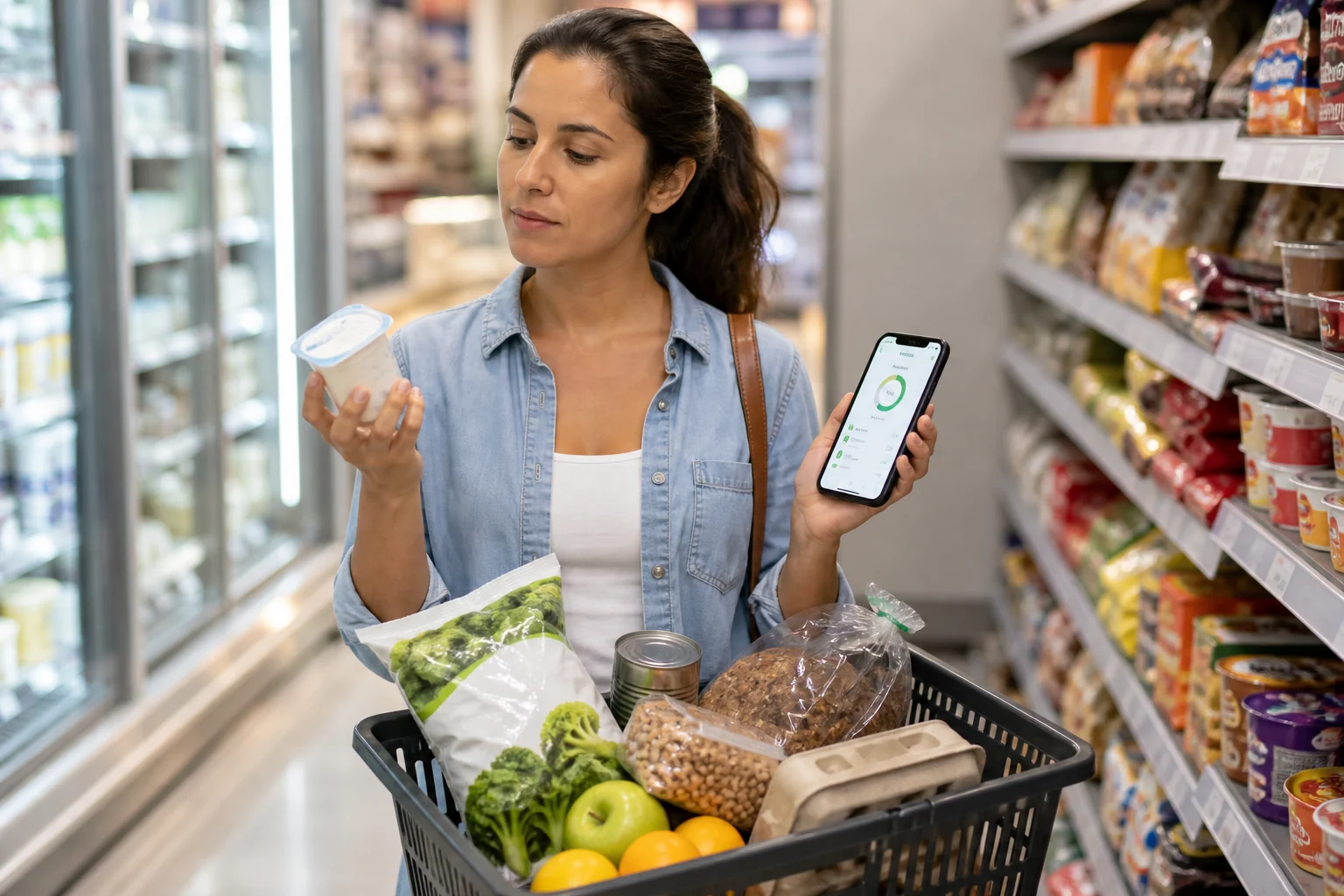
Start with the drink, snack, breakfast, or emergency dinner that shows up several times a week.
Read the ingredient list and the Nutrition Facts label; neither one alone tells the full story.
Frozen produce, canned beans, plain yogurt, and whole-grain bread can make a better pattern easier to maintain.
Why ultra-processed foods are a timely search topic
The 2026 IFIC Food & Health Survey reports that 52% of Americans are familiar with the term “ultraprocessed food,” up 8 percentage points from 2025 and 20 points from 2024. When deciding whether a food qualifies, 56% said they would consult the ingredient list and 51% the Nutrition Facts label. The same survey found that convenience surpassed healthfulness as a food-choice driver for the first time in its 21-year history.
That combination explains the real search intent: people want to understand processing, but they still need affordable, fast food. An article that says “cook everything from scratch” misses the constraint the trend data makes visible.
The U.S. Trending Now page and Explore were checked on August 2, 2026. No stable, exportable weekly index was available for the selected long-tail phrase. The topic was retained using the current IFIC trend survey and current American Heart Association guidance; no Google Trends number is inferred or invented.
What “ultra-processed” means—and what it does not
Most foods are processed in some way: washing, cutting, freezing, canning, fermenting, pasteurizing, or cooking all change food. The widely used Nova classification describes ultra-processed foods as industrial formulations that often include additives or ingredients not commonly used in a home kitchen. Examples often include sugary drinks, packaged cookies, frozen desserts, chips, processed meats, and some ready meals.
Classification is not the same as a complete nutrition score. The American Heart Association notes that some foods classed as ultra-processed, such as certain whole-grain breads, low-sugar yogurts, and nut spreads, can still fit in an overall healthy eating pattern. It also notes that experts do not fully agree on every definition or on how much risk comes from processing itself versus the nutritional profile and the foods displaced.
Choose the first target by frequency and impact
Do not begin by auditing every ingredient in the kitchen. Review a normal week and ask two questions: Which packaged item appears most often? and Which one most clearly crowds out a more nutritious option?
- A sugary drink every afternoon is usually a clearer first target than a celebration dessert once a month.
- A low-fiber snack that replaces lunch several times a week may matter more than an occasional frozen meal.
- A convenience food that makes it possible to eat beans, vegetables, or whole grains may be worth keeping.
- A product that is high in sodium, added sugars, or saturated fat and easy to replace deserves earlier attention.
This approach prioritizes exposure and opportunity rather than attaching morality to a food. One item does not define the quality of an entire diet.
Use a two-pass label check
Pass 1: read the ingredient list
Look at what the product is made from and the order of ingredients. Long lists do not automatically prove harm, and short lists do not automatically prove quality. The list is most useful for spotting ingredients you avoid, added sweeteners, and industrial additives that suggest the product is far from a simple prepared food.
Pass 2: read the Nutrition Facts panel
Check the serving size first. Then compare added sugars, sodium, saturated fat, and dietary fiber across products you would actually substitute for one another. The FDA says 5% Daily Value or less is considered low and 20% or more is considered high for a nutrient. Use those anchors to compare products, not to declare one serving “good” or “bad.”
| Question | What it reveals | Limitation |
|---|---|---|
| What are the first ingredients? | The main components by weight. | It does not show the amount of every additive. |
| What is one serving? | The unit behind every number on the panel. | Your actual portion may differ. |
| How much added sugar, sodium, and saturated fat? | Nutrients commonly high in many less nutritious ultra-processed foods. | A single nutrient does not describe the whole pattern. |
| How much fiber or protein? | Whether the food contributes useful nutrients and may replace a more nourishing choice. | Added nutrients do not erase everything else about the product. |
Practical swaps that keep convenience
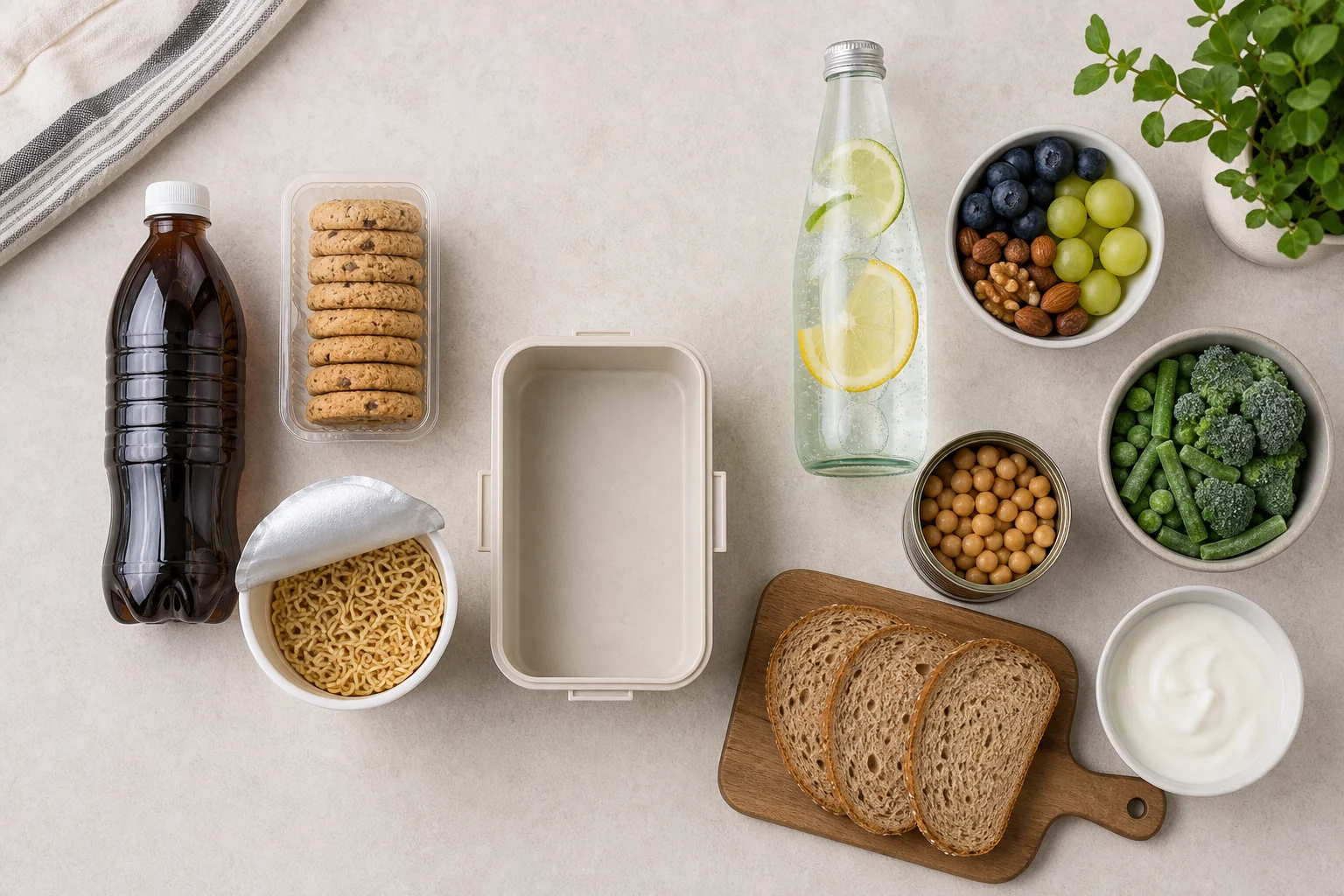
| Repeat moment | Possible swap | Why it may stick |
|---|---|---|
| Sweet drink with lunch | Sparkling water with citrus, unsweetened tea, or a smaller serving alongside water. | Keeps a cold, flavored ritual without demanding a complete routine change. |
| Packaged cookie as the only snack | Fruit with nuts or plain yogurt, or keep one cookie beside a more filling food. | Adds nutrition without requiring an absolute ban. |
| Instant noodles as emergency dinner | Use a smaller noodle portion with frozen vegetables, egg, tofu, or canned beans. | Retains speed while changing the balance of the meal. |
| Processed breakfast bar | Overnight oats, plain yogurt with fruit, or whole-grain toast with nut butter. | Can be prepared or assembled quickly and repeated. |
| Takeout because nothing is ready | Keep a freezer-and-pantry meal: frozen vegetables, canned beans, microwave grain, and a preferred sauce. | Competes with takeout on time, not willpower. |
A swap is successful when it works on the same busy day as the original. Price, storage, cooking access, culture, allergies, and household preferences are part of nutrition quality because they determine what can be sustained.
A seven-day experiment instead of a permanent ban
- Observe for two days. Log normal meals without changing them. Mark the three most common ultra-processed candidates.
- Choose one moment. Pick the item that appears most often or has the clearest alternative.
- Prepare the substitute. Put it in the same place and make it as easy to use as the original.
- Test for three days. Record hunger, satisfaction, time, cost, and whether you actually used it.
- Review on day seven. Keep the swap, modify it, or restore the original and choose a different target. Data that disproves a plan is useful.
In a tightly controlled 2019 NIH inpatient trial with 20 adults, participants ate more calories and gained weight during two weeks on an ultra-processed diet compared with a matched unprocessed diet. The experiment supports concern, but it was small, short, and conducted in a metabolic ward. It does not prove that one packaged food causes weight gain or that every person needs the same rule.
Track patterns without creating a food guilt score
A useful log records context: what the food was, how much, when it appeared, what else was in the meal, hunger before and after, and why that choice was convenient. Avoid assigning a red badge to every processed item. Frozen vegetables, canned beans, whole-grain bread, and low-sugar yogurt may support a better pattern even though processing made them practical.
Review weekly rather than reacting to one entry. Look for repeated drinks, snacks, and emergency meals. If the replacement costs too much, takes too long, or leaves you unsatisfied, redesign the plan instead of blaming motivation.
How Appediet can help you find the repeat moment
Appediet can support this experiment by turning meal photos, barcode entries, and manual corrections into a seven-day record. Use the photo to capture context, barcode or label information for a packaged item, and a short note for the reason it was chosen—late meeting, no groceries, craving, or convenience. At the end of the week, review when the item repeats and test one substitute in that same situation. Appediet should be used to organize the pattern, not to claim that a photo can diagnose processing level or health risk.
The bottom line
Reducing ultra-processed foods is easier when you protect convenience and remove all-or-nothing rules. Start with one frequent, lower-value item; compare ingredients and the Nutrition Facts panel; choose a realistic substitute; and review what happened after a week. A better pattern is built from repeatable decisions, not a perfectly “clean” pantry.
FAQ
What is an ultra-processed food?
The widely used Nova system describes ultra-processed foods as industrial formulations that often contain additives or ingredients not commonly used in home cooking. Classification is not always obvious, and the system does not directly score nutritional value.
Do I need to eliminate all ultra-processed foods?
No. The American Heart Association notes that a limited number of ultra-processed foods, including some whole-grain breads, low-sugar yogurts, and nut spreads, can fit within an overall healthy pattern. Focus first on frequent foods high in added sugars, sodium, or saturated fat that displace more nutritious choices.
Is every packaged food ultra-processed?
No. Frozen vegetables, canned beans, plain milk, chopped produce, and roasted unsalted nuts are processed for safety or convenience but are not automatically the same as an industrial formulation. Packaging alone does not determine the category.
Can an ingredient list prove a food is unhealthy?
An ingredient list can reveal additives and the order of ingredients, but it does not tell the entire story. Review it together with serving size and the Nutrition Facts label, including added sugars, sodium, saturated fat, and fiber, then consider how often the food appears in your pattern.
Can a tracking app identify ultra-processed foods from a photo?
A photo may help identify a visible product or meal, but it cannot reliably reveal every ingredient or processing method. Barcode, package label, manual review, and user correction are more appropriate when classification matters. A tracking app should support awareness, not diagnose risk from an image.
Find the one pattern worth changing first
Use Appediet to record a normal week, combine photos with barcode or manual details, and review which convenience choice repeats often enough to test a realistic swap.
Download AppedietSources
- IFIC: 2026 Food & Health Survey findings
- American Heart Association: Are Ultraprocessed Foods Good or Bad?
- American Heart Association: Regulating Ultraprocessed Foods fact sheet
- NIH Clinical Center: First randomized controlled ultra-processed diet study
- FDA: Daily Value on the Nutrition and Supplement Facts Labels