
 Appediet
Eating Less but the Scale Is Up? Check This First
Eating less but weighing more? Check your morning weigh-in, short-term fluid changes, food portions and goal assumptions before cutting food again.
A higher scale reading can happen even when you have changed your meals. It does not, by itself, show how much body fat changed or prove that another food cut is needed. Start with the weighing conditions, look for relevant short-term context, then check what your food record and goal actually describe.
If the gain comes with swelling or new breathlessness, make medical advice the first step. A food-log review should not delay help for concerning symptoms.

1. Build a repeatable morning weigh-in
Before interpreting the difference, ask whether the readings came from comparable conditions. A measurement before breakfast and one after an evening meal describe different moments. Changing the scale, floor or clothing adds another reason to pause before changing a food goal.
Choose a time you can repeat
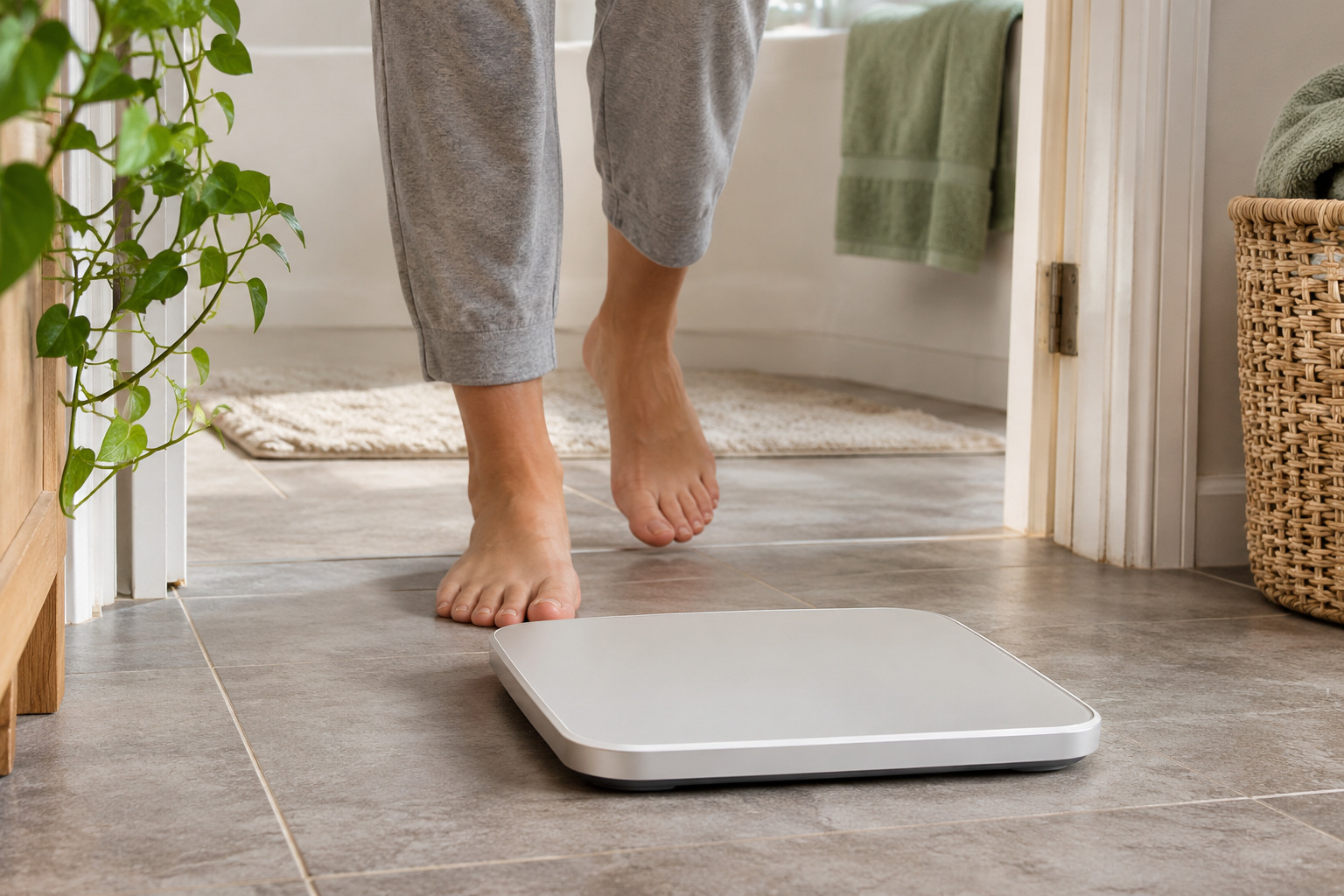
A practical option is after waking and using the bathroom, before breakfast, with similar light clothing. Use the toilet as usual; having a bowel movement is not a requirement before every reading. The aim is a consistent routine, rather than finding the lowest number you can produce.
NHS England recommends the same time of day, preferably morning, the same scale and location, a firm level surface and similar clothing. The University of Sydney’s weighing guidance gives a morning bathroom-before-breakfast routine as an example.
Keep the setup simple
- Leave the scale on the same firm, level patch of floor rather than moving it between carpet and tile.
- Check the displayed unit. Keep kilograms, pounds or stones consistent in the record.
- Remove shoes and heavy items; choose similar clothing each time.
- Stand still with weight distributed over both feet and wait for a stable display.
- Save the date and reading once. Add a brief note if the usual conditions changed.
Daily weighing is optional. If you already keep a daily record, use the same routine each day. Weekly recording can also be useful; NHS England describes regular weekly-to-monthly intervals. Choose a frequency that fits your care plan and feels manageable, rather than repeatedly checking after every meal.
Tip: If you weighed at an unusual time, label that condition in your notes. Keep it separate from your usual morning comparison instead of silently treating it as an identical measurement.
2. Separate body weight from body fat
The scale reports total body weight. It does not separate fat, body water or the food and fluid currently moving through your digestive system. The University of Sydney explains why readings can differ across the day and why a consistent comparison matters.
A meal or drink changes the measurement context
Food and drinks add mass before they have passed through the body. Comparing a reading after eating and drinking with a reading before breakfast cannot isolate a change in body fat. You can note the difference without trying to calculate a precise correction for it.
Water retention is possible, but it is not an automatic explanation
The American Heart Association notes that excess sodium can increase water retention and body weight. A saltier-than-usual restaurant meal is therefore relevant context to record. It does not prove that sodium explains your particular increase, establish how much is water, or justify dehydrating yourself.
Hormonal changes, medicines and medical conditions can also be relevant. MedlinePlus lists fluid retention among possible causes of unintentional gain. Note a meaningful change in symptoms, medication or routine so that a clinician can review it when needed.
Tip: Write “restaurant meal, later weigh-in” or “new medicine started” rather than “gained fat” or “just water.” A description preserves useful information without assigning a cause the scale cannot identify.
3. Make “eating less” specific
“Less” can mean fewer meals, a smaller-looking plate, less of one food or a lower number in an app. Those observations are useful, but they describe different things. None establishes your current energy balance on its own.
Start with an ordinary day you can reconstruct. NIDDK’s portion guidance distinguishes the amount you choose to eat from a labeled serving and suggests food records as a way to understand portions. Keep the review factual rather than treating a missing detail as a personal failure.
Check the food, not only the meal name
A bowl called “rice and chicken” can include rice, chicken, cooking oil, vegetables, sauce and a drink. List the parts you actually know. For a packaged ingredient, keep the exact product. For a mixed dish, distinguish a known recipe from an estimate of an unfamiliar meal.
Tip: If you cannot identify an ingredient or amount, leave that uncertainty visible. A precise-looking total does not become reliable merely because a tool displays it.
Match preparation state and unit
Check whether the entry is raw, cooked, drained or prepared in another way. Then match grams with a gram-based source, or a household measure with a supported measure for that food. A cooked weight entered against a dry-food record answers a different question.
If rice is a recurring source of confusion, use the cooked-versus-dry rice guide to check the method before changing the amount you eat.
Look for additions and duplication
Revisit known sauces, oil, milk in drinks, toppings and extra servings. Also check whether the selected dish already includes an addition. Counting a standard dressing twice is another way a record can drift from the meal.
Tip: Review a familiar repeated meal first. Compare the saved ingredients and serving definition with what you make now. A change in bread, yogurt, cooking fat or portion can make yesterday’s saved entry a poor match for today.
4. Work through one real label example
The FDA’s frozen-lasagna label example lists 280 kcal per serving and four servings in the package. That gives a concrete way to separate a label serving from the amount eaten.
| Amount in the FDA example | Calculation | Energy |
|---|---|---|
| One labeled serving | 1 × 280 | 280 kcal |
| Half the package: two servings | 2 × 280 | 560 kcal |
| The whole package: four servings | 4 × 280 | 1,120 kcal |
These numbers belong to that published example, not to every lasagna or to your personal calorie goal. Use the serving and energy values on your own current package. A label serving is a calculation basis, not a direction about how much you should eat.
Tip: Before changing a saved entry, check three things together: the food, the stated serving and the amount eaten. Correct the field you can verify rather than forcing the final total to match an expectation.
Download Appediet to keep a meal record you can review. Check food identity, preparation and portion before saving; an automated estimate still needs those checks.
5. Review the goal and the period being compared
One unexpected reading and a sustained pattern are different questions. Keep your chosen weighing routine consistent and compare the same kind of record over time. A morning-to-evening difference is not the same comparison as repeated morning readings.
Likewise, compare food records from comparable periods. A complete weekday and a partly remembered weekend day cannot establish a change in your usual intake. Check which meals and drinks were actually recorded before interpreting a lower total.
An old target may need review
NIDDK explains that energy needs change during weight loss and that a smaller body needs fewer calories. Its Body Weight Planner also includes activity assumptions. A goal set under a different weight or routine may therefore warrant review.
This does not establish that your target is wrong, that your metabolism is damaged or that you should cut food again. Review the inputs, the period of observations and any health context with an appropriately qualified professional when individual advice is needed.
Tip: Check whether a regular walk or workout was already part of the goal’s activity assumptions. Keep an exercise-device estimate separate from an automatic instruction to add or remove the same amount of food.
6. Choose one practical next step
Use the clearest information gap to decide what to do next. You can improve a weighing setup or correct a known food entry without redesigning every meal, adding exercise and changing a target at once.
| What you notice | Practical action | What to keep in the record |
|---|---|---|
| The time or clothing changed | Return to a repeatable routine for future readings | The date, time and unusual condition |
| The scale moved or the unit changed | Check the location, surface and displayed unit | Which scale and unit were used |
| A meal portion is unclear | Check the label or the ingredient amount you actually know | The food, source, preparation and portion |
| An addition or duplicate entry is found | Correct that specific entry and inspect the saved result | What was changed and why |
| Your usual routine changed | Review the assumptions behind the existing goal | The activity, schedule or health change |
| The gain remains unexplained or symptoms appear | Seek appropriate health advice | Dated readings, symptoms and medicine changes |
Keep a short note you will understand later
A useful note can be: “Evening reading; usual readings are before breakfast,” “checked the label; the package contains several servings,” or “the reason remains unclear; I will ask my clinician.” These are recording examples, not invented weight trends or outcomes.
In Appediet or your usual diary, keep the food record focused on what you ate. Keep timing, symptoms or medication context wherever you can reliably revisit it; a particular app field is not required. A useful record makes uncertainty easier to explain.
Tip: Choose one question for the next review: “Are the readings comparable?” “Does this food entry describe the amount I ate?” or “Does this change need medical advice?” That question is more actionable than trying to make tomorrow’s number lower.
7. Know when this is a health question
Arrange medical advice for unexplained or persistent gain, especially with new symptoms. MedlinePlus advises contacting a provider for weight gain with issues such as swollen feet, shortness of breath, constipation or other unexplained changes. Rapid gain can reflect significant fluid retention.
Seek urgent help for severe breathing difficulty. Follow any existing monitoring or action plan from your clinical team rather than applying a general article’s checklist to it.
If a medicine might be involved, contact the prescriber before making a change. Bring the medicine list, dated readings and symptom notes. Food records can support that conversation, but they cannot diagnose the cause.
If weighing starts to drive repeated checking, anxiety or repeated food restriction, step back from the routine and ask for suitable support. A monitoring habit should help you understand your situation, not dictate whether you are allowed to eat.
FAQ
Do I need to have a bowel movement before weighing?
No. A consistent routine is useful, but having a bowel movement is not a requirement for every reading. Use the bathroom normally; morning before breakfast is one practical time to repeat.
Should I weigh every day?
Daily weighing is optional. A consistent weekly routine may also suit your needs. Follow a clinician’s monitoring plan when one applies, and choose a frequency that feels manageable.
Does a lower food-log total prove a calorie deficit?
No. Check the foods, portions, missing items and period recorded, as well as the assumptions behind the goal. A logged total alone does not measure your actual energy balance.
Should I wait for more readings if I have symptoms?
Concerning symptoms take priority over a logging exercise. Seek medical advice for unexplained gain with swelling or breathlessness, and urgent help for severe breathing difficulty.
Sources
- NHS England: How to record your weight
- University of Sydney: How often should you really weigh yourself?
- American Heart Association: Effects of excess sodium
- MedlinePlus: Unintentional weight gain
- NIDDK: Food portions
- NIDDK: Eating and physical activity
- NIDDK: Body Weight Planner
- FDA: Understanding the Nutrition Facts label