
 Appediet
Meal Photos or Calorie Numbers? Pick Your Goal
Choose a photo diary, a nutrient record, or a small combination by the question you want to answer, not by the number of features on the screen.
Use meal photos when you want a visual reminder of what and when you ate. Use a nutrient record when you need quantities tied to specific foods and portions. These are different jobs: a picture preserves the meal visually, and a calorie calculation comes from identifying the food and allocating a portion.
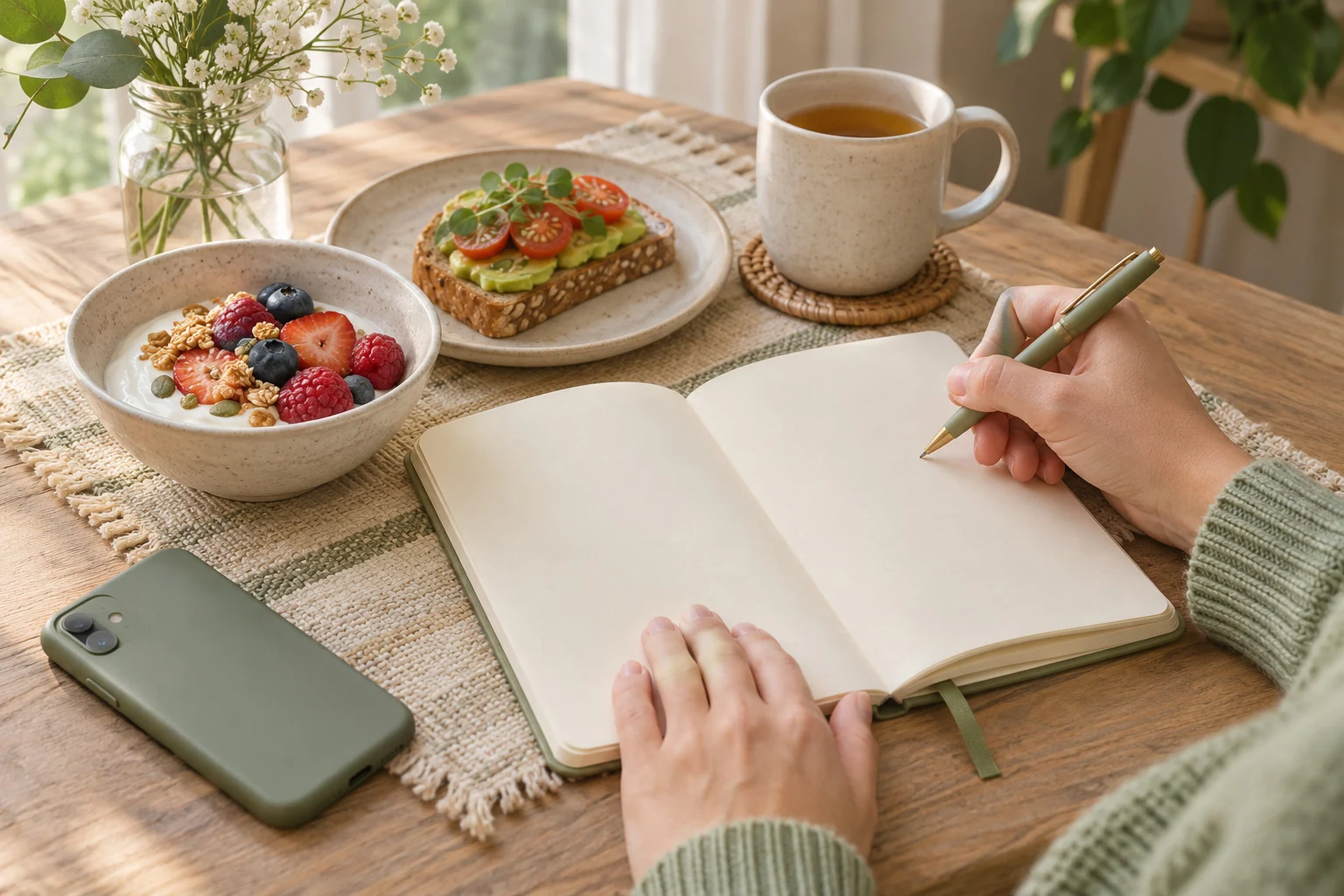
Start with one question about your meals
Ask what you want to learn from the record. You might want to remember which lunches you enjoyed, notice when a meal was interrupted, or check the amount of a nutrient in foods you already know. Match each question to the method that answers it.
NIDDK includes time, food and feelings in its sample food-and-beverage diary. That is a reminder that a diary can preserve context, not just quantities. Read it as guidance on what a diary can preserve, and look for separate evidence behind any claim about diagnosis or a specific health outcome.
Choose the smallest record that preserves the information you will actually revisit. If your question is about a meal’s ingredients or amount, a picture may need a short note. If your question is about a numerical nutrient total, the food identity, portion and data source also matter.
| What you have | What to match | What to check |
|---|---|---|
| Remember the meal | Photo plus a short description | Can you identify it later without guessing? |
| Understand the eating context | Time and a personal note | Does it capture the situation you meant to remember? |
| Review a nutrient amount | Food and portion record with a source | Can you explain which amount and food entry were used? |
Download Appediet to keep your food record.
Try the distinction with an ordinary breakfast
Imagine yogurt with berries and toast, with a cup of tea alongside it. A picture can preserve the visible meal. It may also remind you of additions such as granola, seeds, avocado or a spread; exact amounts and the yogurt product used come from a note or the label.
For a context diary, a useful note might describe breakfast before leaving home, what you ate, and what you want to remember. For a nutrient record, keep the actual yogurt product, ingredient amounts and any additions with the entry. Those records can share a photo while serving different purposes.
A photo before eating may show what was served rather than what was finished. If the distinction matters to your question, add a brief note about leftovers or another helping. Keep the visual record at the level of detail your intended task needs.
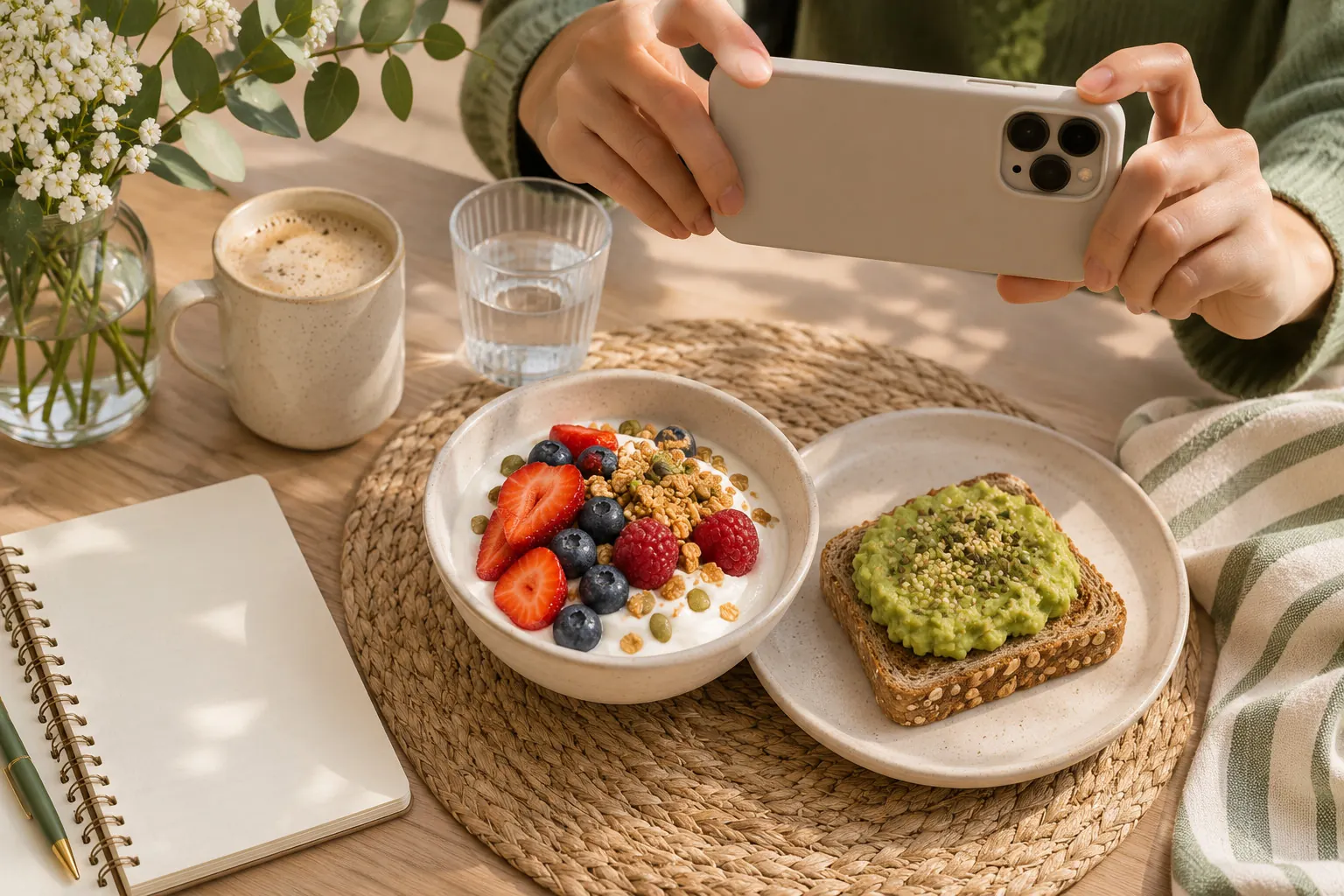
For this step: Use a label when the meal needs numerical detail.
Keep a portion reference without weighing every meal
If you mainly want a visual diary, a short note can preserve what the photo leaves out: the yogurt product, an extra slice of toast, or part of the meal left uneaten. If you also want numerical nutrition, keep the label or matching food record with the amount.
For a food you eat often, weigh a usual portion once in your own bowl after taring the bowl. Note the food state and fill line, then photograph it beside your hand if useful. Recheck occasionally, especially after a change of food or container. A fist or palm works as a personal visual anchor, calibrated by the portions you have weighed yourself.
Keep the jobs separate: the photograph preserves appearance, the note preserves context, and a measured or labelled amount supports the numerical calculation. Use only the detail that answers your original question.
Run a task check before changing tools
Use one meal you can describe clearly. With a photo-diary workflow, take the picture, add the context you want, and revisit it later. Check whether you can still identify the food and understand why you saved it.
With a nutrient-record workflow, identify the food, check the preparation state and unit, enter the amount, and revisit the record. Check whether the saved portion still means the same thing and whether you can correct a mistaken food match.
Treat this as your own task check and judge it by the record it leaves. Note which information you had to supply and which information remained uncertain. What counts is being able to inspect the ingredients and portions behind any summary.
Continue with the detail you need: Check which food the entry actually describes.
Combine methods only when each adds something
A photo plus a short ingredient note may be enough for some meals. For another meal, a label-based portion record may answer your question without an extra photo. You can vary the input while keeping the purpose of the record clear.
Keep one meal entry per meal, combining the photo and the quantities for the same food. If the tool keeps those inputs separate, check how you will prevent the same meal from appearing twice in your own review.
Before choosing a workflow, also check what is shared when you upload a photo and which details you can leave out. Food records can contain personal context. Keep the amount of detail proportionate to the task rather than collecting extra information just because a field is available.
Keep the method you can explain and revisit
After several ordinary meals, ask whether the record helped answer your original question. Could you find the relevant meal? Were the notes understandable? If you used nutrient numbers, could you trace the portion and source?
Use the diary purely as a record of the meal. If a detailed approach becomes unhelpful, you can reduce the fields or choose a different way to remember your food. A clinician-directed record may have specific requirements, which should come from that professional rather than an app category name.
Appediet or another tool should be assessed through the actual workflow available on your current device. Choose by the information you need to preserve, then check the result. The information you need to preserve decides the fit.
FAQ
Is a photo food diary always a calorie counter?
No. A photo can simply be a visual record. A calorie estimate requires an additional method for identifying food and allocating a portion.
Can I keep photos without nutrient totals?
Yes, if that matches the purpose of your personal record. Keep enough context to understand the meal when you revisit it.
Should I use both methods for every meal?
Only when both provide information you need. Keep a single combined entry for the same food.