
 Appediet
Should I Eat Back the Calories from a Walk?
Check whether walking is already part of your food goal before turning an activity number into extra food. There is no universal eat-back percentage.
A walk does not automatically create an extra food allowance. First check how your existing food goal treats everyday activity, and what the activity number actually represents. You do not need to earn dinner through exercise; treat a displayed calorie value as a description of the walk, and let your plan and your needs decide the meal.

Check what your starting goal already includes
Some energy-planning methods include an activity level before they calculate a food target. NIDDK’s Body Weight Planner, for example, asks about activity and states that its results assume the activity changes you entered continue.
How your own tracker works is a separate question. Look for its current explanation of baseline activity and adjustments. If a regular walk is already included, adding a separate allowance for the same walk could count the activity twice. Check this as a bookkeeping possibility in your own log.
| What you notice | What to check or try | What it tells you |
|---|---|---|
| Your plan includes your usual walking | Ask whether the walk is already in the baseline | Check the method before adding a second allowance |
| You added activity beyond that routine | Check how the plan handles the change | A changed routine is a reason to review the original goal assumptions |
| You cannot find the explanation | Ask the provider or the professional who set the plan | Keep the method unknown rather than choosing an arbitrary adjustment |
Further reading: NIDDK: Body Weight Planner
Download Appediet to keep your food record.
Ask what the activity number means
Before copying a number into a food budget, find the field definition. Does it describe that activity alone, a daily total, or a change from an existing baseline? Check each tool’s own definition, even when field names look the same.
Also check whether a value was entered manually or imported from another source. Two entries for one walk are worth investigating. Count two entries as duplicates only when their source and definition match.
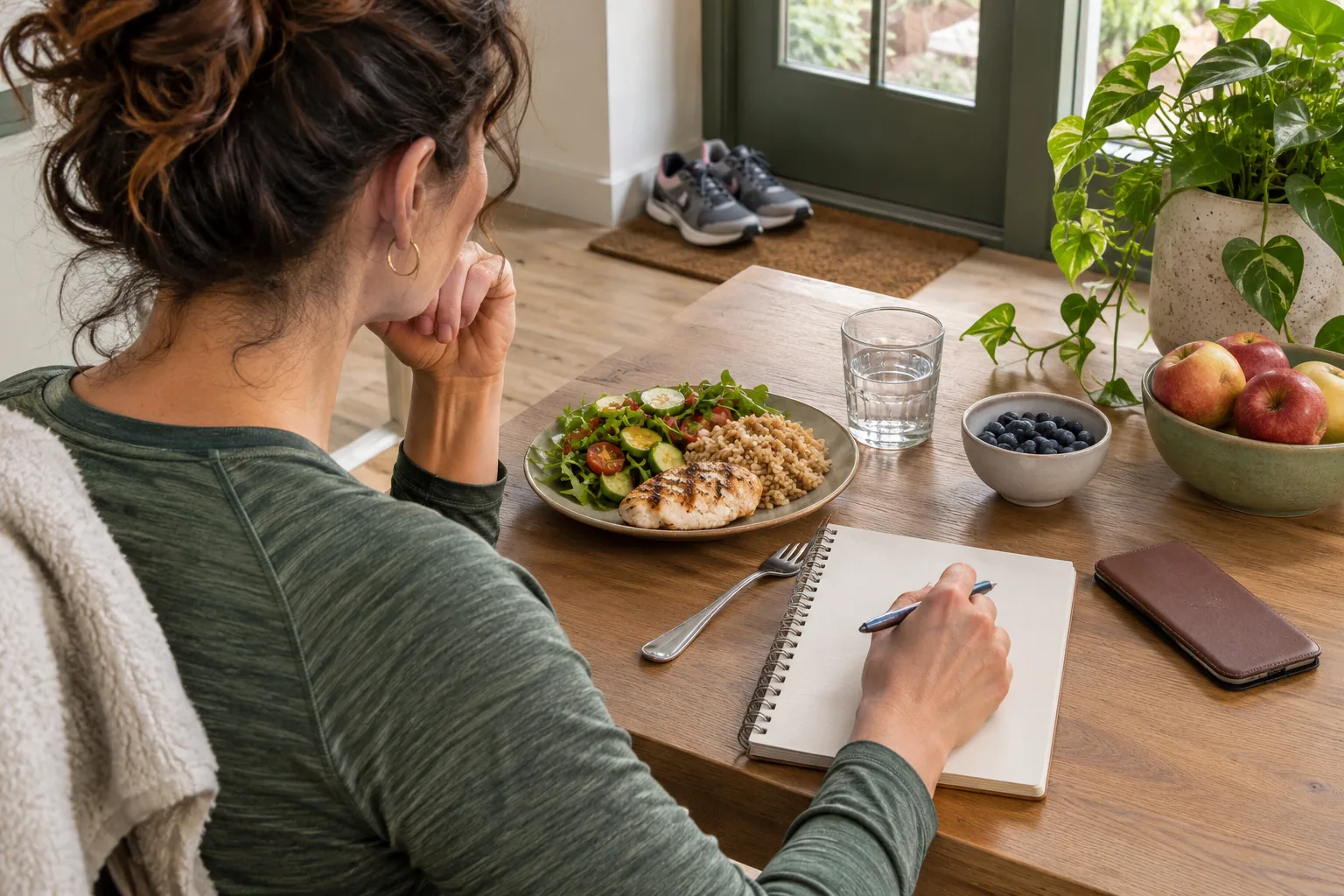
For this step: Keep the meal record on a known food and portion basis.
Trace one walk before changing the food goal
Choose a single walk in your activity history. Keep its date, source and field name together. Then check whether the food-goal method already includes that kind of ordinary activity and whether another device imported the same event. Use similar timestamps as a prompt to inspect the definitions, and confirm duplication from the source and definition.
Save a short decision note: “usual commute already described in baseline; adjustment method still to confirm,” or “routine changed; asking how to revise the plan.” These examples explain the bookkeeping question without assigning a universal eat-back amount.
If you cannot find the field definitions, ask the provider or the professional who set the plan. Keep meals and your health needs in view while resolving the record. An activity estimate alone does not establish what an individual should eat.
Use this check before making an adjustment
Start with the walking you normally do. Then compare that routine with the assumptions used when the goal was set. Keep the activity record separate from the decision about whether your eating plan needs to change.
For example, a walk to work already described in the original activity assumptions needs to be checked against that baseline before an allowance is added. If your routine changes substantially, take that change back to whoever or whatever set the goal.
Neither example supplies a calorie amount. Without your plan’s method and your circumstances, a rule such as “always eat it all back” or “never eat any back” would skip the central question.
| What you notice | What to check or try | What it tells you |
|---|---|---|
| What was my normal routine? | Write down the walking already described when setting the goal | Baseline activity |
| What changed? | Describe any additional duration, frequency, or different activity | A reason to review the assumptions |
| What does the tool do? | Read the current source and adjustment definitions | Method known, or still unknown |
Continue with the detail you need: Record ordinary meals without weighing every food.
Keep the meal decision connected to your needs
Walking can be part of an active life without turning food into a reward or a debt. Keep regular meals in view. If you are hungry, exhausted, or struggling with your plan, discuss the plan rather than using one activity number to decide whether you are allowed to eat.
The energy-planning discussion here is for adults. Pregnancy, breastfeeding, medical conditions, and prescribed eating plans require individual advice. NIDDK’s planner specifically excludes children and pregnant or breastfeeding people from its intended use.
Further reading: NIDDK: Keep active and eat healthy
Save a note that explains the decision
A useful note is: “This walk is part of my usual routine; I still need to confirm whether my goal includes it.” Another is: “My routine changed, so I need a review of the original assumptions.” Neither requires a guessed food allowance.
If you keep meals in Appediet, record what you ate. Check your app’s current explanation to learn whether recording a walk changes your food goal. A meal record and an activity estimate answer different questions.
FAQ
Is there a standard percentage of walking calories to eat back?
There is no universal eat-back percentage. The decision depends on the plan’s activity assumptions, the meaning of the number, and individual needs.
Does this mean I should never eat after a walk?
No. Regular meals and individual needs still matter. The question is whether to make an automatic numerical adjustment, not whether food must be earned.
Can I assume my tracker adjusts the goal automatically?
No. Check the current product documentation or get clarification. An activity entry does not, on its own, establish how a food target is calculated.