
 Appediet
Where Did Those Extra Calories Come From?
Your meal looked simple. Could the sauce explain the extra calories? Check oils, dips, and dressing portions, then keep flavor with a few easy changes.
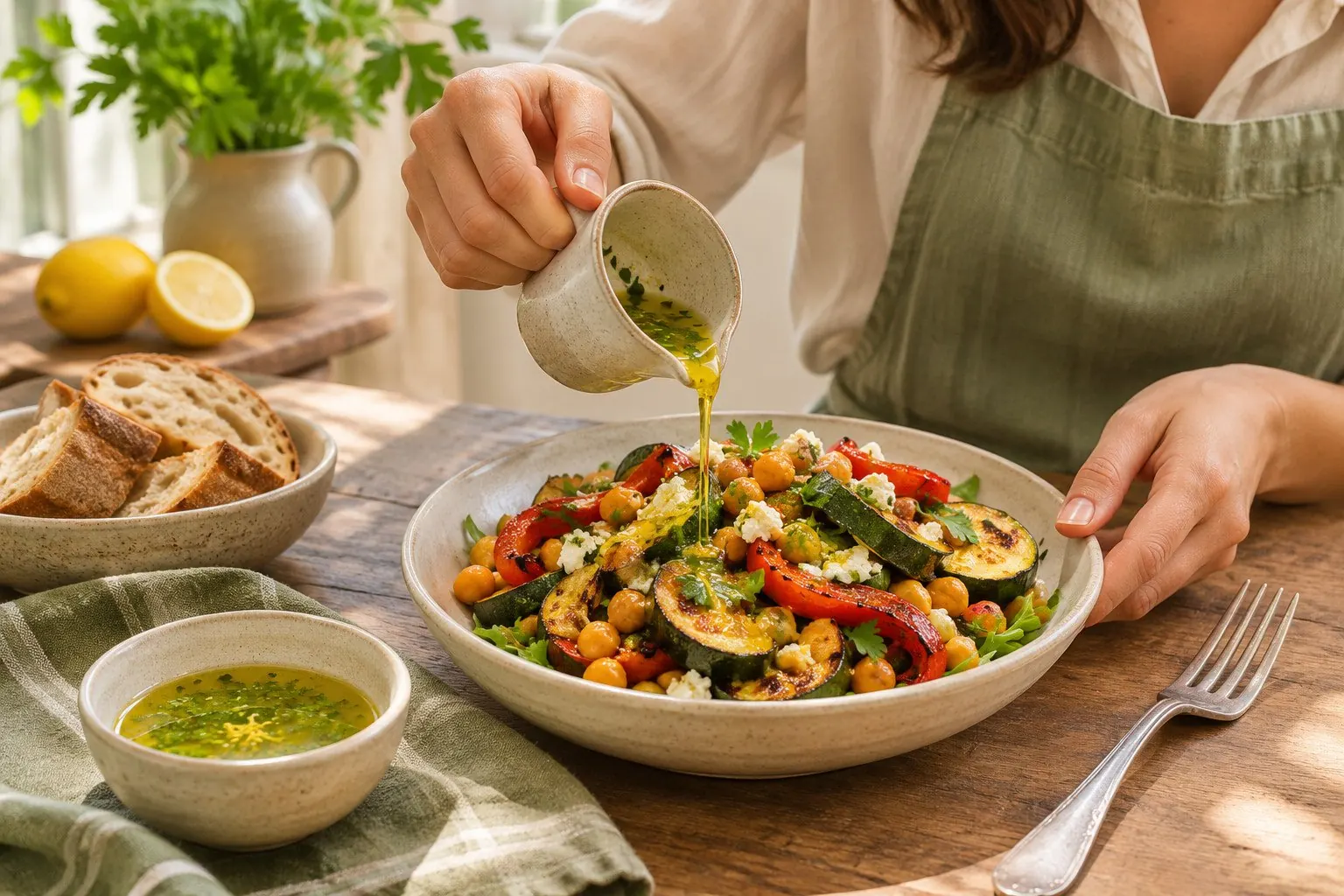
Ask that bottle of sauce beside your plate. You remembered the salad, but what about the dressing, the dip, and the oil used to roast the vegetables? Those additions can be easy to miss when you picture only the main ingredients. Start with the lemon-herb chickpea salad below: keep the flavor, notice what went in, and choose how much dressing you want to use.
Why a small amount can contribute noticeable energy
USDA's general energy factor is 9 kcal per gram of fat. A portion containing 5 g of fat therefore contributes about 45 kcal from that fat; 10 g contributes about 90 kcal.
| Fat in the portion | Calculation | Energy from fat |
|---|---|---|
| 5 g fat | 5 × 9 | About 45 kcal |
| 10 g fat | 10 × 9 | About 90 kcal |
These are grams of fat, not grams of dressing. A dressing also contains other ingredients, and carbohydrate or protein can contribute energy too. Use the exact product's calorie value and serving basis for its total, rather than treating this fat-only calculation as the calories in every spoonful of sauce.
Keep flavor while choosing the portion ↓ · Scale a known label or homemade batch ↓
5 ways to keep flavor and make considered choices
1. Ask for dressing on the side
The FDA notes that separate sauces let you choose how much to use. Add the amount you enjoy, taste the meal, and decide whether you want more. A separate cup is a portion tool, not an instruction to leave the sauce untouched.
2. Measure a starting amount at home
Use your usual spoon or a small weighed bowl to learn what an amount looks like. Keep the actual amount with the recipe. There is no single spoonful that suits every person, dressing or meal; a small starting amount simply makes a second addition a deliberate choice.
3. Use herbs and acidity alongside the dressing
Try lemon juice, vinegar, chopped herbs, garlic or spices as flavor partners. For the salad below, mix the lemon and herbs separately, then decide how much of the oil-containing dressing to use. These are cooking options; the full ingredients and the amount eaten still determine the meal's nutrition.
4. Consider the type of fat as well as the amount
The American Heart Association supports replacing saturated fats with unsaturated fats. Olive or canola oil can replace butter in recipes suited to that swap. An oil-based dressing still contributes energy, so fat type and portion size remain separate checks.
5. Compare sodium and added sugar on the same serving basis
Read calories, sodium, saturated fat and added sugars for the portion you expect to use. When two labels use different serving amounts, put them on a common basis first. A “light” claim does not answer every nutrition question.
The FDA's label guide considers 5% Daily Value or less low and 20% or more high for a nutrient per labeled serving. Use that guide for sodium, saturated fat or added sugars while considering your overall eating pattern.
Keep the salad you enjoy. Separate the dressing, taste before adding more, and notice whether roasting oil or another dip is already part of the meal. The useful change is being able to explain your choices, without treating every condiment as something to avoid.
Use the measured lemon-herb salad example ↓ · Read a sauce label and scale the portion →
A measured lemon-herb salad to try at home
For one home salad, use 100 g safely cooked chickpeas, 100 g sliced zucchini and 100 g red pepper. Roast the vegetables with 5 g olive oil. Separately mix 10 g lemon juice, 5 g olive oil and chopped herbs for a dressing; add the amount you actually use. Cheese or bread, if included, needs its own amount.
Keep the roasting oil, dressing batch and amount eaten distinct. These ingredient amounts describe the home salad; calculate its total nutrition from the exact products and preparation you use. The same ingredient list does not establish the recipe of an unknown restaurant dressing.
Check the base meal before adding extras
A menu item can describe a complete prepared dish, a base with a choice of dressing, or separate components. Read the item details before adding an extra sauce entry. If the published nutrition already includes the standard dressing, adding the full dressing again can count the same food twice.
The FDA explains that covered establishments provide nutrition information for standard menu items and that written nutrient information can be requested. An independent restaurant may lack a complete analysis, and a modified order needs its own accounting rather than the published standard dish.
Ask a narrow question: does this figure include the dressing, cooking oil and the topping I ordered? Keep the answer tied to that item and location. Use a chain restaurant value only for the matching restaurant item.
| What you have | What to match | What to check |
|---|---|---|
| Standard dish with dressing included | Use the matching standard dish | Avoid adding the standard dressing a second time. |
| Base salad with dressing separate | Identify the chosen dressing and amount | Record the amount you consumed. |
| Changed ingredients or extra topping | Keep the original description and the change distinct | Check the standard value against the standard plate; describe modifications separately. |
Download Appediet to keep your food record.
For this step: Scale a labelled sauce to the amount used.
Calibrate the spoon you actually use
A marked measuring teaspoon is about 5 mL and a US measuring tablespoon about 15 mL in NIST’s rounded kitchen conversions. An ordinary dining spoon or restaurant sauce pot has no guaranteed capacity. Check your own utensil with a measuring jug before treating “one spoon” as a unit.
For a product labelled in grams, tare a small bowl and weigh the amount added. For a home dressing, keep the whole batch amount and the share used. A spoon’s volume does not supply the mass of every dressing: thickness, ingredients and how the spoon is filled matter.
If you cannot measure the restaurant sauce, preserve what you do know, such as “separate pot, roughly half used; recipe unknown.” Keep the entry as a noted estimate rather than a fixed calorie number.
Use a separate-dressing salad to see the parts
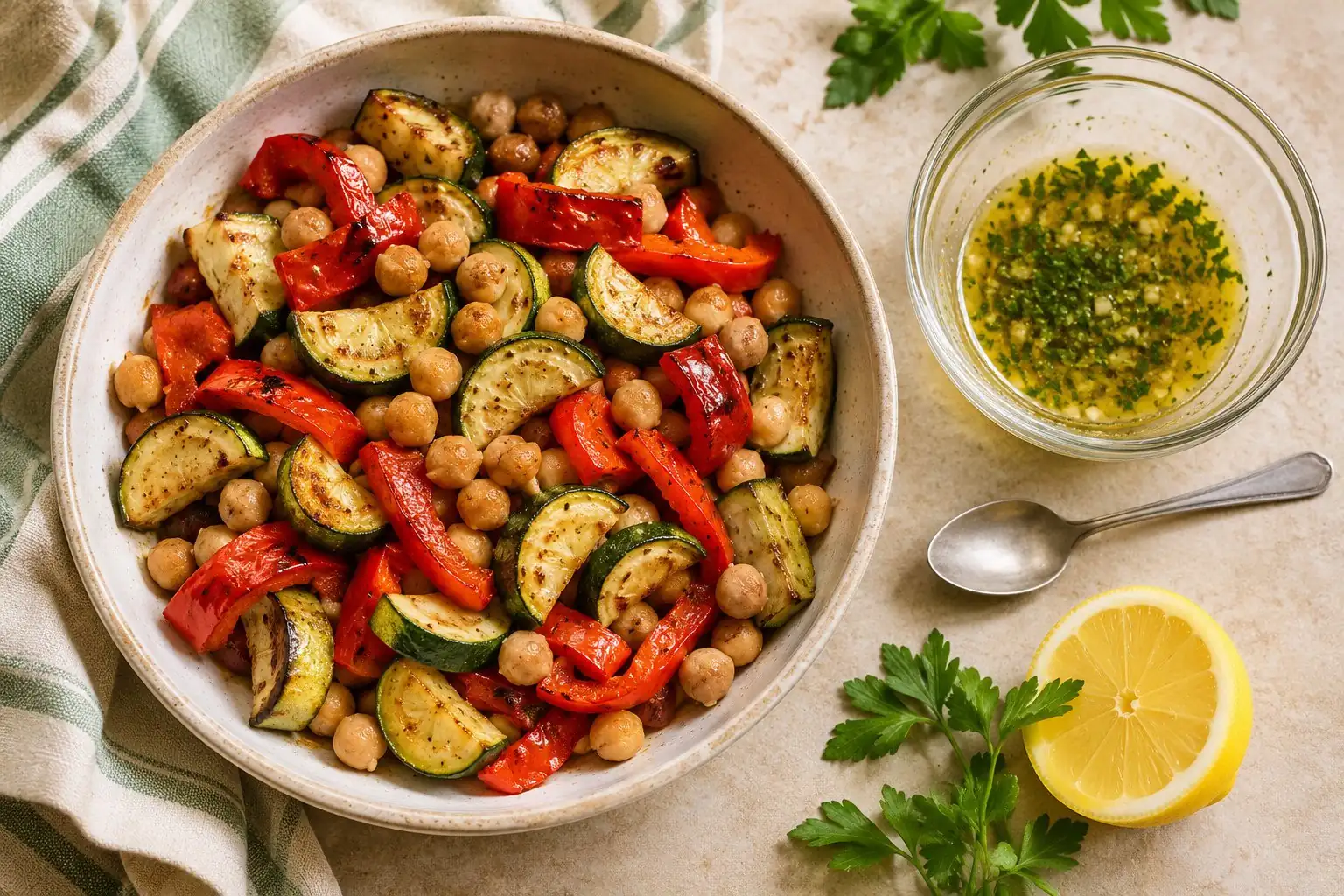
A home version makes the distinction concrete: roast sliced zucchini and red pepper until tender, combine them with cooked chickpeas, and mix lemon juice, olive oil and chopped herbs in a separate bowl. Optional crumbled cheese and bread belong on the ingredient list if you use them.
Keep oil used to roast the vegetables separate from oil mixed into the dressing. They have different jobs, and both can belong to the recipe. The total oil poured into a shared roasting tray is not automatically the amount eaten in one salad.
Use this kitchen example to organize the ingredients you know. For restaurant dressing thickness, oil content and portion size, use a specific label or menu source when one is available.
When the amount is known, scale that source
If a dressing label gives nutrition per serving, match its stated serving unit to the amount used. Enter a tablespoon amount as a volume, or convert it to grams only with a supported conversion for that product. Mass per spoonful differs between dressings.
For a homemade, well-mixed dressing, a batch-share calculation can be useful. In a hypothetical example, 20 g used from a 50 g batch represents 40% of the batch. Apply that fraction to the known ingredient list; use it for batches whose ingredients you know.
Mix an oil-based dressing before dividing it, since separated layers do not have the same composition. Leftover sauce in the cup, sauce left on the plate and sauce actually consumed are different amounts. Label the amount as measured only when you measured it.
Continue with the detail you need: Keep a dressing batch with its recipe.
When you cannot measure it
Ask for sauce on the side when that suits the order. The FDA suggests this as a way to choose how much to use. It can also make the visible parts of a meal easier to describe, while the amounts remain estimates.
When the recipe or amount is unavailable, use a clearly identified estimate if you choose to log one, and keep the uncertainty with it. Record an unsupported amount as unknown; a measured gram value requires an actual measurement.
A useful note can be brief: dressing served separately, partly used, recipe unknown. If the logging tool does not have a suitable note field, keep that information in your own meal record. No particular app field is required to make the distinction.
One final check for duplicate entries
Review the base dish, dressing, preparation oil and extras as one list. Remove overlaps rather than adding another generic sauce entry to feel thorough. Cheese, avocado, croutons, sweetened drinks and side dishes each need their own decision about whether they are already included.
The goal is a record that matches the evidence you have. A consistent estimate with its limits stated can be more useful for your own review than an unexplained precise number. Keep the record neutral and continue your usual eating plan.
Common questions
What does “hidden calories” mean in a sauce?
It means energy from additions such as dressing, dips or cooking oil that you may have overlooked. It does not mean the ingredient is secret or that the food is unhealthy by definition.
Do I need to stop using sauces to eat healthfully?
No. Keep flavor you enjoy, choose an amount that fits the meal, and consider the ingredient pattern, sodium, added sugars and fat type. There is no universal spoonful or calorie allowance for every person.
Does an olive-oil dressing have no calories because it contains unsaturated fat?
No. Fat type and energy are separate questions. An oil-based dressing still contributes calories; use the exact label or known recipe and the amount you ate.
What if the meal nutrition already includes the dressing?
Do not add that same standard dressing again. Check that your actual order matches the published dish and account for changes separately.
Can a sauce photo establish its calories?
No. Appearance alone cannot establish the ingredients, recipe proportions or amount consumed. Keep an unknown restaurant sauce as an identified estimate rather than an exact total.